The conversation ended an hour ago. Or three days ago. And you’re still replaying that one thing you said: the joke that fell flat, the answer that came out clumsy, the moment you’re sure you talked way too much. Every replay comes with a fresh little wince, and a quiet promise that if we just analyze it hard enough, we’ll never do it again. (I’ve done this at 2 a.m. more times than I’d like to admit!)
Sound familiar? That replay feels like diligence, and it even masquerades as memory, but it’s really a well-documented mental glitch. The research can do two genuinely useful things for you… prove the replay is lying to you, and hand you a switch to turn the volume down. Both of those are good news!
Why Your Replay Is a Self-Critical Reconstruction
That mental movie only feels like an accurate playback. Psychologists have a name for it: post-event processing, the repetitive self-focused replaying of a social interaction after it’s over. In cognitive models of social anxiety, this exact loop gets flagged as a maintaining mechanism, one of the things that keeps the anxiety going.
When we ruminate, our mind selectively re-encodes the cringe-worthy moments and quietly deletes the neutral and positive ones. So every single replay makes the memory itself a little more negative than the actual event ever was. You’re editing a director’s cut that gets worse every time you watch it, then treating that doctored version as proof you blew it.
Three Reasons Your Brain Is Wrong About How It Went
The distortion goes deeper than tone. Our replay is built on premises the research shows are flat-out FALSE. Three of them:
- The spotlight effect: they noticed far less than you think. In a classic study, students made to wear an embarrassing T-shirt into a room guessed that about half the people would notice. In reality, fewer than a quarter did. It feels like you’re on a lit stage, while everyone else is starring in their own movie, barely watching yours.
- The liking gap: they liked you more than you think. When researchers had strangers talk and then rate each other, people systematically underestimated how much their partner actually liked them, and the gap stayed even when video confirmed the partner was smiling and engaged the whole time. The version of you that other people walked away with is warmer than the one in your head.
- Your nerves were nearly invisible. We tend to assume our internal anxiety is leaking out for everyone to see. What feels like a flashing “I’m flustered” sign to you is mostly invisible to the person across the table!
Stack those up, and the conclusion is almost impossible to argue with. In your replay, you’re overestimating how much you were watched, overestimating how obvious your nerves were and underestimating how much you were liked, all at the same time.
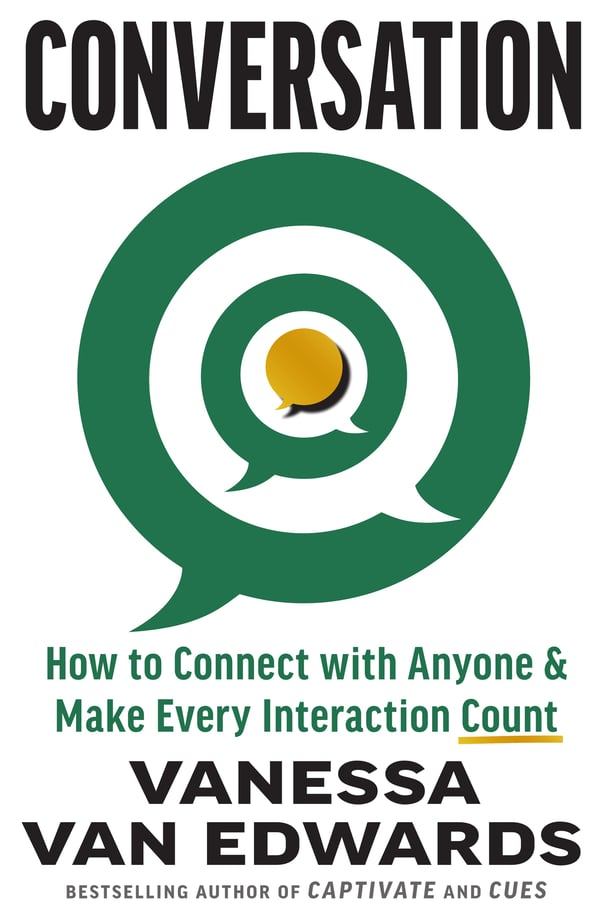
A new book by Vanessa Van Edwards
Every conversation is an opportunity.
If conversations have gotten harder, more awkward or less satisfying, you’re not imagining it. We’re simply out of practice. It’s time to find the joy in talking to each other again.
Why “Just Stop Thinking About It” Doesn’t Work
The obvious move, just shoving the thought away, is the one move most likely to backfire. It’s the “white bear” problem: tell yourself don’t think about a white bear, and your brain helpfully serves one up every few seconds. Thanks, brain! Deliberate thought suppression tends to make the unwanted thought come back more often.
So the goal is to redirect the replay: give your attention somewhere better to go, and quietly drain the emotional charge out of the loop so it stops demanding the spotlight. That’s exactly what the tools below do.
What Actually Turns It Down
Five moves that turn the volume down, no white-knuckling required:
- Name it to tame it. When the replay starts, spend thirty seconds putting the feeling into plain words: “I feel embarrassed and anxious, and my mind is replaying the meeting.” Brain-imaging research found that labeling an emotion reduces activity in the amygdala, the brain’s threat-alarm, and engages the regulatory part of the prefrontal cortex.
- Give it a worry window. Contain the replay so it can’t bleed across your whole day: pick a fixed 10–15 minute slot (say, 7:30 pm). When rumination starts before then, tell yourself, “Not now. I’ll think about this at 7:30,” jot a one-word note, and return to what you were doing. This stimulus-control technique, drawn from cognitive behavioral therapy, keeps the loop from colonizing your entire evening.
- Run a two-minute evidence check. During the window, don’t free-replay. Interrogate! What exact moment am I dreading? What am I assuming they thought? What’s the evidence for that, and against it (they kept talking to me, they laughed earlier, they followed up)? Am I mind-reading or catastrophizing? What’s a fairer read? Putting the fear on trial usually collapses it!
- Talk to yourself like you’d talk to a friend. Self-compassion is one of the best antidotes to this kind of self-critical loop. Ask the simple question: would I judge a friend this harshly for the same moment? Of course you wouldn’t! Extending that same fairness to yourself (“that was a little awkward, and awkward is human”) breaks the spiral better than trying to argue yourself into being right.
- Build an off-ramp. What you do in the first few minutes after a conversation matters. Have a go-to absorbing activity ready (a walk, a task that needs focus, a show) and move into it deliberately.
It’s a Mental Glitch, and It Passes
The thing your mind keeps insisting you need to analyze is just a faulty alarm that needs turning down. Your replay is a self-edited, steadily-more-negative reconstruction, built on three errors the research has actually measured: you were noticed less, your nerves showed less and you were liked MORE than that voice in your head will ever admit. (That same voice makes you feel less self-assured in the moment, too. Here’s how to come across as confident anyway.)
So here’s your one move, next time it kicks off: name the feeling, out loud or on paper (“I’m embarrassed; my brain is replaying it”), walk yourself through a single question (would I judge a friend this harshly?), and redirect into something genuinely absorbing. Skip the fight with the replay. Stop rewatching the cut your anxiety spliced together, and trust the far likelier version… it went better than the replay says, and they liked you more than you think! (And if overthinking is a regular houseguest, here’s the deeper guide.)