The Post-it Note launched 12 years after its glue was invented. TWELVE years… for a sticky note!
In 1968, a 3M chemist named Spencer Silver created a low-tack adhesive that nobody could turn into a product. So he kept sharing it with colleagues across 3M, informally and in seminars. Then Art Fry from another part of the company sat in on one of them and turned it into the Post-it Note.1
Can you picture putting that timeline in a status update?!
It’s also internal networking at its best (and its slowest). Somebody in another department heard about the glue and saw a use for it that its inventor never did.
You probably don’t have a seminar circuit or a miracle glue. That’s fine. The same lucky collision can happen one small message at a time, and hopefully in a lot less than 12 years.
Watch our video below on the art and science of networking and social capital.
What Is Internal Networking?
Internal networking is building working relationships across your own company, especially outside your team, BEFORE you need anything from them. Most of it happens in ordinary work messages with the people whose work touches yours (no name tag or awkward mixer required).
Who belongs in that network? A 2007 Harvard Business Review article describes the networks leaders rely on day to day as including “other internal players with the power to block or support a project.”2
In other words, the people who can wave your project through… or leave it parked in their queue for weeks.
If you messaged five people outside your team right now, how many would write back today? (Be honest. We won’t tell!)
“Um… two? Maybe?”
If that was your answer, you are not alone. In Microsoft’s 2022 survey of more than 31,000 workers, only 48% of hybrid employees said they had a thriving relationship with people outside their immediate team. For remote employees, it was 42%.3
So why bother?
Because being the coworker everyone pings can pay off at review time. Researchers asked work groups who they went to for advice, and the go-to people tended to be rated better at their jobs by their group leaders.
And the people coworkers said made work harder? They were rated lower.4 (So, note to self, don’t be that person.)
Those relationships matter.
Your budget request, your launch date and your next big project all pass through teams you don’t work with. The good news? Allies on those teams mostly come from small, specific messages… and we’ve written out the first few for you below.
Draw the Map of Who Can Make or Break Your Work
Grab a pen (the back of a receipt works fine). List every team that approves your work, supplies what you need, or uses what you produce. Next to each one, write the name of someone you actually know there.
Here’s how a marketing manager’s map might look.
| Team | What they do for my work | Who I know |
|---|---|---|
| Legal | Reviews claims before a campaign goes out | Nobody |
| Data | Pulls the campaign numbers | Leah, an analyst |
| Sales ops | Receives the leads we generate | Nobody |
| Finance | Approves spend over $10,000 | Nobody |
See all those “Nobody” rows? Congratulations, that’s your to-do list. Each one is a team where a delay or a flat “no” can come from someone who has never heard your name.
Sometimes the one name in a row belongs to the person who slows you down, like the reviewer who sends everything back twice or the contact whose replies arrive a week late, every time.
Count that row as a gap too. A second person on that team can tell you how things actually work there, and it keeps one difficult person from standing in for a whole department.
How many of your rows say “Nobody”? If it’s most of them, don’t panic… that’s normal for a first draft.
Action Step: Draw this table for your own job. List every team that approves, supplies, or receives your work, and write one name per row. Circle the blanks.
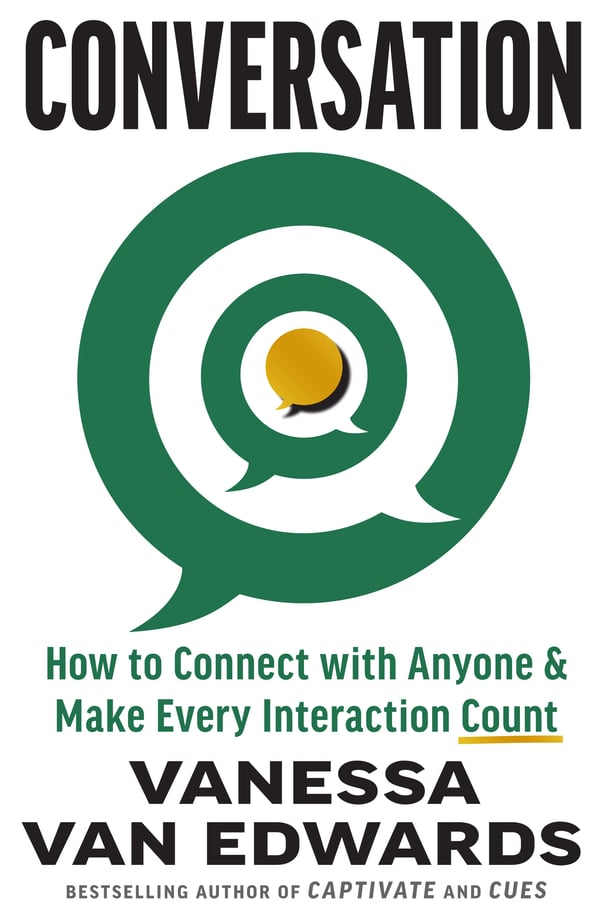
A new book by Vanessa Van Edwards
Every conversation is an opportunity.
If conversations have gotten harder, more awkward or less satisfying, you’re not imagining it. We’re simply out of practice. It’s time to find the joy in talking to each other again.
Open With a 2-Minute Question
So… what do you even say to a total stranger in legal? Please skip the “let’s grab coffee sometime.” (They have a whole queue of contracts to read.)
Instead, ask a quick question about the work your teams already pass back and forth. Like most good requests for advice, it’s easy to answer, and it shows you want to make their job easier. Try something like this:
“Hi Dana, I’m on the marketing team, and we’re the ones who send your group our ads to check before they go out. Quick question… what do you wish people sent you before a review? I’d love to make ours less painful for you.”
Dana can answer that straight from the inbox, with zero meetings booked!
A few weeks later, go back and tell Dana what the answer changed. (Most of us forget this part, and it’s the part Dana will remember.)
“Hi Dana, remember your tip about adding a source for every number? We tried it, and our last two reviews came back in three days instead of a week. Thank you!”
Now Dana knows your name, and that the advice actually worked. So the next time your team sends something over for review, it comes from someone Dana has already helped.
Text That Old Coworker
Yes, THAT coworker. The one you haven’t talked to in months (or, gulp, years).
You might worry that a message after a year of silence will feel weird. (A little, maybe. For about four seconds.)
I once kept a “Hey, long time!” text in my drafts for a whole week. The reply came back within the hour, with three exclamation points!
Researchers actually tested this. They had Executive MBA students ask contacts they’d lost touch with for advice on an important work project.
The verdict? That advice compared well with what their current contacts gave them, and the once-close contacts brought fresh ideas along with the trust they’d already built.5
Former teammates are the easiest place to start, because you already share the history (and probably a running joke about the office printer). Keep your first note ask-free, so Sam has an easy reason to write back:
“Hi Sam! I just saw the new onboarding flow went live, and it looks GREAT. How’s life on the product team? I’m guessing the pace is a little different from our old days together.”
If Sam writes back, suggest a catch-up call. Once you’re talking again, it’s totally fair to ask for Sam’s take on whatever you’re working on now. (That’s exactly the kind of advice the old contacts in that study gave.)
Become the Person Other Teams Ping First
Now for the teams that are always waiting on YOU.
Maybe a sales rep keeps pinging you about where your leads come from, or a designer can’t start until your brief arrives. These people already need something from you, which means you’ve got a built-in reason to talk.
In the British sitcom The IT Crowd, Roy gets so tired of answering the same questions that he records his answers on tape and plays them into the phone every time it rings. (Here’s the 25-second clip.)
We love Roy, but there’s a friendlier version. Answer their question once, in full, and in writing, like this note to that sales rep:
“Hi Theo, you’ve asked a couple of times where our webinar leads come from, so here’s the whole story. Everyone who signs up gets tagged ‘event.’ Anyone who stays past the halfway mark gets tagged ‘event-live,’ so those are your hottest leads. Happy to walk your team through it if that helps!”
And then there are the teams whose requests are always missing something. (We see you, mystery-brief senders!) For them, a short checklist can feel like a favor, especially when you tie it to their deadline:
“Want your brief back in two days instead of five? Just send us three things up front: who it’s for, the one thing they should do, and the launch date.”
Keep Your Allies Warm the 30,000-Note Way
So someone’s officially on your side. Yay!
Now how do you keep them there without it turning into a chore? Try these three small habits.
- First, pass along news that affects their team. Overheard that the pricing page is changing next month? Leah in data is going to have to rebuild a dashboard for that, and a quick heads-up today saves her a scramble later:
“Heads up, the pricing page changes on the 15th. Thought you’d want time to adjust the conversion dashboard.”
- Second, brag about them to their boss. (This one’s a favorite of ours.) When someone on another team bails you out, a quick note to their manager puts that help right in front of the person who has a say in their review:
“Leah pulled our campaign numbers for the quarterly review on two days’ notice, and they were the slide everyone asked about. I wanted you to know.”
Every time I’ve sent one of these, word got back to the person I bragged about… and they thanked ME for it!
Think one brag note is a lot? Doug Conant took thank-you notes to an extreme.
As CEO of Campbell Soup, he handwrote them to employees all over the company. “I wrote 10 to 20 notes a day, six days a week for a decade,” he said in a Chicago Booth interview.6
Do the math and that’s more than 30,000 notes. (His pen deserved its own thank-you note!)
- Third, keep them posted on your work. When you ship something that changes theirs, send a quick note on what changed and what it means for them: “Our new lead form goes live Monday, so your reports will show a source field starting then.”
Relax, you don’t need 30,000 notes! Set a monthly calendar reminder to look over your map and message anyone who’s gone quiet.
Ask for Help With an Easy Out Built In
Sooner or later, you’ll need a favor. I used to bury every ask under a paragraph of apologies, so people had to dig to find what I actually wanted.
A good request names one specific thing and gives enough context to act on it. It also leaves an easy way to say no:
“Could you look at one slide before Thursday? It’s the cost breakdown for the vendor proposal, and you know how finance reads these better than I do. Totally fine to say no if close-out week has you buried.”
Afterward, send a close-the-loop note like the one you sent Dana. Tell them what happened with the proposal, especially if their read changed something.
Need support for a decision before a big meeting? That’s a different move, and it’s what the meeting before the meeting is for.
Frequently Asked Questions (FAQs) About Internal Networking
How do I start networking with other departments at work?
Start by listing every team that approves, supplies, or receives your work. Then write down one person you know on each. For each team where you know nobody, send a two-minute question about the handoff, like “What do you wish people sent you before a review?” A few weeks later, tell them what you changed because of their answer.
Isn't internal networking just office politics?
Internal networking can overlap with office politics, but most of what’s above is about making other teams’ work easier: a full answer, a better handoff, or a heads-up. If you’re dealing with credit stealing or favoritism, our guide to office politics covers those games.
How do I build allies when I work remotely?
The map works the same way, and most of the messages above already go by chat or email. For the remote stand-ins for hallway chat and getting noticed through what you write, see how to network as a remote worker.
What if I'm an introvert?
Written questions, follow-up notes, and heads-up messages tend to suit a quieter style, since none of them needs an audience. For events and bigger rooms, there’s more in how to network as an introvert.
I'm new and don't know anyone yet. Where do I start?
Your map is mostly blank, which gives you a clean list to work from. Your manager or onboarding buddy can usually name the right person on each team, and “I’m new and trying to learn how our teams work together” tends to get a warm reply in a first month.
How is an ally different from a sponsor?
A sponsor is someone senior who speaks up for you when promotions and big assignments get decided. The allies here are mostly peers on other teams who help your day-to-day work go faster. Both help, and our guide to finding an executive sponsor covers the other one.
Does internal networking work if I'm self-employed?
Yes, the same map works if you’re self-employed. Swap “teams” for the people your work passes through, like a lender, a bookkeeper, or the other agents in your office. Anyone who reviews, supplies, or receives your work gets a row. The two-minute handoff question works on them too, and so does the close-the-loop note once their answer helps.
How do I network internally without it feeling fake?
Keep every message about the work you already share, and it rarely feels fake. A question about a handoff, a full answer to something another team keeps asking, or a heads-up about a change that affects them all help the other person first. “Heads up, the pricing page changes on the 15th” counts as networking, too.
How often should I reach out to internal contacts?
Once a month is a good rhythm for most internal contacts, and a monthly reminder to review your map makes it automatic. If someone has gone quiet for a few months, a short note with no ask restarts things. In between, pass along news that affects their team, close the loop when their advice helped, and send the occasional thank-you note to their manager.
How do I ask a coworker in another department for help?
Ask for one specific thing, give enough context to act on it, and make it easy to say no. “Could you look at one slide before Thursday? It’s the cost breakdown for the vendor proposal. Totally fine to say no if close-out week has you buried.” Afterward, tell them what happened, especially if their read changed something.
Internal Networking Takeaway
These messages are easiest to send on a boring Tuesday, when you don’t need anything from anyone. Start with the map, since it tells you exactly who to message first.
- Map every team that approves, supplies, or receives your work, and circle the rows where you know nobody.
- Send one two-minute handoff question to someone in a blank row, then tell them later what you changed.
- Message one former teammate who moved to another department, with no ask attached.
- Answer the question a team that depends on yours keeps asking, fully and in writing.
- Send one thank-you note this month to the manager of someone who helped you.
- Tell your contact on another team when something you ship changes their work.
- When you need help, ask for one specific thing and make “no” easy.
Action Step: Pick one blank row from your map, find one name on that team, and send them the handoff question. Then put a reminder on your calendar to send the follow-up note in two weeks.
For what to say once you’re face to face, see how to start a conversation with coworkers.
- Lemelson-MIT, Art Fry and Spencer Silver
- Ibarra & Hunter (2007), How Leaders Create and Use Networks, Harvard Business Review
- Microsoft Work Trend Index (2022), Great Expectations: Making Hybrid Work Work
- Sparrowe, Liden, Wayne & Kraimer (2001), Social networks and the performance of individuals and groups, Academy of Management Journal
- Levin, Walter & Murnighan (2011), Dormant ties: The value of reconnecting, Organization Science
- Chicago Booth CareerCast, A CEO's Masterclass in Finding Value in Others (Doug Conant), 2023