“Wait… did I really just say March?!”
If yesterday’s meeting is still on a loop in your head, you are not alone. Wrong dates, long pauses, wobbly voices… some very famous people have been there too.
At the 2017 Oscars, La La Land was announced as Best Picture… except the actual winner was Moonlight. The presenters, Warren Beatty and Faye Dunaway, had been handed the wrong envelope.
The next day, the accounting firm behind the envelopes put out a statement: “PwC takes full responsibility for the series of mistakes and breaches of established protocols during last night’s Oscars.”1
Your bad meeting probably wasn’t broadcast to millions (phew).
And like PwC, you can usually fix the real mistake in a sentence or two. First, we’ll sort out what needs a note, what needs a delivery, and what you get to leave ALONE.
Watch our video below to learn how to overcome a bad first impression.
Why It Feels So Much Worse Than It Was
That sour, replay-it-in-the-shower mood has a name. Researchers call it a meeting hangover. The term comes from research on all kinds of bad meetings, including the ones that were just badly run.
So how common is it? A 2025 Harvard Business Review report found that over one quarter of workplace meetings leave employees with lingering negative effects.2
More than one in FOUR!
Luckily, the people in that room probably went easier on you than you think. People tend to expect harsher judgment after a blunder than observers actually give, partly because they overlook the circumstances observers take into account.3
Only you know about the bad night’s sleep and the three versions of the timeline. The room? It may have just seen a long day and a packed agenda.
So most of a bad meeting probably needs a short note… or nothing at all. (Go ahead and take that deep breath.)
Try This: Before you write a single word to anyone, jot down every moment you keep replaying. Yes, even the tiny ones. You’ll sort them next.
Triage the Wreckage Before You Write a Word
Say you told your boss, with total confidence, “We launch March 3!” Except it actually launches next month.
Then someone asked what the new product would cost, and your mind went totally blank. “I’ll, um… get you those numbers by Friday?”
Now it’s 11 p.m. and you’re in your pajamas, typing an apology to all eight people who were in the room.
Hold off on hitting send, and sort the damage into three piles first.
| What happened | What kind of problem | What to do |
|---|---|---|
| Said the launch is March 3; it’s April 3 | Wrong information | Correct it in writing, once |
| Promised the product cost breakdown “by Friday” | Something you owe | Deliver it, early if you can |
| Went blank on the cost question | Awkward moment | Leave it alone |
| Voice shook through the first slide | Awkward moment | Leave it alone |
Half the table needs nothing from you at all (your evening just got a lot better!). The wrong date does matter, because people might plan around it.
The shaky voice? That mostly matters only to you. I once lost a whole evening to a voice crack that nobody else even remembered.
So how do you know which pile a moment belongs in? Ask whether it could cost someone time or money.
If it could, fix it, even if it felt tiny in the room.
Client meetings work the same way. Correct a wrong price or date, and send promised numbers early.
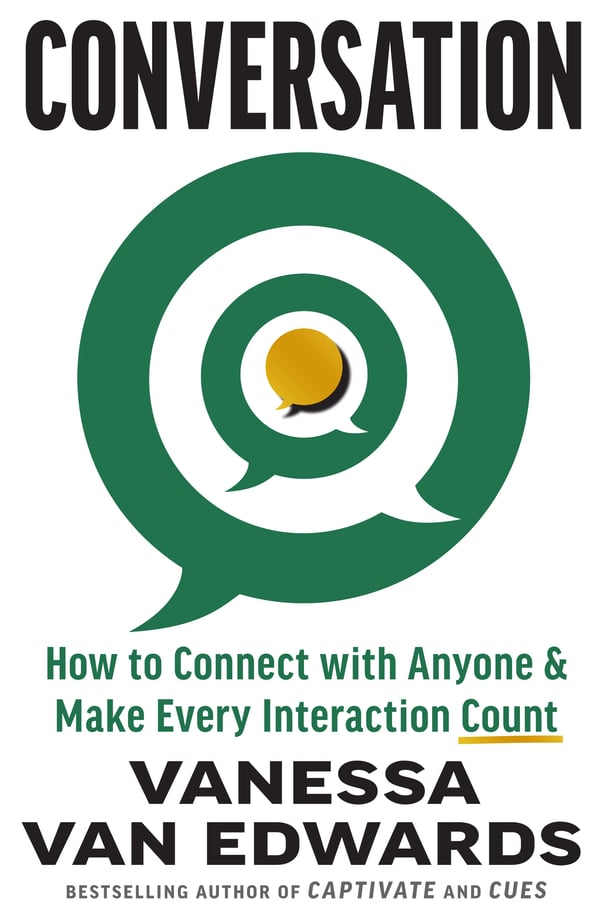
A new book by Vanessa Van Edwards
Every conversation is an opportunity.
If conversations have gotten harder, more awkward or less satisfying, you’re not imagining it. We’re simply out of practice. It’s time to find the joy in talking to each other again.
Delete the “Sorry I Was So Off” Email
Those awkward rows get NO message at all. (Yes, even the voice crack.)
I’ve drafted that email more than once. Something like, “Sorry about yesterday, I was so off. I only got the deck at 9 p.m.” But a note like that leaves eight people deciding whether to reassure you.
The deck part also sounds like an excuse… even when it’s totally true.
Messaging a coworker “Was I as bad as I think?” can get the whole team talking about it again.
If you need to talk it through, a friend who wasn’t in the meeting is a much safer ear. And if it’s still stinging, here’s more on getting over embarrassment.
Oh, and at the next meeting, skip the opening joke about last time. A line like “Let’s hope I get the dates right today!” only reminds everyone.
Fix the Wrong Fact in Three Sentences
The next morning, send one short note to everyone who heard the wrong date (yes, even the VP).
“One correction from yesterday’s review: the launch date is April 3. I read it off an old version of the timeline. The current one is attached.”
Even CEOs have to send these.
In 2014, Microsoft CEO Satya Nadella was asked onstage what advice he’d give women who aren’t comfortable asking for a raise. His answer? “It’s not really about asking for the raise,” plus a line about “good karma” coming back.
Cringe.
Later that day, he emailed employees: “I answered that question completely wrong.” His new advice: “If you think you deserve a raise, you should just ask.”4
If someone already acted on the wrong date, they get a quick message of their own.
“The launch is actually April 3rd. I gave you the wrong date on Tuesday, and I know you’d already scheduled the customer email for March 3rd. Sorry for the extra work. Want me to draft the new version?”
And then… stop! A “Just making sure everyone saw my correction!” follow-up only puts the mistake right back in their inbox.
Beat Your Own Deadline
Now for the fun one. That “I’ll, um… get you those numbers by Friday?” promise is your second note.
Send it on Wednesday instead. It answers the exact question you blanked on, and the meeting finally produces what it was supposed to. Here’s how it might read.
“Following up on Tuesday’s review with the product cost numbers I owed you. Year-one cost is $48,000, including setup, and year two drops to $36,000. The full breakdown is attached, with the two line items that could still change highlighted.”
Have the Hallway Talk You’re Dreading
Of the eight people in that room, usually one person (two, tops) has a real say in your work. Think your boss, or the VP who heard the wrong date.
Save your nerve for a real conversation with them, and skip the group message.
Keep the opener about what THEY need from you.
“Do you have two minutes? I want to make sure you have what you need on the launch date and the product costs. Is there anything else from Tuesday you’d like me to follow up on?”
If they have nothing to add, congratulations, that 11 p.m. apology draft can go straight in the trash!
They might also say it went badly. That stings more coming from them than from anyone else in the room, we know.
If they do, thank them, ask what they’d want to see at the next review, and write it down. That answer is your prep for the comeback.
Turn the Next Meeting Into Your Comeback
At the next review, the same people who watched you stumble get to watch you walk in prepared.
One early contribution can be enough. Before anyone else jumps in, open with which product you’d recommend and why. “I looked at both options, and I’d go with the second one. Here’s my reasoning.”
And Beatty and Dunaway? They got their comeback, too. A year later, they returned to present at the 2018 Oscars.5
Please be nice to yourself through all this (we mean it). In one experiment, people who reflected on a personal weakness with self-compassion were more motivated to change it.6
Beating yourself up about Tuesday can turn the prep for the next review into a punishment.
Action Step: Before the next review, write down the one point you’ll make first. Then rehearse it to your dog, your houseplant, or an empty car.
Frequently Asked Questions (FAQs) About Recovering From a Bad Meeting
Should I apologize after a bad meeting?
You usually don’t need to apologize to the whole group after a bad meeting. Apologize when you hurt someone or cost them work, like the coworker who scheduled a customer email around the wrong date. Wrong information gets a short correction. Awkward moments, like a shaky voice or a blank, get nothing, because a “sorry I was so off” email asks eight people to reassure you.
What if I went completely blank?
Going completely blank in a meeting usually needs no apology, however long it felt. The follow-up note with the answer you couldn’t find is usually all the repair it needs. For why it happens and how to restart mid-sentence, see why your mind goes blank.
Should I still send the correction if nobody noticed the wrong date?
Yes, send the correction even if nobody seemed to notice. A wrong date can end up in someone’s calendar or a customer email days later, and one line now is easier than untangling that.
What if I snapped at someone?
That one’s different, because it involves another person’s feelings. A private apology to that person is owed, as soon as you can, without a “but.” Our guide to how to apologize covers what to say.
What if my boss brings it up before I do?
If your boss brings up the meeting first, agree briefly, say what you’ve already sent or plan to send, and ask what they’d like to see next time. Something like: “Yes, I had the wrong date. I sent the correction this morning. Is there anything you’d want from me before the next review?”
The meeting was recorded. Does that change anything?
A recording only changes how you handle wrong information. If people might watch the recording later, a one-line correction in the meeting notes or the recording’s description catches viewers who missed your email. The shaky moments can still stay unmentioned.
How do I stop replaying a bad meeting in my head?
Turn the replay into a short list of what actually needs action. Sort each moment into wrong information, something you owe, or an awkward moment, then handle the first two and leave the third alone. Go easy on yourself, too. People who treat a weakness with self-compassion tend to feel more motivated to work on it. If the replaying is still keeping you up weeks later, talking it through with a counselor or therapist can help.
How do I recover from a bad presentation at work?
Recover from a bad presentation the same way you’d recover from any bad meeting: correct anything wrong, deliver anything you promised, and leave the awkward moments alone. Then walk into the next presentation with one prepared contribution you can make early, like your recommendation and why. That way, the people who watched you stumble have a newer memory of you coming in ready.
What should a follow-up email after a bad meeting say?
A good follow-up email after a bad meeting corrects one specific thing. State the right fact, name one cause you control, and attach the current version: “One correction from yesterday’s review: the launch date is in April. I read it off an old version of the timeline. The current one is attached.” Send it once, to the people who heard the mistake.
Bad Meeting Recovery Takeaway
A bad meeting feels ENORMOUS at 11 p.m. and a lot smaller by Thursday! Most of the repair is two short notes and one conversation. Everything else you get to leave alone, starting with that 11 p.m. apology draft.
- Leave the awkward moments out of every message, and skip the joke about last time.
- Send one short correction to the people who heard the wrong fact, with one line naming the cause. If anyone already acted on it, message them directly and offer to help.
- Deliver what you promised, early if you can.
- Ask the one person whose view counts what they need from you.
- Walk into the next meeting with one prepared contribution ready to go first.
Action Step: Copy the three-column table into a blank note and fill it in for your meeting. Anything that lands in “Leave it alone” comes out of the apology draft (and yes, that might be the whole draft).
If you’re still replaying it after all that, see how to stop second-guessing what you said.
- Associated Press via Boston.com (2017), Firm says several mistakes caused Oscars best picture gaffe
- Harvard Business Review (2025), The Hidden Toll of Meeting Hangovers
- Savitsky, Epley & Gilovich (2001), Do others judge us as harshly as we think? Overestimating the impact of our failures, shortcomings, and mishaps, Journal of Personality and Social Psychology
- Crosscut (2014), Microsoft CEO Satya Nadella on women and raises
- Rolling Stone (2018), Warren Beatty, Faye Dunaway to present at 2018 Oscars
- Breines & Chen (2012), Self-compassion increases self-improvement motivation, Personality and Social Psychology Bulletin