When researchers surveyed engineers at one tech company, 42% put their own work in the top 5%.1 That’s a LOT of people squeezed into one very small slot. (The math was never going to work out!)
In other words, most of us think we’re kind of hot stuff. And then calibration happens…
At one large company, panels of managers called calibration committees changed about one in four ratings. They lowered ratings four times as often as they raised them.2
If your company holds calibration meetings, your manager carries your self-review into a room full of other managers, and you don’t get an invite.
So how do you write a self-review that survives that room? You give your manager lines they can read out loud and defend without you there.
Watch our video below to learn how to stand out from the crowd, professionally and personally.
Kill Every “As Discussed” in Your Draft
Grab your favorite line from your draft and put it up on a screen in front of six managers who’ve never met you. Does it still make sense? Then keep it.
If six managers just squinted at the screen, it’s rewrite time.
| Falls apart when pasted | Stands on its own |
|---|---|
| “As discussed in our 1:1s, I took over the Henley account.” | “Took over the Henley account mid-quarter and renewed it for another year at a 12% higher rate.” |
| “Fixed the issue from Q2.” | “Rebuilt the invoice export that was double-billing about 40 customers a month; zero double bills since July.” |
| “Sorted out the thing with procurement, as you know.” | “Got procurement to sign off on the new vendor contract after it had stalled for five months.” |
To test yours, read it as a manager from another team who has never heard of your project. Wait, who’s Henley?! If you’d need to ask, add the detail.
I once reread my own draft in December and found “Fixed the issue from Q2.” I had NO idea which issue!
Open With the Payoff Like Jeff Bezos
Does your draft walk through every meeting, every spreadsheet and every late night before it ever gets to what happened? It’s tempting, since that’s the order it all happened in.
Your manager wants a different order. Put the result first and the effort second.
Jeff Bezos pulled this exact move in Amazon’s original 1997 shareholder letter. Before a single word about strategy, his very first sentence sounded like a results slide: “Amazon.com passed many milestones in 1997: by year-end, we had served more than 1.5 million customers, yielding 838% revenue growth to $147.8 million, and extended our market leadership despite aggressive competitive entry.”3
Your lines can do the same thing, and nobody needs 838% growth to pull it off. Watch the result jump to the front in these two.
- “Spent three months mapping the month-end close with the finance leads, which cut it from nine days to four.” becomes “Cut the month-end close from nine days to four by mapping the process with the finance leads.”
- “Ran Saturday tutoring sessions all spring, and 11 of 14 students passed the retake.” becomes “Got 11 of 14 students through the retake by running Saturday tutoring sessions all spring.”
Think your manager sees your year the way you do? Maybe not. Self-ratings and manager ratings tend to line up only loosely, and self-ratings come out higher on average.4
That’s why the strongest lines are ones your manager can confirm without taking your word for it. Notes looking a little thin on results? A brag document is the place to start collecting them.
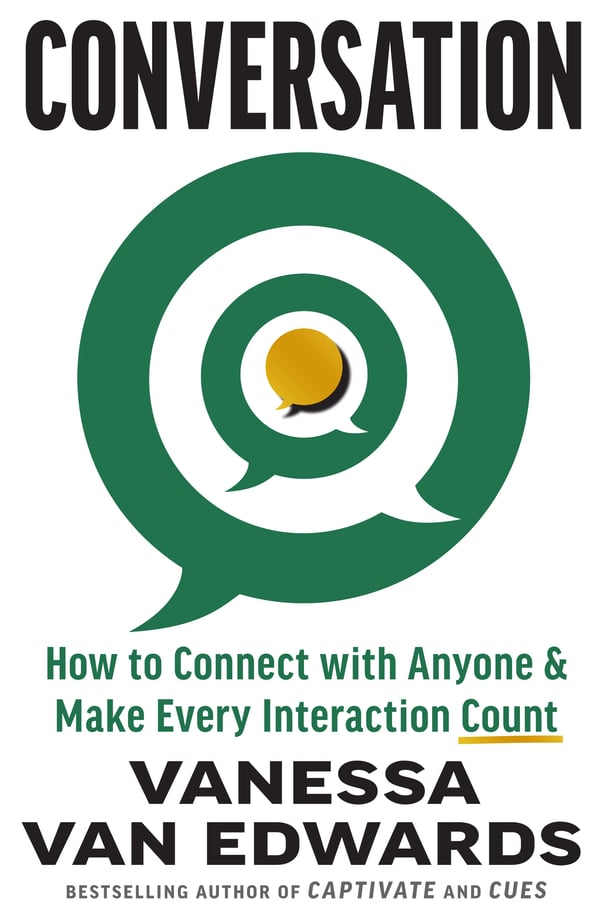
A new book by Vanessa Van Edwards
Every conversation is an opportunity.
If conversations have gotten harder, more awkward or less satisfying, you’re not imagining it. We’re simply out of practice. It’s time to find the joy in talking to each other again.
Swap “We” for Your Verb (Without Hogging the Credit!)
You carried a big chunk of a group project, then wrote “we” in every single sentence about it. On paper, it now sounds like you brought the snacks!
I’ve done it too. One year my whole draft was “we” from top to bottom, and my manager’s first question was “Okay, but what did YOU do?”
The fix is to give yourself your own verb. And team players can relax, because the team gets to stay in the sentence!
- “We launched the referral program.” becomes “Designed the referral flow and ran the pricing test; the team launched it in six weeks.”
- “We cut churn in Q3.” becomes “Wrote the cancellation scripts the team used to cut Q3 churn from 6% to 4%.”
- “We opened the new clinic location on time.” becomes “Built the staff schedule and trained the front-desk hires; the clinic team opened the new location on time.”
Still feel like a credit hog? Peek at the second half of each line, where the team is right there with what they did. (Our guide on how to talk about yourself without bragging has more.)
Turn Your Weakness Into a Progress Report
Ah, the dreaded growth-area box. You know you have weaknesses (we all do)… but which one do you actually write down?
Pick a real skill you’re building and have ALREADY started on. Ideally, it’s also one that doesn’t make anyone wonder whether you can do the core job. (An accountant who’s “working on math” is a tough sell.)
Now watch the same growth areas change once you add the step you’ve already taken.
| Sounds like a weakness | Sounds like progress |
|---|---|
| “I need to get better at delegating.” | “I handed the weekly report to Omar, and the vendor calls are next.” |
| “My presentations could be stronger.” | “I took a presenting workshop, and now I run our monthly client meeting.” |
| “I want to understand the budget side better.” | “I started sitting in on budget meetings, and I’m writing next year’s team budget myself.” |
Own the Miss Before Anyone Else Brings It Up
Almost every year has a miss in it. (No misses this year? Congratulations! …Are you sure, though?)
Writing it up yourself, with the fix attached, gives your manager something to say when someone in the room brings it up. Otherwise, they’re stuck defending you empty-handed.
Warren Buffett owned a much bigger miss in his 2020 letter to Berkshire Hathaway shareholders. He called an $11 billion write-down “almost entirely the quantification of a mistake I made in 2016.” He’d bought a company called Precision Castparts, and in his words, “I paid too much for the company.” Then he shut the last escape hatch himself with “No one misled me in any way.”5
He named the dollar figure and the year, and he took the blame himself. Your miss is probably smaller than $11 billion (we hope!), but the same recipe works, as long as you add the fix.
- Sales: “Finished at 88% of quota after losing the Atlas renewal in Q3; I’ve since added a 90-day renewal check-in for every top-20 account.”
- Operations: “Missed the June go-live for the new inventory system by six weeks because data cleanup took longer than planned; the July rollout had zero stock errors.”
Write the Sentence Your Manager Will Say in the Room
Someone in calibration leans back and asks, “Why this rating?” Every head turns to your manager…
Your self-review can hand them that answer word for word, so they’re not making it up on the spot. It usually names the level you worked at and the one result that proves it. Here’s how it might sound in three different roles.
| Role | What your manager says in the room |
|---|---|
| Team member | “Jordan trained all eight new night-shift nurses, and the unit got through flu season without bringing in temps.” |
| Senior team member | “Lena worked a level above her title this year. She fixed the late-night emergency schedule for three teams, and 2 a.m. calls dropped by half.” |
| People manager | “Andre grew his team from four people to seven and didn’t lose a single one when the company reorganized.” |
In your own summary, write it in the first person (“I owned the month-end close…”). Your manager swaps “I” for your name, and just like that, they’ve got their line! If your form has an overall summary question, put this sentence there.
Use These Self-Evaluation Examples for Every Question on the Form
Every company words these questions a little differently (because of course they do), so match each example to the closest one on your form.
What Was Your Biggest Accomplishment?
- Sales: “Closed the Ridgeway contract, our largest new account this year at $380,000, after a seven-month sales cycle I ran end to end.”
- Teacher: “Raised my ninth graders’ reading benchmark pass rate from 61% to 78% by adding weekly small-group sessions.”
How Did You Work With Others?
- Support: “Set up a weekly handoff call with the product team, which got the billing bug fixed in three weeks after it had been stuck in the backlog since spring.”
- Operations: “Built a shared shipping calendar with the warehouse and sales teams, which ended double-booked pickups by April.”
Where Did You Show Initiative?
- Nurse: “Started a five-minute safety huddle at shift change that the whole unit now runs every night.”
- People manager: “Covered a vacant team-lead role for four months while keeping my own team on target.”
What Are Your Goals for Next Year?
- Teacher: “Bring the small-group model to my tenth-grade sections and reach a 75% benchmark pass rate by spring.”
- People manager: “Get one person on my team promoted to senior by Q3; we’ve agreed on the two projects that will get them there.”
Frequently Asked Questions (FAQs) About Self-Evaluations
What should I write in a self-evaluation?
Write result-first lines your manager could paste into a meeting you’re not in. For each question, lead with the outcome, use your own verb, and add the number or detail that makes it checkable, like “Cut the month-end close from nine days to four by mapping the process with the finance leads.” Then add one growth area you’ve already started on and your biggest miss, with the fix attached.
How long should a self-evaluation be?
A self-evaluation has no set length, and a few result-first lines per question usually do more than paragraphs of background. What matters is that the first sentence of each answer makes your case on its own. If your manager pasted only those first sentences onto a calibration slide, they should still add up to your rating.
How should I rate myself on a scale?
Rate yourself where your evidence puts you, since that’s usually the safest answer. On average, self-ratings come out higher than managers’ ratings, so a score backed by results your manager can check is easier for them to defend. If you’re torn between two levels, pick the one your strongest line proves. Put that line in your summary answer, too.
Can I use AI to write my self-evaluation?
AI can help tighten the wording of a self-evaluation, but the results have to come from you. Every line still needs to make sense to a manager from another department, so check that the tool didn’t swap your specifics for vague praise. Many companies limit what you can paste into AI tools, especially client names and numbers. Check your company’s policy first.
What if my company doesn't do calibration?
Write quotable lines anyway, because they get reused even without calibration meetings. They show up in promotion packets, skip-level conversations, and your manager’s own write-up. “Cut the month-end close from nine days to four” works in every one of those places. A vague “As discussed, I helped with the close” doesn’t.
How do I write a self-evaluation after a bad year?
Name the miss yourself, with the fix attached, before anyone else brings it up. A line like “Finished at 88% of quota after losing the Atlas renewal in Q3; I’ve since added a 90-day renewal check-in for every top-20 account” gives your manager something to say when it comes up in the room. Then make sure the wins from that same year still lead their own answers.
How do I talk about teamwork in a self-evaluation without taking all the credit?
Give yourself your own verb, then name what the team did in the same sentence. “Designed the referral flow and ran the pricing test; the team launched it in six weeks” shows your part and keeps the team in the picture. A bare “we” can make it look like you watched someone else do the work.
What should I put as an area for improvement in a self-evaluation?
Pick a real skill you’re already building, and include the step you’ve taken. “I handed the weekly report to Omar, and the vendor calls are next” gives your manager progress to point to. “I need to get better at delegating” only names a gap. Ideally, choose a skill that doesn’t raise doubts about the core of your job.
Should I include numbers in my self-evaluation?
Yes, include numbers, because they let your manager confirm a result without taking your word for it. Counts, percentages, dollar figures, and dates all work, like “zero double bills since July” or “renewed it for another year at a 12% higher rate.” If there’s no number, name the specific thing you changed and who it helped.
Self-Evaluation Takeaway
Think of your self-review as a script your manager reads in a room you’re not in. Before you hit submit, give your draft this little quiz.
- Would every line make sense to a manager from another department?
- Does each line lead with the result?
- Did every “we” get your own verb, with the team still in the sentence?
- Is your growth area one you’ve already started on, with the step you took?
- Is your biggest miss written with the fix attached?
- Is the one-sentence case for your rating in your summary answer?
Six yeses? Then your manager has lines they can quote! Before calibration, ask your manager which one or two lines they plan to lead with. If your strongest result isn’t one of them, you still have time to point it out. Next, get ready for the conversation itself with our performance review tips.