“Unfortunately, this is the top of the band for the role.”
That one sentence ends a lot of negotiations. But it doesn’t have to!
Quick quiz first! When US workers asked for more money than they were first offered, how many got no bump at all?
a. 1 in 10
b. 1 in 5
c. 1 in 3
d. Half
If you picked c, you’re right! About 35% of people who asked for more were only given the pay they were first offered. Another 28% got the full amount they asked for, and 38% got something in between.1
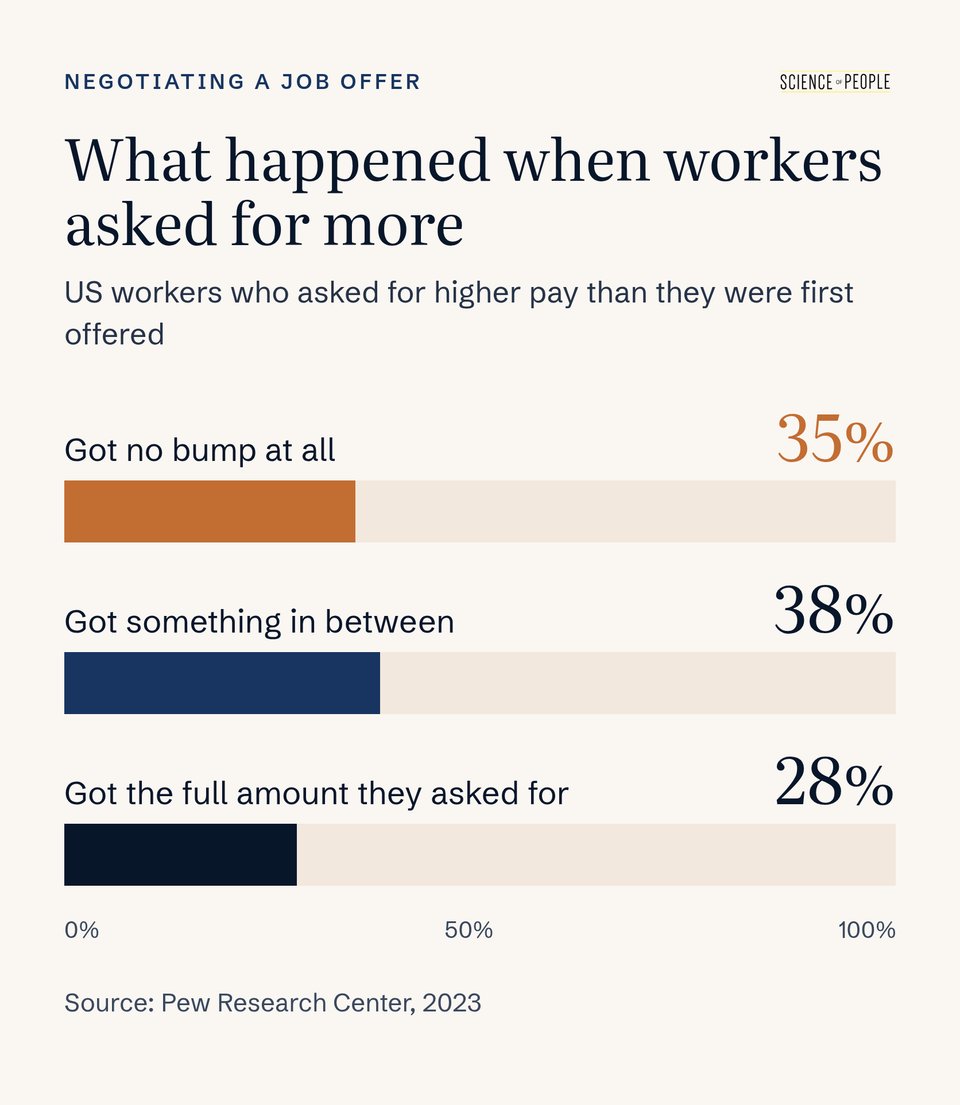
So if you’re in that 35%, you still have room. Here’s what to do.
Ask Which Parts of the Offer Have Room
Before you ask for anything else, ask one question:
“I understand the base is set. Which other parts of the offer have some flexibility?”
A lot of what you want costs them almost nothing, like a later start date or a better title. Negotiators who find out early what the other side cares about tend to get better deals.2
So who do you ask? Both the recruiter or hiring manager, about different things.
| Ask the recruiter | Ask the hiring manager |
|---|---|
| “Is there a sign-on budget for this role?” | “How many days a week is the team actually in the office?” |
| “Does PTO start accruing on day one?” | “What would you want me to own in the first six months?” |
| “How firm is the start date?” | “Is there any flexibility on the title?” |
The recruiter knows the policy and the hiring manager knows the work, so each one can usually say yes to things the other can’t.
Pro Tip Asking good questions under pressure is a skill you can practice. It’s a big part of what we work on in People School.
Rank Your List Before You Reply
Write down everything you’d like. Yes, I mean everything! Then sort it with two questions. How much does this matter to me? And how much does it cost them?
Here’s what that looks like filled in for a partnerships role where the base just got turned down:
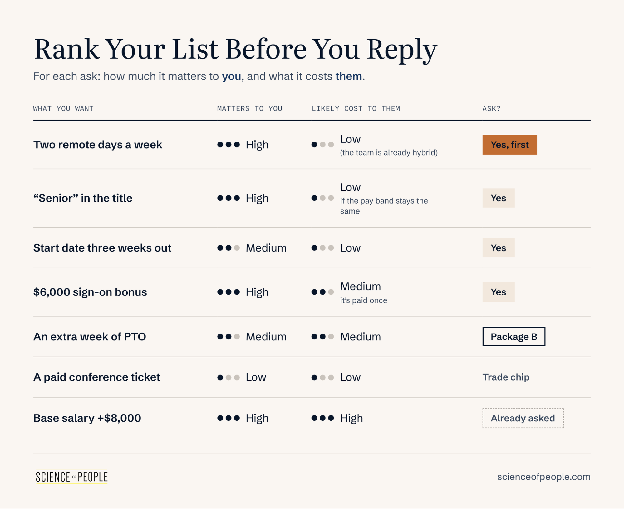
Anything that’s high for you and low for them goes in your first email. Anything that’s low for you is a “trade chip,” something you can happily give up to get something else.
Now pick the one item you’d trade two others for. Write it down: ________
That’s your top line! It goes first in your email.

A new book by Vanessa Van Edwards
Every conversation is an opportunity.
If conversations have gotten harder, more awkward or less satisfying, you’re not imagining it. We’re simply out of practice. It’s time to find the joy in talking to each other again.
What to Ask for When the Salary Is Stuck
Ask for the Title Upgrade
Your title follows you… for years. It’s the first thing your next recruiter reads on your LinkedIn, too.
So what’s the best way to get more out of your role without actually increasing salary? Ask for a title “upgrade.”
- Are you experienced and applying for a new writing job? Ask to be the Senior Content Writer.
- Going for a partnerships manager position? → Senior Partnerships Manager.
- Only data analyst on the team? Lead Data Analyst.
Can’t change the official title? Ask for a working title instead… something descriptive for your email signature and internal profile. Then ask what it would take to earn the real one, and put that question on the agenda for your first review.
Get the Scope Written Down Before Day One
Scope is the stuff that rarely makes it into the offer letter… like who you report to, what you own, how much budget you control, and whether that “open headcount” is really yours to hire.
So ask to add a short scope summary to the offer:
“Could we add a quick summary of the role’s scope to the offer letter? Here’s my understanding from the interviews.”
Then make it easy and hand them the summary, already written:
- Reports to: Head of Partnerships
- Owns: the vendor and reseller relationships, including the partner budget
- Team: one direct report (the open partnerships coordinator role, hiring in Q1)
- Six-month goal: sign three new reseller partners
If they won’t put it in the letter, get the hiring manager to confirm it by email. Trust me… in month four, a paper trail beats “but you said.”
Ask for a Learning Budget
Want to get better at your job? Ask them to pay for it (yes, many employers do this!). A course, a conference, or a coach is a one-time expense, and the skills you gain show your employer you’re more valuable.
Here’s what to do.
- Pick the thing you’d actually use it on first.
- Go with a number in mind. An ask with a number is way easier to say yes to than “Do you have a development budget?”
It might sound like this: “I’d love to take a negotiation course this year, about $2,000. Is there a learning budget I could use, and could we add it to the offer letter?”
Before you sign, ask if any of it has to be paid back if you leave early. Some employers attach strings to training money… so get that answer in writing too!
Put Your Remote Days in the Offer Letter
How much would you pay to work from home? In a hiring experiment for a national call center, the average applicant was willing to give up 8% of their wages for the option to work from home.3
On an $80,000 salary, that’s giving up $6,400 a year. If you value it anywhere near that much, remote days belong near the top of your list.
And it’s an easier ask than it feels, because the company gets something out of it too. Here’s the data (because I LOVE data!): When a tech company in a 2024 Nature study gave staff two days a week at home, a third fewer people quit, and performance grades didn’t drop.4
So pitch it as a reason you’ll stay:
“The team mentioned you’re in the office Tuesday through Thursday. Could we write two remote days a week into the offer letter? It’s a big part of what would keep me here long-term.”
If they hesitate, offer a trial: “Let’s try it for 90 days and look at it together.”
Get it in the letter… a verbal promise from your hiring manager leaves the building when they do! For ideas on structuring the days themselves, here’s how to build a remote work schedule that actually works for you.
Ask for a Sign-On Bonus to Cover What You’re Leaving
If they won’t budge on base pay, ask about a sign-on bonus! It’s a one-time check instead of a raise they’d pay you every single year… so sometimes there’s room for it even when there’s none for your salary.
Maybe you’re leaving an annual bonus that pays out next month, stock that hasn’t vested yet, or a 401(k) match you’d lose. Whatever it is, put a number on it and ask them to cover it:
“If I leave now, I walk away from a $6,000 bonus that pays out at the end of March. Would a $6,000 sign-on bonus be possible to cover that?”
Heads up… check the offer for a repayment clause! If you leave before a certain date, you might owe some or all of the bonus back, so read that part carefully before you sign.
Ask for PTO Flexibility
PTO is one of the few things a recruiter might have a policy range for, so it’s worth a shot.
“Is there flexibility on PTO? An extra week would make a real difference for me. Or could accrual start on day one?”
Unlimited PTO? Ask what people on the team actually took last year. That number tells you way more than the policy page ever will.
Get Your First Pay Review Date in Writing
This one sneaks you back to the money. The base is stuck today… so ask when it gets looked at again.
“I understand the base is fixed at hiring. Could we put a compensation review at six months into the offer letter?”
Then ask one more question: “What would you want to see from me by then?” Write the answer down. Six months in, you’ll walk into that review knowing exactly which results they care about! When the date comes, here’s how to ask for a raise with those results in hand.
Send Two Packages and Let Them Pick
Full disclosure… this tip is a BOLD move.
Offering a choice of a few offers CAN win better deals than a single offer. The other side might see it as a more sincere attempt to reach an agreement, and then the negotiation gets more cooperative.5
So take your ranked list and split it into two bundles:
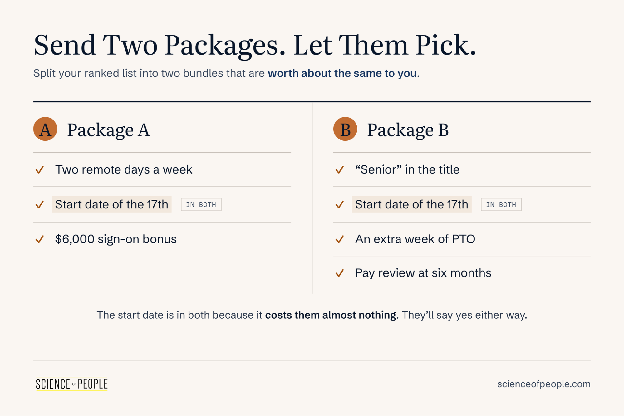
Both packages should be worth about the same to YOU. That’s the “equivalent” part. If you’d be thrilled with A and only okay with B, rebalance until you’d honestly take either one.
Notice the start date is in both? That’s on purpose! It costs them almost nothing, so they can say yes to it whichever package they pick.
And put everything in one message. Asking for one thing, getting a yes, then coming back for the next one… that wears out a recruiter’s goodwill fast. For more on trading concessions, our guide to negotiation tactics goes deeper.
The Email to Send (When Salary Won’t Move)
The words around your asks matter too. In a Science of People Labs study, we gave hundreds of people the same description of a stranger and changed one word. Of the people who read warm, 92% called him generous. Only 14% of the people who read cold did, though every other trait was identical.
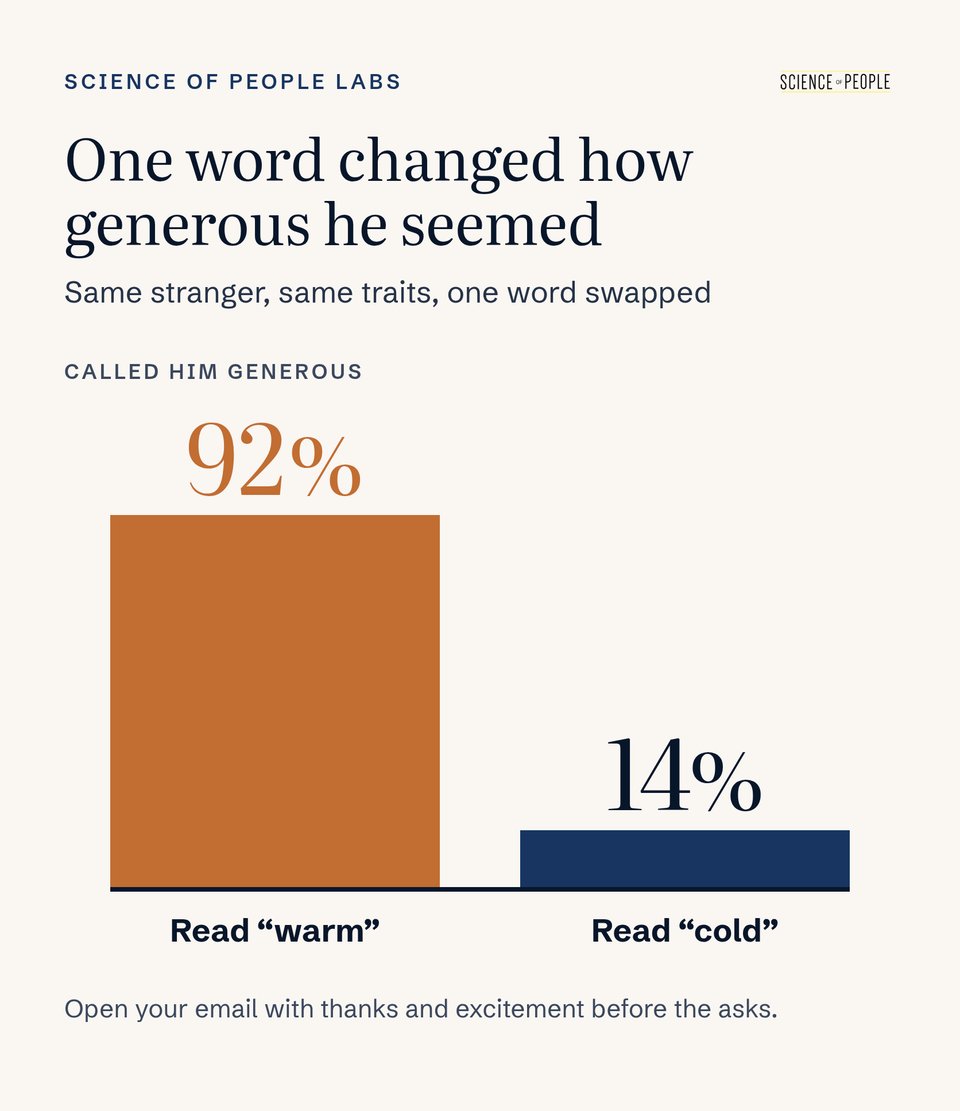
The same thing can happen to your asks. Five requests that follow “I’m still really excited about the role” sound like someone who wants this to work, so the email opens with thanks and excitement before it asks for anything.
Here’s the whole thing, written out:
Subject: Following up on the offer
Hi Dana,
Thank you again for the offer, and for walking me through the base. I understand it’s at the top of the band, and I’m still really excited about the role.
A few other parts of the offer would make a big difference for me, so I’ve put them together as two options. Either one would let me sign this week.
Option A
- Two remote days a week, written into the offer letter
- A start date of March 17
- A $6,000 sign-on bonus, to cover the annual bonus I’d give up by leaving before it pays out in late March
Option B
- The title Senior Partnerships Manager, at the same level
- A start date of March 17
- One additional week of PTO
- A compensation review at six months
I’ve also attached a short summary of the role’s scope, based on my interviews. Could we add it to the offer letter?
Happy to talk through either option on a call. Thanks for working with me on this!
Best, Jordan
One rule for that line about signing this week… only write it if it’s true!
What if they say yes to only part of it? Take the win, then trade once. “Option A works for me if we can add the six-month pay review” is a fine reply. After that, say thank you and stop asking.
Read the Revised Offer Letter (Line by Line!)
A yes on the phone is a great start. Then wait for the revised letter, because that’s the thing you’ll actually sign.
When the new version arrives, check it against your list:
- The title, exactly as agreed
- The start date
- Remote days, as a number per week
- The sign-on amount and any repayment terms
- PTO days and when accrual starts
- The date of your first pay review
- The scope summary, or the hiring manager’s email confirming it
Something missing? Don’t panic… it’s usually a slip. “Could we add the two remote days we discussed?” fixes it in one line.
And if nothing on the list moves at all? Here’s how to decline a job offer gracefully if it comes to that.
Frequently Asked Questions (FAQs) About Negotiating a Job Offer
What can I negotiate in a job offer besides salary?
You can negotiate the title, the written scope of the role, remote days, a sign-on bonus, PTO, a learning budget and the date of your first pay review. Many of these cost the company very little, which makes them easier to say yes to. Start by asking, “I understand the base is set. Which other parts of the offer have some flexibility?” Then listen for what’s cheap for them.
What should I say when a recruiter says the salary is at the top of the band?
Accept the base once, then move the conversation to the rest of the offer. A simple line works: “I understand the base is set. Which other parts of the offer have some flexibility?” That keeps the tone friendly and opens up the title, start date, remote days, sign-on bonus and PTO. Ask the recruiter about policy items and the hiring manager about the work itself.
Should I negotiate with the recruiter or the hiring manager?
Talk to both, about different things. The recruiter usually knows the policy, so ask them about a sign-on budget, PTO accrual and how firm the start date is. Ask the hiring manager about the work. How many days is the team really in the office? What would you own in the first six months? Is there any flexibility on the title? Each one can often say yes to things the other can’t.
How do I ask for a better job title?
Ask for one step up that matches your experience, like Senior Partnerships Manager instead of Partnerships Manager, at the same pay level. If the official title can’t change, ask for a working title for your email signature and internal profile. Then ask, “What would it take to earn the official title?” and put that question on the agenda for your first review.
How do I ask for a sign-on bonus?
Tie the bonus to a specific thing you’re giving up by leaving, and use that exact number. For example: “If I leave now, I walk away from a $6,000 bonus that pays out at the end of March. Would a $6,000 sign-on bonus be possible to cover that?” It’s a one-time cost for them, so there’s sometimes room even when the base is stuck. Check the offer for a repayment clause before you sign.
How do I get remote work days written into my offer?
Ask for a specific number of days and frame it as a reason you’ll stay. Try: “Could we write two remote days a week into the offer letter? It’s a big part of what would keep me here long-term.” If they hesitate, offer a 90-day trial and a check-in. Whatever they agree to, get it in the letter, because a verbal promise leaves when your manager does.
Is it okay to ask for several things at once in a job offer negotiation?
Yes, and it’s better to put every ask in one message than to come back for more after each yes. Repeated rounds wear out a recruiter’s goodwill fast. Bundle your asks into two packages that are worth about the same to you. Open with thanks and excitement, and attach a number or a date to every item.
What if the company only agrees to part of my request?
Take the win, then make one trade at most. A reply like “Option A works for me if we can add the six-month pay review” is fair and specific. After that, say thank you and stop asking. Then wait for the revised offer letter and check every agreed item against your list before you sign.
What should I check in a revised offer letter?
Check every item you agreed to, line by line, before you sign. That means the exact title, the start date and remote days as a number per week. It also means the sign-on amount and repayment terms, PTO days and accrual, your first pay review date and the scope summary. If something’s missing, it’s usually a slip. A one-line note like “Could we add the two remote days we discussed?” fixes it.
Negotiating a Job Offer Takeaway
- Ask the flexibility question before you counter. “Which other parts of the offer have some flexibility?” Then listen for what’s cheap for them.
- Fill in the ranking table tonight. Mark each item high or low for you and for them, and circle the one you’d trade two others for.
- Put a price on what you’re leaving behind. Find the bonus, stock, or match you’d forfeit, and use that exact number for your sign-on ask.
- Build two packages you’d honestly take. Put your cheapest-for-them item in both.
- Send everything in one email. Thank them, mention the base once, and attach a number or a date to every ask.
- Check the revised letter against your list before you sign. Anything missing gets a one-line follow-up.
Haven’t asked about the number yet? Start with our guide to negotiating your salary.