Oprah Winfrey. Dwayne Johnson. Warren Buffet. You may think only powerful leaders have influence. But what I’ve found is that anyone can develop it.
- What makes a person influential?
- How do I develop influence?
- What even IS influence?
I answer all these questions and more in this article.
But first…
I sat down with Noah Zandan, CEO and co-founder of Quantified Communications, the leading firm combining behavior science, AI, and experiential learning. Noah’s book, Insights into Influence, is a groundbreaking anthology of thought leadership and science-backed insights.
Check out our video on influence below:
What is Influence? (Definition)
Influence is the ability to decide what you care about, help others understand why you care about it, and have them support you on your journey. Influence is not a goal; rather, it’s an output.
Here are some examples of influence:
- A remote worker has influence over their team if they decide the direction of a project.
- A student has influence over their sibling if the sibling develops good habits after watching them study.
- A CEO who implements organizational policies influences an employee’s behaviors.
To know if someone is influential, imagine someone and ask yourself the following 4 questions:
- Am I interested in hearing more from this person?
- Do I believe in them or want to follow them?
- Would I do something differently after hearing them talk?
- When this person speaks, how do I feel?
If you answered positively to all of these questions, there’s a good chance that person has influence.
The Most Influential People in The World
OK, so now we know the dictionary definition of influence.
But what REALLY makes people influential?
Sure, you can Google search “most influential people” and get something like:
- Time’s list of 100 most influential people
- Forbes’ The World’s Most Powerful People list
- The 1978 book The 100: A Ranking of the Most Influential Persons in History
But the problem is… these influential people lists are arbitrary.
Influence isn’t like math or engineering, where we can measure numbers and prove that 10 > 9.
When it comes to influence, we can’t simply rank people and say someone is more influential than the other.
Or can we? To really nail down influence, I’ve researched far and wide and dug deep into my own personal experience.
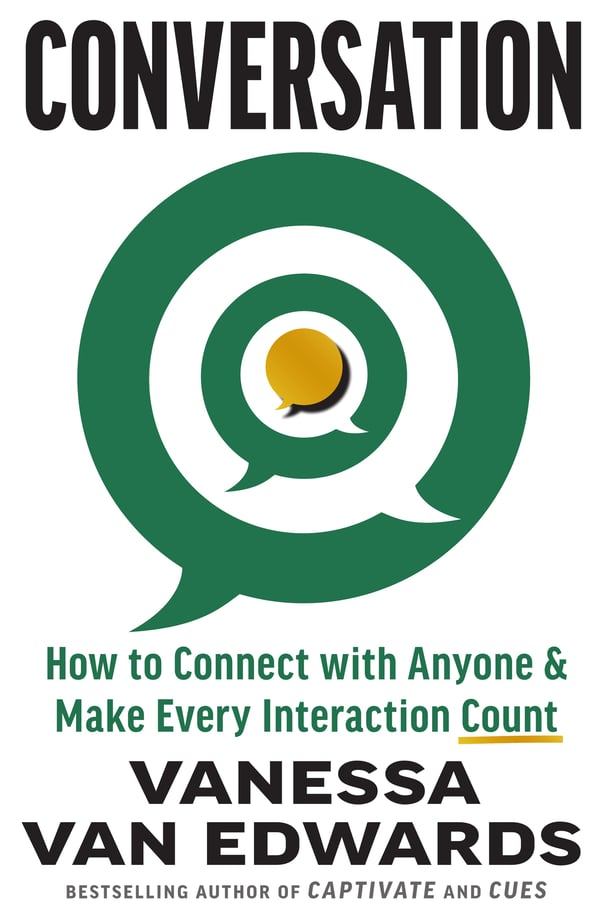
A new book by Vanessa Van Edwards
Every conversation is an opportunity.
If conversations have gotten harder, more awkward or less satisfying, you’re not imagining it. We’re simply out of practice. It’s time to find the joy in talking to each other again.
I found that influential people have these key traits:
- They take the lead.
- They’re not afraid to go against the grain.
- They’ve had great mentors.
Let’s take a deeper look at these traits, with real-life case studies to back them up.
Using Emotional Words
Oprah Winfrey is known for her humor and massive influence in the talk show space. And yes, she uses more emotional words in her speech than the average person.
Zandan’s experiment found that the top 10% of influential leaders use 3 times more emotional words than logical ones, including 62% more personalized language.
Influential people have the ability to sway audiences and influence emotions. They have the amazing ability to make other people feel special and important.
For example, let’s take a look at Oprah’s USC commencement speech. Notice how she uses powerful personal pronouns like “you” and “we” and “our” when she talks, like when she says, “The truth has always been and will always be our shield against corruption, our shield against grief and despair. The truth is our saving grace.” Watch her emotionally powerful words here:
Learn to influence with emotions: The Ultimate List of Emotions
Ignoring the Naysayers
Arnold Schwarzenneger didn’t become a world-class bodybuilder, famous Hollywood actor, and governor of California without lots of uncertainty. People in Hollywood said it would never happen because of his accent, because his body was too muscular, and because of his odd-sounding name.
Influential people are able to see past the noise and naysayers. They carve their own path, even if it means going against the grain.
Check out Arnold’s interview here, where he says the first thing that led to his success was ignoring those who doubted him:
Weathering The Storm
Most people hear “Warren Buffett” and think money and investing.
Sure, Warren Buffett is one of the wealthiest people on Earth, but not many people know it was Warren’s undefeatable attitude during tough times that really showed his influence.
In an analysis of Buffett’s shareholder letters from 1977 to 2016, data scientist Michael Toth found that Buffett remains positive even during hard times, like the 2008 financial crisis.
Influential people remain calm and realistic. They know if something is going south, and they aren’t afraid to speak the truth. However, the key here is that influential people remain optimistic during these tough times while others are panicking.
“People respect when a leader is not only forward-thinking but is very open and honest when things are potentially not going well.”
-Michael Toth on Warren Buffet
Learn to weather the storm: 9 Stoic Practices to Help You Thrive
Taking The Lead
Dwayne Johnson takes conversations by the reins. He doesn’t only let others take control of the flow of conversation. He asks questions, compliments people, and isn’t afraid to interrupt in a friendly manner.
Influential people take the lead. They aren’t afraid of stating their opinions, setting the mood in a conversation, or even interrupting others.
Take a look at the following clip and see how Dwayne Johnson leads the conversation. Before Dwayne interrupts, the interviewer, Jack Hamilton, doesn’t seem 100% comfortable. But right after Dwayne compliments him, he relaxes and opens up.
This is the power of taking the lead:
Learn to take the lead: How to Be a Good Leader
Having a Success Routine
According to Business Insider, Twitter founder Jack Dorsey gets out of bed at 5 a.m. He then meditates for 30 minutes and completes a 7-minute workout 3 times. He ends his routine with a cup of coffee and begins the rest of his day.
Influential people have success routines, or things they can do to pump themselves up and feel confident. Research shows that confidence is what makes people influential, and having a success routine is part of building up that confidence.
“I look to build a lot of consistent routines. Same thing every day.”
Learn to have a success routine: Perfect Your Morning Routine
Adding, Not Subtracting
Sophie Turner, the famous English actress who starred in Game of Thrones, doesn’t exactly come off as the most influential person. She even came out to say, “Yeah, I am spotty. I am fat. I am a bad actress.”
But even if she has her own problems (who doesn’t?), Sophie’s got a unique ability to add to conversations. This is a crucial trait most influential people have mastered.
When influential people speak to someone, they always try to add on to what the other person is saying. They are not subtractors—these are complainers, negative Nancy’s, or judgmental people. They are in the habit of thinking “What can I add to this?” instead of “What don’t I agree with?”
Check out this video where Jimmy makes a joke about Sophia, and instead of downplaying it, she adds onto it. This is a great way to follow up and build on the conversation:
Tilt Your Head
Want to know an easy, quick way to win show you’re engaged?
Simply tilt your head. This is a nonverbal way of showing you are engaged and actively listening.
When speaking with someone (especially in a loud room or restaurant), occasionally encourage them by giving them a head tilt to show that you want them to keep talking.
Anne Hathaway does a great job of tilting her head when talking to Stephen Colbert:
If you learn to master your nonverbals, you can influence on a deeper level than simply speaking words.
Master Resource: Learn all about body language in our ultimate guide to body language.
Lean In
Master motivator Ed Mylett commands influence through his body. As an avid gym-goer, Ed knows that the body influences the mind.
And in this case, Ed uses his body to lean in, bridging the empty space between him and his conversation partner and increasing his influence.
When you lean in, you instantly increase the intensity of a conversation. So when you’re already engaged in conversation, a subtle lean can take your words to another level. Here’s how to use it:
If you have a really important point or you agree with what they are saying, slightly lean in and agree with them. This is like a nonverbal exclamation point and really increases connection. Or, if you have something really juicy you want to say, lean in to give your point a little extra oomph.
Watch here in an episode of Impact Theory how Ed turns his torso and uses the lean-in technique:
What Are The Best Influential Books?
Looking to increase your influence?
Look no further. Here are my top 3 books to go from rusty bolt to influential wizard.
Influence: The Psychology of Persuasion by Robert B. Cialdini
As the title of the book suggests, this book is all about influence.
Influence is one of the best persuasive books ever written, period. A national bestseller, this book has sold over 3 million copies and has been translated into 30 languages.
Influence contains various psychological strategies that great persuaders use, and Robert even takes up jobs as a car salesman and waiter to demonstrate that these influential strategies work. Chock-full of practical advice and theory, this book is great for entrepreneurs, salespeople, marketers, or anyone who wants to influence people in any way.
I highly recommend giving this book a read.
How to Win Friends and Influence People by Dale Carnegie
When I read my original 1936 copy of this book (yes, this book is over 80 years old!), I was absolutely floored.
This is the book I recommend to anyone who’s looking to become a more influential person. I simply couldn’t believe all the social “mistakes” I was making that Carnegie pointed out and how much influence I was losing because of that.
After making a slight course correction, every new conversation seemed more enjoyable and fun! And most importantly… I did win friends and become more influential! Woo-woo!
Captivate: The Science of Succeeding with People by Vanessa Van Edwards
I might be a little biased, but I wrote this book to change your life, add influence, and boost your confidence. Truly, I wrote it for you, using everything I have learned about what makes people influential and with science to back it up.
Influence Mini-FAQ
How can I improve my influencing skills?
Learning how to influence others is a skill like any other. The more time and effort you put in, the better you’ll get at influence. I recommend using a combination of knowledge-based accumulation and real-life practice.
Try these quick tips to get a head start on your influence skills:
- read a life-changing book
- learn to meditate so you have greater focus and attention
- speak with confidence in your voice
- learn to be funny
- set your goals and conquer them
- build your own network of influence
What is the best way to influence others?
To successfully influence others, you have to be genuine. If you really care and put your energy toward a good cause, others will naturally “feel” your passion and you’ll have influence. You should also know what others are looking for.
For example, if you try to influence a customer who’s stubborn, has done their research, and is set on buying product A, but you want to influence them to go with product B instead, you might have a harder time than influencing someone with a clean slate.
What are the four types of influence?
The four types of influence are negative, neutral, positive, and life-changing.
Negative: This type of influence can be dangerous, especially if the influencer has bad intentions. Their influence can be driven by greed or desire for more power, which can cause harm to those they have influence over. Imagine the angry boss who is an authoritarian over the office.
Neutral: Neutral influence is indifferent influence. People with this type of influence don’t sway the crowd too positively or negatively. They may have an important role or title in a group, but their presence does not change the group much. Think of a lazy sales manager who takes a back seat while their subordinates lead the team.
Positive: Positive influence is the classic “leader” we envision influential people to be. These are your CEOs, idols, and other figures people look up to. Positive influencers seek good for others and are charismatic enough to sway others’ opinions.
Life-changing: People with life-changing influence are on another level. These are the few individuals who are spoken about globally and have changed most people’s lives for the better. Think of religious figures, like Jesus or Muhammad, and certain musicians, like Michael Jackson.
Who Do You Want to Influence?
I also did an interview on influence!
As a final wrap-up, check out my video here:
Before you leave, I want to ask you one thing: Who do YOU want to influence?
We all want to be influential, but what do we really want to be influential about? Choosing who we influence is key to further developing our skills in the right direction.
The most important tip of all is to be yourself and really be influential to those who matter to you. If you truly want to influence others, they’ll feel good being around your genuine, unique self.