Bring money up at the wrong moment and a simple question about the credit card bill turns into a referendum on the whole relationship. If your money talks end in tension, silence or a slammed cabinet, you’re far from alone. (If one specific conversation just came to mind, this one’s for you.) The fix has less to do with budgets than with understanding how each of you thinks about money in the first place.

Why Money Fights Hurt So Much
Money disagreements are genuinely dangerous for a relationship!
A study of 4,574 couples found that financial disagreements were the strongest predictor of divorce, ahead of every other common source of disagreement the researchers measured.1 Couples who argued about money carried that risk whether money was tight or plentiful.
When two partners clash over money, the real disagreement is about what money means to each of them, and two people who share a mortgage and a streaming login can still mean very different things by it. That gap is the part a conversation can actually fix!
Figure Out Your Money Style
You’ve got a money style, and so does your partner. Underneath each one is a set of automatic beliefs about money, the kind that decide how a purchase feels before we’ve had a second to think. Those beliefs go deep. A study of 422 adults identified four distinct patterns of money beliefs, and three of the four were significantly linked to income and net worth.2 The same research describes money beliefs as typically learned early and kept into adulthood, which may be why ours feel so obviously true.
In everyday life, those beliefs become a recognizable money style. The four labels below are ours, a plain-English shorthand for the kinds of patterns that study points at. See if you spot yourself or your partner:
The Saver. Security comes first. A healthy emergency fund is what helps them sleep, and even planned spending can stir up a low hum of worry. (A fully budgeted vacation can still feel vaguely illegal.)
The Spender. Money is for living! They’re generous and experience-rich, and saving for a someday that never quite feels real is a genuine struggle.
The Status Seeker. Money is a scoreboard! Purchases double as proof of how far they’ve come, and comparison plays a bigger part in their decisions than they’d admit.
The Avoider. Money is stressful, even shameful. Bills pile up unopened because looking at them feels worse than ignoring them. No judgment here! Dread is a powerful thing.
Every one of these is normal, and many of us are a blend of at least two, with a mix that shifts across life stages. The point is simply to name yours.
A money fight is two money styles colliding long before anyone opens the budget.
Try This: Pick the style that fits you best, then guess which one fits your partner. Ask them to do the same, and compare answers. Mismatched guesses show you exactly where you’ve been misreading each other. Expect at least one surprise!
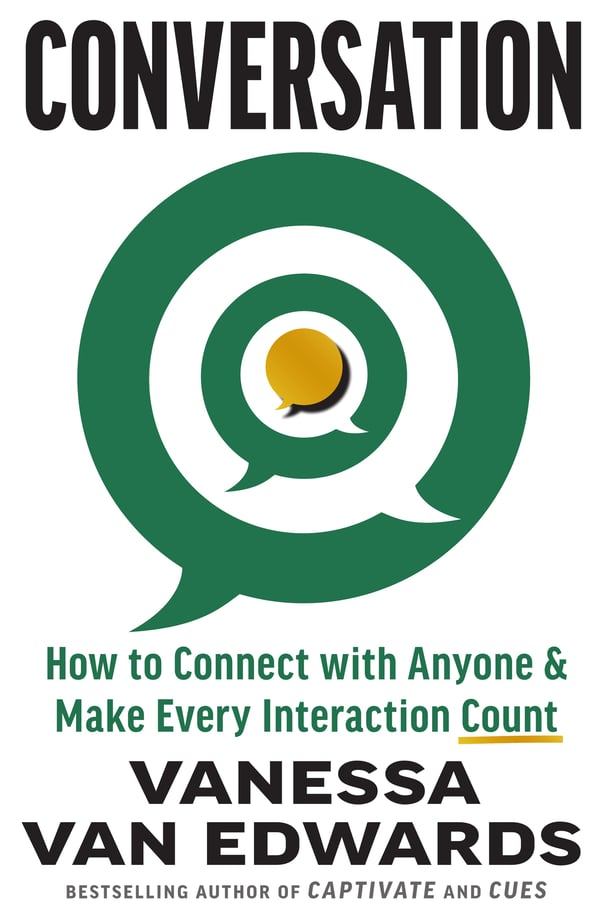
A new book by Vanessa Van Edwards
Every conversation is an opportunity.
If conversations have gotten harder, more awkward or less satisfying, you’re not imagining it. We’re simply out of practice. It’s time to find the joy in talking to each other again.
Talk About the Meaning Before the Math
Money conversations go better when the numbers come second. Before anyone opens a spreadsheet, find out what’s behind your partner’s money decisions.
Swap the opener about cutting back for a question that shows you how your partner actually thinks:
“Which of the four money styles sounds most like you? Which one sounds like me?”
“What’s a purchase you’ve never regretted?”
“What’s one thing you wish we spent more on? And one thing you wish we spent less on?”
The individual answers matter less than the pattern behind them. Once you know your partner leads with the Saver style, their caution stops looking like control and starts looking like a need for safety you can work with!
Action Step: Bring one question from the list into your next unhurried moment together, and answer it yourself first. Going first turns it into an exchange and makes it easier for your partner to be honest. (Car rides work beautifully for this: side by side, no eye contact required.)
Make Understanding the Goal
The goal of a money conversation is understanding, not agreement.
You and your partner may never perfectly match on spending and saving, and that’s completely okay! Feeling understood by your partner can protect the relationship even when your instincts about money never fully line up.
So when your partner tells you how they think about money, don’t rush to correct them or sell them on your way. Get curious and ask follow-up questions. Let them feel seen in a place couples rarely talk about.
When Your Money Styles Clash
Sometimes the styles simply don’t match. One partner sleeps better with a year of expenses in the bank; the other feels every unspent dollar as a trip they didn’t take. The gap is real, and pretending it isn’t there only postpones the fight.
The aim is a money system that respects both styles, built together. A few moves help:
Name the clash out loud. “It sounds like security means saving to you, and freedom to me.” Naming it lowers the temperature…
Translate the resistance. When your partner pushes back on a purchase, translate it: “this threatens my sense of safety” is closer to the truth than “they’re being cheap.”
Build a both/and budget. Carve out a no-questions-asked “freedom” amount for the spender and a protected savings rate for the saver. Each style gets honored on purpose!
Some gaps never fully close. A lifelong Saver and a committed Spender may still feel differently about the same big purchase ten years from now, and that’s workable as long as the budget gives both of them room.
Pro Tip Revisit the conversation every quarter, before a fight forces it. Money styles shift with each life stage, and a calm check-in beats a heated one.
Frequently Asked Questions
How do I bring up money with my partner without starting a fight?
Wait for a calm, unhurried moment and lead with curiosity. Ask about your partner’s money style, or open with a values question like “What’s a purchase you’ve never regretted?” before any talk of budgets. Starting with your money styles keeps the conversation from feeling like an attack, and offering your own answer first shows it’s a two-way conversation.
Why do my partner and I keep fighting about money?
Usually because you have different money styles: one of you may experience saving as safety while the other experiences spending as joy, so the same purchase carries opposite meanings. Money fights trace back to that mismatch, which is why naming your styles helps more than another round of budget edits.
What questions should couples ask about money?
Try “Which of the four money styles sounds most like you?”, “What’s a purchase you’ve never regretted?” and “What’s one thing you wish we spent more on, and one thing you wish we spent less on?” These bring out the values behind each person’s financial decisions, so you can understand your partner’s instincts around saving and spending before you judge them.
What if we have completely different views on money?
Different money views are common and rarely a dealbreaker on their own. Aim for mutual understanding: knowing why your partner saves or spends the way they do lets you build money decisions that respect both styles. A both/and budget, with a guilt-free spending amount and a protected savings rate, gives each of you something that honors your style on purpose.
Turn Money Talks Into Connection
When money comes up next, resist the pull toward spreadsheets and scorekeeping. Get curious about your partner’s money style, pick one question from this article, and share your own answer first.
You may never fully match on saving and spending. Understanding each other is the more realistic goal. For more on helping your partner feel understood, start with our guide on how to make someone feel truly seen.