I once did a 10-day “digital detox” on my YouTube channel in which I got the chance to unplug and get off social media and email for 10 days. I’ve been very pleased to see the feedback from some of you who have been inspired by this!
I’ve received many questions about my digital detox, but the one I thought was most important, and the subject of this article, is how you can do a digital detox yourself. How do you know if it’s right for you? And how do you make it work if your job is very tech-focused?
Watch the video below to see how the detox went, then keep reading for the step-by-step version.
First, a quick quiz. How many times a day do Americans say they check their phones?
- A. 40
- B. 80
- C. 186
In one recent survey, the answer was C… Americans say they check their phones about 186 times a day, roughly once every five waking minutes.1
That’s a lot of phone time.
(Be honest: How many of today’s checks did you actually MEAN to make?)
The good news? A digital detox can win a lot of that attention back! The fix the research found is more practical than “put your phone down,” and way less extreme than moving to a cabin.
My Digital Detox
My digital detox was actually set in motion a couple years ago. It started when I decided to do a vow of silence. As a confession, I tend to be an interrupter! I get so scared of an awkward silence that I tend to fill it with my words.
So, for a couple years in a row, I did a vow of silence. I decided the only way to cure my tendency to fill these silences was to be completely silent myself.
However, now that I’m a mom, it made taking a vow of silence a bit unrealistic! So I thought the next best thing was a digital detox. I found that I was filling my own silences with social media and email, and it was something I wanted to kick!
This was the right detox for me, but is it the right one for you? Here’s how you can find out.
What Is a Digital Detox?
A digital detox is a voluntary period of time during which a person reduces or eliminates their use of digital devices, from smartphones and social media apps to email and tablets, to improve mental health, focus, and overall well-being. A detox can run from a full weekend without any screens to cutting one problematic app for a few weeks. The point is to reset your relationship with your devices so they work on your schedule.

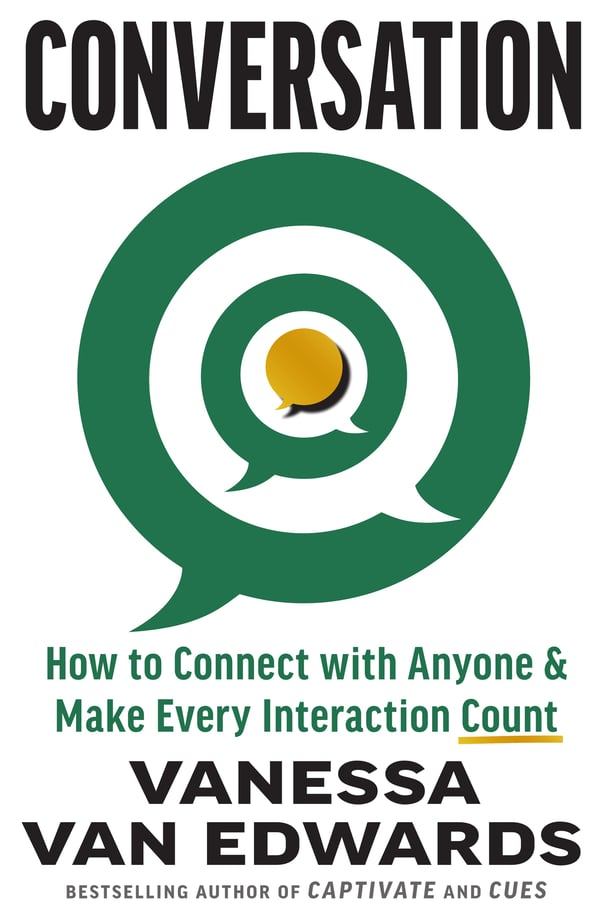
A new book by Vanessa Van Edwards
Every conversation is an opportunity.
If conversations have gotten harder, more awkward or less satisfying, you’re not imagining it. We’re simply out of practice. It’s time to find the joy in talking to each other again.
Do Digital Detoxes Actually Work?
Yes… though maybe not the way you’d expect.
It’s common to assume a detox only “counts” if you go completely off the grid. One experiment tested exactly that. It split more than 600 people into three groups. One gave up their smartphones entirely for a week. Another simply used theirs one hour less each day, and a third carried on as usual.
Both changes paid off in well-being and healthy habits. Four months later, most of the one-hour group’s improvements were stronger and more stable than the quit-entirely group’s.2
So you get to keep your phone! You just use it less, on purpose.
The strongest evidence comes from a 2025 study in PNAS Nexus. Nearly 500 smartphone users agreed to block mobile internet on their phones for two weeks. An app tracked whether the block stayed on.3 Here’s what they found:
- Daily screen time fell from about five hours to under three
- Mental health and life satisfaction improved
- Attention improved by about as much as reversing 10 years of age-related decline
- 91% improved on at least one measure
Only about a quarter of the group kept the block on for at least 10 of the 14 days. And the group as a whole STILL improved! (We love this part.)
A messy detox still counts.
Only about a quarter of participants kept the block on for 10 of the 14 days, and the group still improved.
Can 3 Days Without a Phone Reset Your Brain?
Three days is enough for brain scans to spot a change in how young adults’ reward areas react to phone pictures.
In a brain-scan study, 25 young adults restricted their smartphone use for 72 hours.4 Afterward, the parts of the brain tied to reward and craving reacted differently to pictures of phones. Those shifts lined up with the brain’s dopamine and serotonin systems, the chemistry behind mood and habit.
Three days is ONE long weekend, which makes it a good first test. It’s short enough that you’ll actually finish it!
Benefits of a Digital Detox
Reduced Anxiety and Low Mood
In one study, 295 young adults took a one-week break from Instagram, TikTok, Snapchat, Facebook, and X. Their depressive symptoms fell about 25%, anxiety about 16%, and sleep problems about 15%.5 The people who started out struggling the most improved the most.
Sharper Focus and Attention
Two weeks without mobile internet improved attention by about as much as reversing 10 years of age-related decline.3
Ten YEARS!
What’s going on? Interruptions may be part of the story.
One researcher shadowed information workers through their days and found interrupted work took about 23 minutes, on average, to get back to.6
A notification takes two seconds to glance at. Finding your place again in the report you were writing can take a lot longer.
Better Sleep
People in the same two-week study slept about 20 minutes more per night while their mobile internet was blocked.7 Cutting screens before bed also ends the “just one more scroll” loop that pushes bedtime later… and later… and later.
Interrupted work took about 23 minutes, on average, to get back to.
Stronger Relationships
Where does all that freed-up time go? In the two-week study, people who lost mobile internet spent more time socializing in person, exercising, and outdoors.3
Why does that matter so much? Research links stronger social relationships to a 50% greater likelihood of survival.8 We’ll take a coffee date over a scroll session any day.
More Creativity
Constant input can leave little room for the idle thinking where you tend to get ideas. In one study, people four days into a tech-free wilderness trip solved about 50% more creative word puzzles than people who hadn’t started their trip yet.9
When you stop filling every quiet moment, your brain starts filling it with its own material. The boredom you scroll to escape is where a lot of good ideas come from.

Special Note We are so honored to help you build a healthier relationship with your phone! If you are struggling to find the help you need, please note that all content found on this website is not to be considered professional medical advice. It is always best to consult a doctor or licensed therapist with any questions or concerns in regards to your physical or mental health. For a good resource for therapists, you can check out Mental Health America’s helpful list.
Pick Your Detox Type Before You Start
How do you actually use your phone? The answer changes which detox makes sense.
Three experiments with about 600 people tested a single day off social media and found nothing measurable for well-being. On some measures, people felt less connected to others and less satisfied with their day.10 So if your apps are where you talk to your friends, cutting the apps can cut off the friends too.
Say you delete Instagram for a week… then remember your Sunday soccer group plans every game in its DMs. That’s an app to CAP, and deleting it just means missing the game.
Capping an app works, too. In one study, college students limited Facebook, Instagram, and Snapchat to 10 minutes each per day for three weeks. Their loneliness and depression dropped compared with students who used social media as usual.11
Here’s a quick way to pick:
| How you mostly use it | Your detox | What week one looks like |
|---|---|---|
| Scrolling feeds and videos you don’t remember an hour later | Cut it out | Delete the app for seven days and keep texts and calls |
| Messaging friends, group chats, making plans | Cut it down | Keep the messaging apps and set a 30-minute daily cap on feeds |
| A mix of both | Split it | Delete your single worst feed app and cap the rest at 30 minutes a day |
Try This: Open yesterday’s screen time and sort each app into “talked to someone” or “watched something.” Whichever pile is bigger picks your row.

How to Do a Digital Detox: 7 Research-Backed Steps
Step 1: Run the Screen Time Audit
Don’t try to quit everything at once. Start with the one or two apps that cause the most trouble.
So what fills your empty time? What app do you reach for without thinking?
Often it’s one social app you open out of boredom. (Our pick for a first target? Whatever you open while waiting for coffee.)
How to run your audit:
- Check your phone’s built-in screen time tracker (Settings → Screen Time on iPhone, Digital Wellbeing on Android)
- Look at which apps consume the most time and which you open most frequently
- Identify the one or two apps where you spend the most mindless time, the kind that doesn’t leave you feeling better afterward
- Those are your detox targets
Here’s what a finished audit might look like:
| App | Time last week | How you felt after |
|---|---|---|
| 9 h 40 m | Worse, almost every time | |
| A news app | 4 h 5 m | Jittery; opened it in the elevator |
| Maps | 1 h 10 m | Fine, needed it |
Instagram and the news app are the targets. Maps stays!
Expect some apps to be stickier than others. In the week-off study, about two in three people kept opening Instagram, and about half kept opening Snapchat.5 Naming the specific app beats a vague “use my phone less” goal.
Action Step: Open your screen time report right now. Write down your top three time-consuming apps and how many hours you spent on each last week.
Step 2: Use the Habit Swap Strategy
A common reason detoxes fail is that people try to cut something out without replacing it. It’s like cutting out junk food but not stocking your kitchen with anything else. You’ll be raiding the vending machine by 3 PM!
Why does willpower struggle here? The reach for your phone is usually cued by a situation: the elevator, the couch, the first minute after your alarm goes off.
You can choose a new response to the same cue. The Power of Habit calls this the Golden Rule of Habit Change: keep the old cue and the old reward, and insert a new routine.
Here’s how it works in practice:
- Identify your trigger. When do you reach for your phone? Common triggers include boredom, waiting in line, stress, the first moment after waking up, and sitting on the couch after work.
- Name the reward you’re actually seeking. Entertainment? Connection? Distraction from discomfort? Relaxation?
- Choose a replacement behavior that delivers a similar reward:
- Boredom → Read two pages of a book, do a quick stretch, text a friend a real question
- Stress → Three deep breaths, a short walk, two minutes of journaling
- Connection → Call someone instead of scrolling past their posts
- Morning habit → Put a book or journal on your nightstand where your phone usually sits
Pro Tip Start tiny. Make the replacement so small it requires zero willpower. Instead of “I’ll read for an hour instead of scrolling,” try “I’ll read one page.” (Honestly, one page is our favorite starting line.) Research from University College London found a new habit typically takes about 66 days to feel automatic, and that missing a single day doesn’t derail your progress.12
Step 3: Engineer Your Phone Against Itself
Your phone is designed by teams of engineers to be as engaging as possible. Rude!
But we can fight back using our phones’ own settings.
The highest-impact changes:
- Turn off all non-essential notifications. Keep calls and texts from real people. Turn off push notifications for social media, news, shopping, and games. Every buzz is an invitation to leave whatever you were doing.
- Switch to grayscale mode. When college students switched their phones to grayscale for just over a week, their daily screen time dropped by about 38 minutes, mostly from social media and browsing.13 On iPhone: Settings → Accessibility → Display & Text Size → Color Filters → Grayscale. On many Android phones: Settings → Accessibility → Color Correction → Grayscale (menu names vary by brand).
- Delete your worst apps from your phone. Access them only through a web browser on your laptop. The extra friction of opening a browser and typing the URL kills the impulse to scroll mindlessly.
- Apply the First/Last Hour Rule. No phone for the first hour after waking and the last hour before bed. This one change helps protect your sleep and reclaims your mornings from the notification treadmill.
- Create Focus profiles. Set up Work, Sleep, and Personal modes that automatically silence different apps at different times of day.
Action Step: Right now, go into your notification settings and turn off push notifications for every social media app. Keep them accessible—just stop letting them interrupt you.

Step 4: Use the Commitment Broadcast
If you’re an active social media user, your friends will notice when you disappear. You can use that… carefully.
Announcing a goal can backfire. In a set of experiments, other people took notice of someone’s identity goal (like becoming a lawyer). Afterward, that person worked on it less, as if the announcement had already handed them some of the credit.14 A public “I’m doing a digital detox!” post can feel like progress before you’ve done a thing.
So skip the big announcement and build your broadcast around a check-in date. The point is having someone who’ll ask what you actually DID.
How to set up your check-in:
- Tell one or two close friends or family members directly and ask them to check in on a specific day
- Give them the details: which apps you’re leaving, for how long, and what you’re doing with the time
- Set a specific end date (“I’m off Instagram for two weeks starting Monday”) rather than an open-ended “I’m taking a break”
The specificity matters. “I’m doing a digital detox” is vague and easy to abandon. Here’s what the text to your check-in partner can look like:
“I’m off TikTok and Instagram until the 14th. I’m swapping the scrolling for reading and evening walks. Text me Friday and ask what I did instead!”
That gives your brain a clear plan and gives your partner something concrete to ask about.
Step 5: Commit to at Least One Week
How long should a digital detox last? Longer than ONE day!
A single day off doesn’t do much. One day at the gym just makes you sore. The payoff comes when you keep showing up.
A practical timeline:
- 3 days: In a brain-scan study, young adults’ reward areas reacted differently to phone pictures. A good weekend trial run.4
- 1 week: In one study, symptoms of depression, anxiety, and insomnia eased.5
- 2 weeks: In another, attention sharpened and mental health improved.3
- 66 days: The typical time for a new habit (like not checking your phone first thing in the morning) to feel automatic.12
Does two weeks feel impossible? We’d start with a weekend. Most people in the two-week study didn’t manage the full block, and the group still came out ahead.
One day at the gym just makes you sore. The payoff comes when you keep showing up.
Step 6: Make It Work Around Your Job
If your job requires email, Slack, or social media management, aim for filtered access during work hours. You stay reachable, and your phone stops interrupting your hardest work. Here’s how:
- Block “Deep Work” time on your shared calendar. Schedule two-hour blocks in the morning where you silence notifications and focus on your highest-priority task. Frame it to colleagues as a productivity strategy.
- Batch your communication. Check email and messages at two or three scheduled times per day (for example, 9 AM, 12 PM, and 4 PM) instead of reacting to every ping in real time.
- Establish an urgency protocol. Tell your team how to reach you when something really can’t wait. You can paste this into Slack: “Heads up: I’m trying focused mornings. I’ll check messages at 9, 12, and 4. If something truly can’t wait, call my cell.”
- Put your phone in a drawer. Out of reach means you can’t pick it up on autopilot between tasks.
- Start your detox on vacation or a long weekend. Use time off to build the habit of checking your phone less, then carry those boundaries back into your workweek.
Action Step: Block two hours of “Focus Time” on your calendar tomorrow morning. Put your phone in a drawer during that block. Notice what happens to your productivity!
Step 7: Plan for the Rebound
What happens when the detox ends and you reinstall your apps?
Without a reentry plan, it’s easy to slide back to your old habits within days. Here’s how we’d prevent that:
- Reinstall apps one at a time. Add one back per week and monitor whether your screen time creeps up.
- Set daily time limits before you reinstall. Most phones let you set app-specific limits. Ten minutes each on three social apps, 30 minutes total, cut loneliness and depression for college students over three weeks.11
- Keep your notification settings. Push notifications off, grayscale mode, and Focus profiles should stay permanent.
- Schedule regular micro-detoxes. One screen-free evening per week or one phone-free weekend per month helps you keep the benefits without another full reset.
- Watch where the time goes. In the week-off social media study, people cut their social media use by hours a week, yet their total screen time actually crept up slightly.5 So where did the minutes go? Somewhere else on the phone. During the detox and the first week back, jot one line each night about what you used in place of the app you cut. A line like “Tuesday: no Instagram, 40 minutes of YouTube Shorts” tells you your next target.
When a Digital Detox Might Not Work
Can a detox backfire? Sometimes… and knowing when makes you more likely to succeed.
The one-day experiments from earlier are a warning. A single day off social media didn’t lift well-being, and on some measures people felt less connected. Even in the week-off study, where depression and anxiety symptoms eased, loneliness didn’t get better.5
If you mostly scroll without interacting, cutting the app costs you little. If you mostly message friends, join communities, or create content, quitting cold turkey may cost you real contact.
Feeling bored in the first few days? That’s when the urge to reach for your phone is strongest. It’s why the replacement from Step 2 matters.
Our advice? Target your most problematic passive-consumption apps, and keep the digital connections you actually value.

What to Do During a Digital Detox
The freed-up time is the whole point! Remember where the two-week group’s time went? In-person socializing, exercise, and the outdoors.
We think that’s a pretty good menu. Here are specific activities to fill the gap:
- Move your body. A walk, a workout, stretching, or yoga. It’s one of the easiest ways to fill the 10 minutes you’d have spent scrolling.
- Have a real conversation. Call a friend. Have dinner without phones on the table.
- Get outside. The creativity jump in the wilderness study happened outdoors, and outside is the easiest place to leave your phone in your pocket.
- Pick up a hobby that uses your hands. Cooking, drawing, gardening, playing an instrument.
- Read a physical book. There’s zero risk of “just checking one notification.”
- Journal or brainstorm. Without constant input, your brain starts generating its own ideas. Keep a notebook nearby to capture them.
The boredom you scroll to escape is where a lot of good ideas come from.
Frequently Asked Questions
How long should a digital detox last?
What happens when you do a digital detox?
The first few days may feel restless or boring.
Brain scans after three days picked up changes in how young adults’ reward areas react to phone pictures.4 After a week off social media, young adults in one study saw depressive symptoms drop about 25% and anxiety about 16%.5
After two weeks without mobile internet, attention improved by about as much as reversing 10 years of age-related decline.3
Is a social media detox worth it?
For a lot of people, yes. A one-week social media break eased symptoms of depression, anxiety, and insomnia, with the biggest gains for people who started out struggling the most.5
If you mostly use social media to talk with friends, though, a full break can cut into that contact. Cutting your most passive apps while keeping the ones you use to talk to people is a safer bet than quitting everything.
Do digital detoxes actually work?
What is the 72-hour brain reset?
It comes from a brain-scan study in which young adults restricted their smartphone use for 72 hours.4 Afterward, the brain areas tied to reward and craving responded differently to pictures of phones, in patterns linked to dopamine and serotonin.
What are the negatives of digital detox?
The first few days may bring some boredom, restlessness, or FOMO.
A full break can also cost you some connection. In three experiments, a day off social media didn’t improve well-being, and on some measures people felt less connected to others.10 The solution is to target your passive-scrolling apps and keep the ones you use to talk to people.
How many days does it take to rewire your brain from phone use?
Brain scans show measurable changes after just three days.4 In one study, depression, anxiety, and sleep symptoms eased after about a week.5 In another, attention improved after two weeks.3
A new habit, like not checking your phone first thing in the morning, typically takes about 66 days to feel automatic. The range is wide, and missing a day doesn’t reset your progress.12
Digital Detox Takeaway
The device is fine. The way most of us use it is the part worth changing. Here’s your action plan:
- Audit your screen time today. Open your phone’s screen time report and identify your top two time-draining apps.
- Pick your detox type. Cut out the apps you mostly scroll, and cap the ones you use to talk to people.
- Choose a replacement behavior for your biggest scrolling trigger (boredom, stress, morning routine).
- Turn off push notifications for every social media app right now. Every alert you silence is one less reason to pick up your phone.
- Try grayscale mode for one week to make your phone less visually appealing.
- Commit to a minimum one-week detox from your most problematic app, and ask one person to check in on you.
- Protect your work focus by blocking Deep Work time on your calendar and putting your phone in a drawer.
- Plan your reentry before you start—set daily time limits and keep your notification changes permanent.
- Watch where the time goes during your first week, so another app doesn’t quietly take the old one’s place.
You don’t need to go off the grid or throw your phone in a river. (Please don’t. Phones are expensive!) Small changes to how you handle your devices can improve your mood, sharpen your focus, and give you back hours of your week. And if your phone keeps sneaking onto the table during conversations, our guide to phubbing covers how to keep it in your pocket.
- Reviews.org Cell Phone Usage Report
- Journal of Experimental Psychology: Applied
- PNAS Nexus
- Computers in Human Behavior
- JAMA Network Open
- Gallup Business Journal
- Georgetown University
- PLOS Medicine
- PLOS ONE
- Journal of Technology in Behavioral Science
- Journal of Social and Clinical Psychology
- European Journal of Social Psychology
- The Social Science Journal
- Psychological Science