In This Article
Here's every habit in my daily routine, with the actual research, from sleep hacks to stress and focus and more.
Every month I share a list of things I’ve been loving. Lately I’ve been experimenting with my routines, the little things I do to feel energized, focused, healthy, and connected. So I thought I’d pull them all together in one place.
Some are very normal. Some are a little weird. And a few have become non-negotiable for me.
Then I did something slightly nosy with my own list. I had every habit on it checked against the scientific research to see what works. Most of it does. A couple turn out to be more about enjoyment than evidence, and I’d rather tell you that than leave them off.
My routine comes first. After that, I’ve kept going with more health hacks worth knowing about.
Important Note: This article covers general health habits and isn’t medical advice. It is always best to consult a doctor or licensed therapist with any questions or concerns in regards to your physical or mental health, especially before starting a supplement, changing anything that affects your blood pressure, or if you’re pregnant, taking medication, or managing a condition. For a good resource for therapists, you can check out Mental Health America’s helpful list.
My Feel-Good Routine
#1: Jaw Micro Moves
OK, this one is weird. I do a few tiny jaw exercises throughout the day because they help with my TMJ.
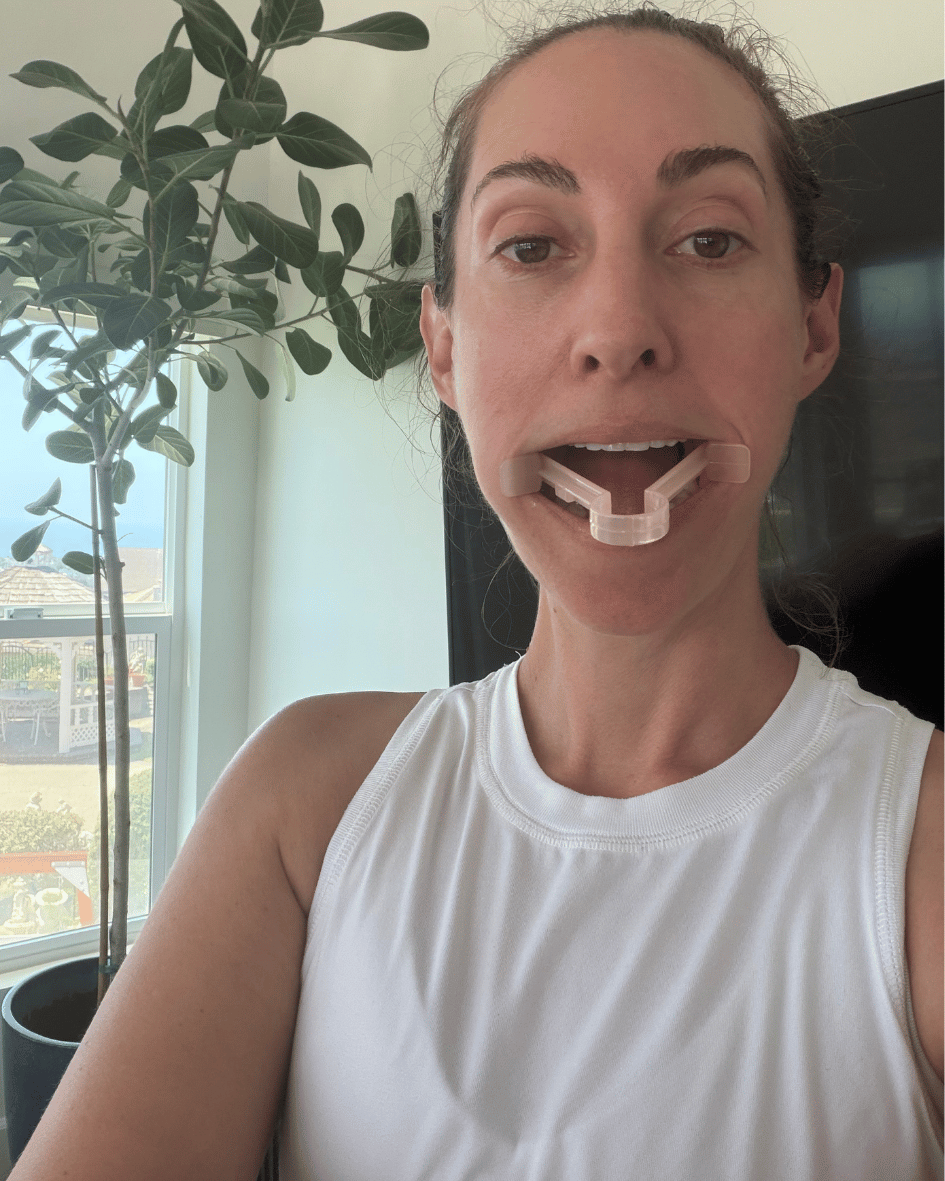
So does it work? Honestly, nobody knows yet. Researchers went looking at jaw exercises and hands-on jaw treatment, and found the studies just aren’t good enough to say either way1. Which isn’t the same as saying it doesn’t work! It means nobody has done the homework properly.
Jaw pain is miserable and worth taking to a professional, and there are real treatment guidelines for it2.
Pro Tip: If your jaw clicks, aches, or locks, a dentist or physical therapist can tell you which exercises suit your particular jaw. That beats guessing with a gadget.
#2: Trampoline Time in the Morning Sun
Every morning, I do about 10 minutes of jumping/lymph movement, ideally outside with the sun on my face. It is one of my favorite ways to tell my brain, OK, we’re awake now.
There are really two things going on here, and one of them is a real winner.
The morning light is the real hero. Your body clock runs mostly on light, and even a gloomy morning outside is far brighter than the sunniest room in your house. When researchers took a group of committed night owls and shifted them earlier using earlier wake times, morning light, fixed meals and moved caffeine, their body clocks moved about two hours earlier over three weeks. Their depression and stress scores fell, and their reaction time and grip strength improved during those morning hours they’d always been useless in3.
The “lymph movement” part is where I have to be honest. There’s no good evidence that bouncing drains your lymphatic system in any meaningful way. Bouncing is just pleasant, low-impact cardio, and that’s a perfectly good reason to do it.
One safety note I’d be wrong to skip. Doctors have reported a small cluster of cracked vertebrae in the mid-back among people who took up regular mini-trampoline workouts, mostly a posture problem4. Keep your spine stacked and don’t go wild.
Action Step: Take your first coffee outside tomorrow morning. Ten minutes, no app, no lightbox, nothing to buy.
#3: Sauna and Dry Brushing
I do about 20 minutes in the sauna, around 200 degrees, roughly five times a week, plus some vigorous dry brushing. And I wear a sauna hat. Do I look ridiculous? Absolutely. Do I care? Not even a little.
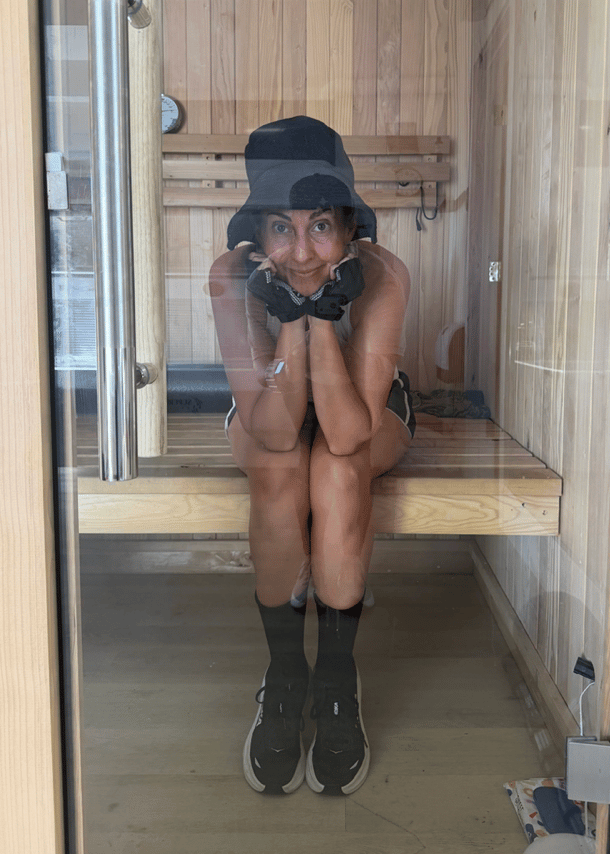
The sauna is one of the strongest things on my whole list. Frequent use tracks with living longer and with fewer heart attacks, and the link gets stronger the more often people go. Four to seven sessions a week showed the strongest one of all56. My five a week lands right in that range.
My one caveat: nobody assigned these people to saunas, so researchers followed them over years and watched what happened. People who can sauna five times a week tend to have time and money for a lot of other healthy things too. What we can say more firmly is that regular heat lowers blood pressure, and that came from studies where researchers actually assigned people to do it7.
The dry brushing is a different story. Go looking for studies on dry brushing and lymph drainage and you’ll come up empty. It’s exfoliation, it feels lovely, and that’s the whole story.
Pro Tip: No sauna nearby? No problem. A hot bath gets you a similar amount of heat, and that’s the version almost anyone can do tonight.
#4: Laughing With Friends
Deep friendship is one of the best things you can do for your life. So I make time for my people. We laugh. We talk about ridiculous things.
This is the one people optimizing everything else tend to skip entirely, and the evidence behind it is enormous.
Loneliness and social isolation are linked to dying earlier, across evidence spanning 90 separate long-term studies89. The World Health Organization now runs a commission on it, and its 2025 report links an estimated 871,000 deaths a year to loneliness10. Poor connection also tracks with higher rates of heart disease and stroke11.
All of this comes from watching people over years. Nobody ran an experiment, and being unwell isolates people too, so the arrow points both ways. Even allowing for all of that, the size of the link holds up against anything else in this article.
Action Step: A standing Thursday call, a monthly dinner, a Sunday run with someone. Recurring beats spontaneous nearly every time, because spontaneous rarely survives a busy month.
#5: Mouth Tape and a Cooling Mattress
Mouth tape felt VERY weird for the first few nights but now I don’t want to sleep without it. I’ve also been using Eight Sleep, and when I actually stick to my whole sleep routine, my sleep scores can be ridiculously good!
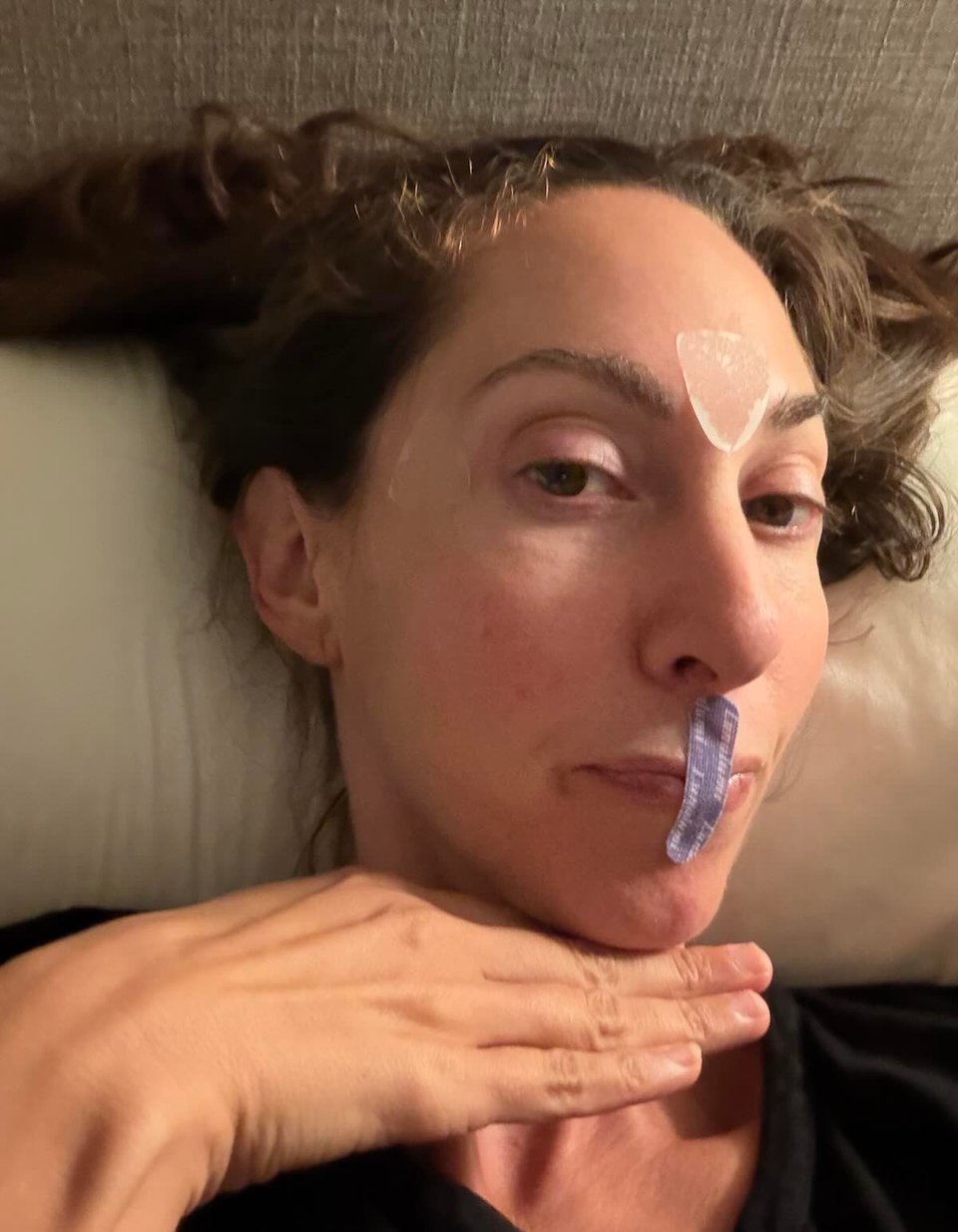
Mouth tape genuinely splits people. Someone gathered up ten studies on it and the results were all over the place. Two found people’s breathing got measurably better overnight. The rest found nothing at all12. So it may well work for you the way it works for me, and it may do nothing at all. People with sleep apnea or breathing issues should NOT do mouth tape. Talk to your doc.
The cooling mattress is a similar story. Bedroom temperature matters, and sleep came out most efficient when the room sat between 68 and 77°F (20 to 25°C)13. But when researchers looked specifically at cooling bedding, they found it does cool you down without actually improving your sleep14.
Pro Tip: Before spending four figures on a cooling cover, try cooling the whole room. A window unit or a decent fan buys you the same variable.
#6: Daily Creatine and Greens Gummies
I take creatine every day, and I have become weirdly obsessed with gummies, especially ones that make getting greens feel more like eating candy than eating vegetables.
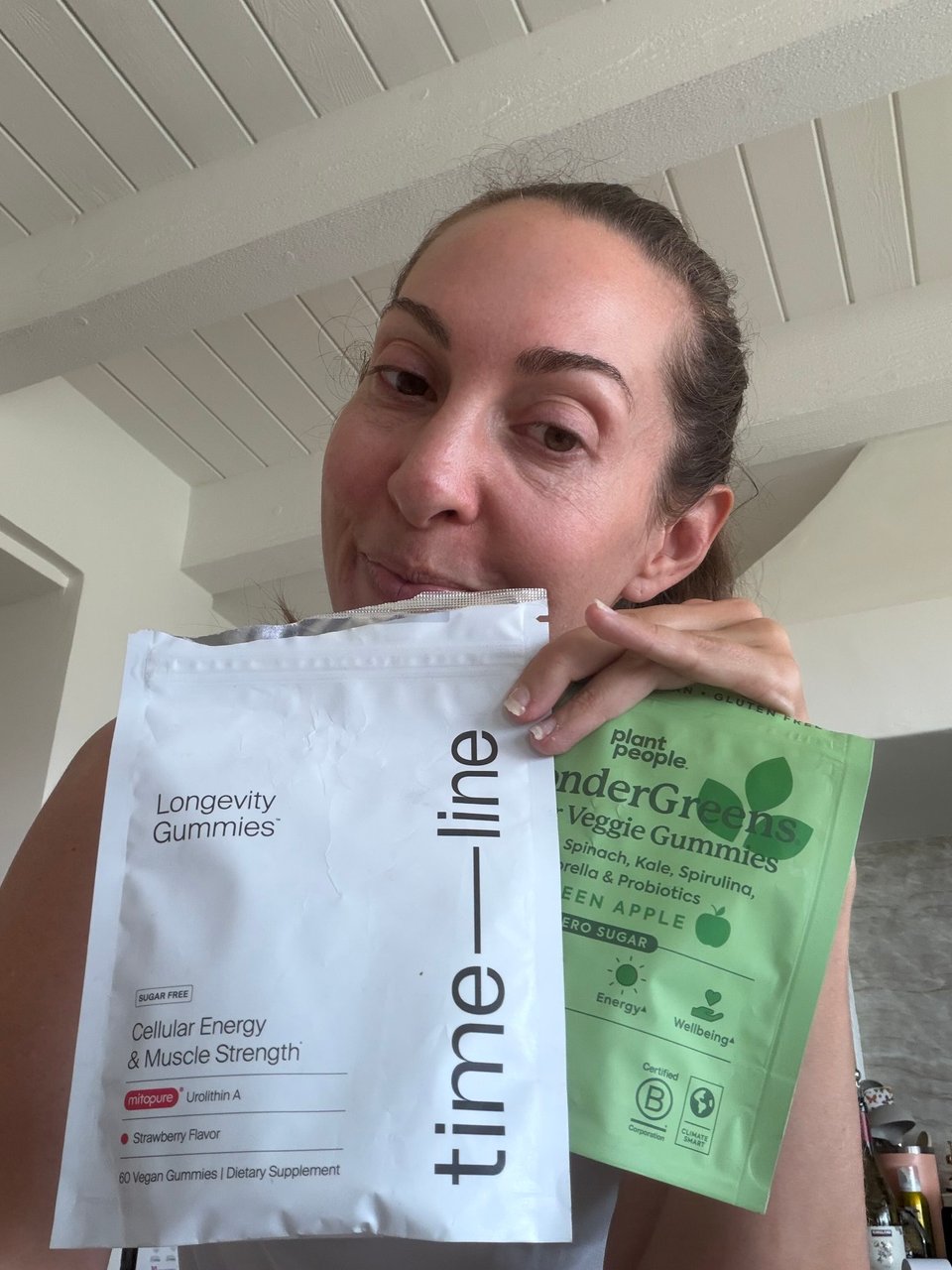
Creatine is the single best-supported supplement on this list. Take it while you’re lifting weights and you’ll build a bit more muscle than lifting alone gets you, on the order of a kilogram over a few months15. The studies that actually scanned people’s muscles found the effect small, and a little smaller after middle age16. Doses in the research run from about 5 grams a day upward.
The greens gummies are more of a gap-filler. Powdered fruit and veg really does push up the vitamin C, A and E in your blood, along with the plant pigments that come with them17. So they’re doing something real. They just aren’t a swap for actual vegetables, and the fiber you’d get from the real thing is one of the most underrated things in this whole article.
Pro Tip: Buy plain creatine monohydrate, because the fancier forms cost more and have thinner evidence behind them. As with any supplement, check with your doctor first if you have kidney problems, are pregnant, or take regular medication.
#7: A Preventative Skincare Routine
I’m big on preventative routines… the boring little things you do consistently because future-you will thank you.
And the evidence really does back the boring-and-consistent approach.
People who used sunscreen daily showed no detectable increase in skin aging over four and a half years, and 24% less aging than the group who only bothered when they felt like it1819. That was a proper study, measured on the exact thing those very expensive serums get sold against!
Prescription retinoids have proper evidence behind them too20. Most of the rest of the shelf? Nothing close.
Action Step: Park the sunscreen next to your toothbrush. That’s the whole trick, because the failure point here is almost always remembering!
#8: Movement-Based Weightlifting
I lift weights a few times a week, but I’m not particularly interested in doing the most conventional-looking exercises. For me, strength training is about feeling strong, capable, and energized.
If you find the gym boring, you don’t need to live there.
Muscle-strengthening work is linked to roughly 10 to 20% lower risk of dying, and of heart disease and cancer. The benefit peaks at about 30 to 60 minutes a week, and past that hour the research doesn’t know whether you’re gaining anything more2122.
And my instinct about wanting to feel capable turns out to have something behind it. How hard you can squeeze turns out to predict how long people live, across research covering more than three million of them23.
Try This: Two thirty-minute sessions a week is a real training week. It doesn’t have to be four.
#9: Cuddles With My Kiddos
I try to start and end my day with a lot of hugs and cuddles with my girls. Touch and connection are powerful.

This is the same connection evidence from #4, and it’s the version that doesn’t need scheduling.
Worth knowing that the research puts real weight on both halves of this: being objectively cut off and subjectively feeling lonely each track with dying earlier, and the studies disagree about which one weighs more89. A packed calendar doesn’t cancel out feeling unseen in it.
Try This: Bookend your day. At least one hug on the way out, one on the way back in. Ideally unlimited hugs if you can swing it.
#10: Comprehensive Blood Testing
I’m a big believer in having data instead of guessing. I like being able to see the numbers and then have a conversation with my doctor about what they mean for me.
That last part is the bit that matters most. The numbers are a conversation starter with my doctor, never a diagnosis on their own.
Two numbers are genuinely worth asking for. One is called ApoB, and it counts how many of the particles that clog your arteries are actually floating around. It predicts risk at least as well as the usual cholesterol number2425. The other is Lp(a), which is set almost entirely by your genes. Measure it once and you’re done for life26.
Pro Tip: If you only ask for two extras at your next blood draw, make them ApoB and a one-time Lp(a).
#11: Makeup That Plays Nicely With Skin
When I’m filming, I’m wearing makeup for hours under hot lights. So my rule is simple: If it’s going on my face all day, I want products my skin actually likes.
There’s no meaningful research comparing specific makeup brands, and I’m not going to invent any.
What does have evidence is the mineral sunscreen in my staples, which is really just #7 doing double duty. If your makeup includes SPF, you’ve got a genuine health habit riding along with a cosmetic one.
Try This: Check whether your daily moisturizer or foundation already includes SPF 30 or higher. If it does, you’ve been doing hack #7 without noticing.
#12: Daily Flossing and Clean Toothpaste
I try to floss every day. I’m also pretty serious about staying on top of my dental health.
Cleaning between your teeth does help your gums. What surprised me is that those tiny cone-shaped brushes that slot into the gaps beat string floss.
The same researchers are refreshingly open that the evidence here is shaky all round, and the difference may be too small to matter in real life. That goes for the brushes as much as the floss27.
On the toothpaste: the ingredient that actually matters is fluoride, and it’s about as well-proven for preventing cavities as anything in dentistry28. So if “clean” toothpaste means fluoride-free, that’s the one swap I’d gently push back on.
Pro Tip: Get a few different sizes! The right brush fills the gap without forcing, and trying to use one size everywhere is exactly why people give up on them.
#13: The Red Light Cap
Hair loss is real…especially after 2 kids and 3 stressful book launches. My husband and I share this red-light hat. I haven’t counted my hair, but I do think it works for thickness!
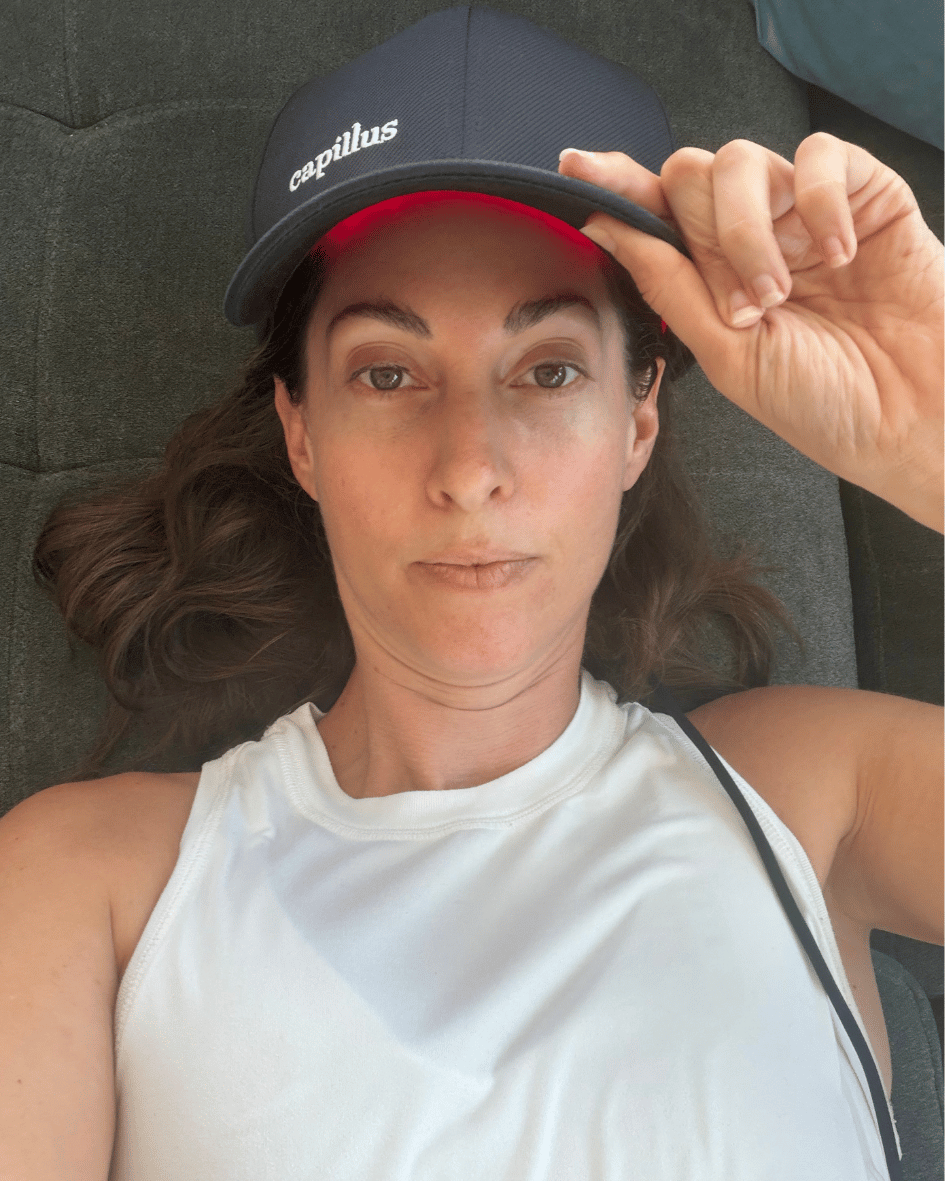
This one surprises everybody. Those glowing caps look like pure theater, and they do something.
Across 38 studies, red light and laser caps thickened hair in the roughly 2,900 people with pattern hair loss, compared with a dummy device. And the results got better past the four-month mark29. An earlier round-up put them in the same bracket as the two big prescription hair-loss drugs, at least in men30.
Results do vary a lot between studies, and it takes four to six months before you’d expect to see anything at all.
Pro Tip: Give it six months before you judge it, and take a photo on day one. Hair changes far too slowly to notice in a mirror.
#14: Dates With My Hubby
My husband and I try to prioritize dates whenever we can, even with two little ones at home. We do a lot of the things on this list together, too.
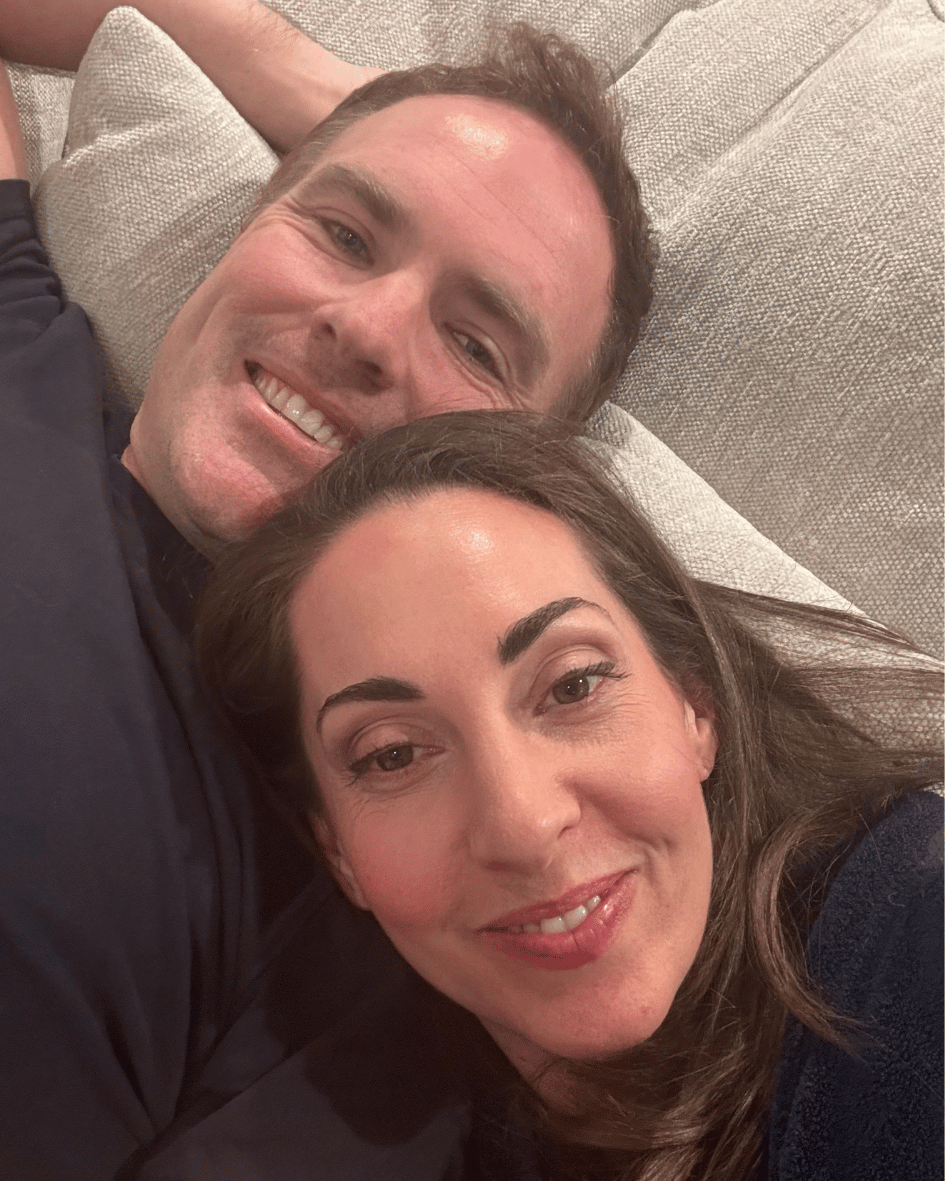
Doing these things together might be the quietly clever part of my whole routine. A habit with someone else attached to it survives a busy month far better than a solo one.
And closing the connection gap is ordinary, learnable behavior: asking a better question, actually following up on the answer, saying the awkward thing out loud. Want to work on the mechanics? Trust-building exercises and the guide to empathy are the practical follow-ons. And if this section landed close to home, start with dealing with loneliness.
Try This: One person, one question you’d normally think was too personal to ask. The awkward question is almost always the one that moves a friendship forward!
More Sleep Hacks Worth Knowing
My routine covers a lot of ground, but it’s not everything. Here are the habits that didn’t make my list but hold up just as well in the research, starting with the one that outranked everything else.
#15: Hold One Wake Time Every Day, Saturday Included
This is the most boring-sounding thing on my list, and it has the best evidence behind it, which feels deeply unfair.
Researchers tracked the sleep of nearly 61,000 people. The steadiest sleepers had a 20 to 48% lower risk of dying during the study than the most erratic ones!
And for all of us chasing eight hours, the sting is that consistency predicted the outcome better than how many hours anyone slept31.
So if you’re ever choosing between one more hour of sleep and one more consistent hour? Take consistent. Hold your wake time even after a rough night, and let bedtime arrange itself backward from there.
Action Step: One alarm, all seven days, Saturday included. That’s the whole setup.
#16: Take a Hot Bath 90 Minutes Before Bed
A hot bath before bed should wake you up, right? Nope. It does the opposite, and the reason for it is lovely.
Soaking pulls blood toward your skin. Then you climb out, and your core temperature drops faster than it would have.
That drop is what tells your body it’s time to sleep. People fall asleep faster after a pre-bed soak32.
But timing carries the whole effect here! You want 60 to 90 minutes of cooling-off time first, which means that hot shower you take on your way under the covers is actually working against you.
Try This: Run the bath while you’re finishing dinner, then get out with about an hour and a half still on the clock. Easy win.
#17: Keep the Afternoon Coffee Small
You’ve heard the whole “no caffeine after 2 p.m.” thing. Turns out the size of the cup matters more than the clock.
In one small study, 100 mg of caffeine (roughly one modest coffee) left sleep alone even four hours before bed. But 400 mg? That wrecked sleep taken any time within twelve hours, and got worse the closer to bedtime it landed33.
People couldn’t feel it happening. Their measured sleep quality dropped while they went on rating their nights as fine.
So “I sleep fine on caffeine” isn’t evidence that you do! One caveat from me: this was 23 young men who already drank coffee regularly, so treat those milligrams as a starting point and find your own line.
Try This: Add up your actual daily milligrams for three days. Most drip coffee runs 95 to 165 mg a cup, and I promise you’ll be surprised how close to 400 you land by mid-afternoon.
#18: Skip the Nightcap
Yes, a drink really does help you fall asleep. And then it takes the money back, with interest, at about 3 a.m.
About two drinks is enough to start cutting into your REM sleep, and more alcohol cuts further34. It takes something closer to five before alcohol actually gets you to sleep faster, and that head start is paid for with even less REM later.
What about the rest of the night? Nobody has pinned that down. The research couldn’t pin down how alcohol affects your total sleep time or how often you surface, so anyone telling you precisely what a nightcap costs you is going well beyond the evidence.
I know. This is the entry everybody would rather scroll past, which is roughly why I put it this high.
Action Step: Try moving your last drink three hours earlier tonight, then notice how the back half of your night goes.
Training and Recovery
#19: Keep the Cold Plunge Away From Your Lifting
Dropping into cold water right after lifting blunts the muscle-building machinery your session just switched on. Both studies that ran this for months found less muscle growth in the group that got in the cold water.
Strength held up in one study and didn’t in the other, so the cost is real even if nobody can tell you exactly how big it is3536.
Nothing wrong with cold plunges! It’s the timing that’s quietly undoing your session, and I almost never see it mentioned.
Action Step: Move your plunge to a non-lifting day. Neither study tested waiting a few hours first, so nobody can tell you what a safe gap looks like. Plunging to recover before a competition? That’s the one case where I think the trade makes sense.
#20: Get Your VO2 Max Properly Measured
How much oxygen can you actually use under load? It’s one of the most consistent predictors of how long you’ll live.
Across the research, the fittest group has roughly half the risk of dying over a study period compared with the least fit3738.
Better still, the association is steepest at the bottom. The gap between unfit and moderately fit is far bigger than the gap between good and excellent, so the people with the most to gain are the ones who’ve done the least!
Action Step: Book a real VO2 max test, because your watch’s estimate drifts badly. One number now, one in six months, and you’ll know whether your training is doing anything.
#21: Test Your Grip, Floor Rise, and One-Leg Stand
Three tests, about a minute each, and you can do every one of them right now. Ready? Squeeze something hard, get off the floor without using your hands, and see how long you can balance on one leg.
Each one predicts something real. My one caveat: nearly all the evidence comes from adults past middle age.
How hard you can squeeze predicts how long people live, across research covering more than three million of them. In adults aged 51 to 80, being able to get down to the floor and back up without using your hands predicted longer survival. And past 65, a shorter one-leg stand predicted losing independence sooner233940.
No lab, no wearable, no subscription needed. And whichever of the three goes worst? That’s the one telling you what to train.
Action Step: All three take about three minutes together. And where you start counts for far less than which way the numbers move when you retest.
#22: Add Sets Until the Returns Stop Being Worth It
More sets per muscle each week really does mean more growth, and that holds up across the research. But each extra set buys you less than the one before it4142.
So at some point you’re paying real time for a shrinking return, and I’d rather you spent it elsewhere.
Around ten hard sets a week per muscle is a sensible place to land. The research doesn’t name it as a ceiling, mind you. It’s simply where most of us get the bulk of the benefit for the time we put in, and strength plateaus even earlier than size does.
Pro Tip: Only count the sets you took close to failure. Three easy sets and one hard one is one set, and treating it as four is exactly why so many people train constantly and change slowly.
#23: Make Your Intervals Long Enough to Count
If you’re chasing that oxygen number from #20, intervals do edge out steady cardio. But the edge is small, and it only shows up when the intervals are long4344.
So what does that look like? Two minutes and up per interval, with at least fifteen minutes of hard work in the session. That’s where intervals actually beat a steady effort.
Those quick, brutal four-minute sessions? They’ll still raise your fitness. They just don’t beat steady cardio at it, which is more or less the opposite of how they get sold to you.
Action Step: Try four rounds of four minutes hard with three easy in between. Twice a week is plenty alongside everything else you’re doing.
#24: Try Wall Sits for Your Blood Pressure
Nobody sees this one coming. Line up all the main exercise types, rank them for lowering resting blood pressure, and the humble wall sit comes out on top. We’re talking roughly an 8-point drop in the top number. That’s about double what cardio or weight training managed, with the humble wall sit the best-performing hold of the lot45.
One caveat on how that was worked out. Researchers lined up results from lots of separate studies and ranked them, so nobody literally raced wall sits against a treadmill. And no study tells you exactly how many holds to do. Most protocols in this area run a handful of two-minute holds, a few times a week.
Pro Tip: Anyone with uncontrolled high blood pressure or a cardiac history should check with a doctor first, because your blood pressure spikes while you’re holding the position.
#25: Load Your Bones Heavy Enough to Matter
Bone responds to how much load you put through it, and heavier loading builds more of it4647.
In women past menopause, where nearly all the good research has been done, lifting heavy three times a week built more bone in the spine and hip. And heavier work beat lighter work every time.
Adding impact like hops on top of the lifting looks like the strongest combination of all. And if you love your machines? Just load them heavily enough to count.
Action Step: Pick a weight you could only lift six to eight times. Can you do twenty? Then it’s too light for this particular purpose. And if you’ve already been diagnosed with osteoporosis, please get medical guidance before adding heavy load or impact.
#26: Climb One Flight of Stairs Every Hour
Long stretches of sitting are linked to worse health, and breaking them up may help your metabolic markers. I’ll be honest though: researchers rate that evidence as weak so far, so file this one as a cheap habit worth having and not a proven fix4849.
In one small study, breaking up nine hours of sitting with a 15 to 30 second dash up the stairs once an hour dropped people’s post-meal insulin by about 16%, at least in those carrying extra weight. Blood sugar itself didn’t budge, and in lean young men nothing changed at all50.
It is at least a changeable habit. Workplace programs cut daily sitting by about 22 minutes, and by over an hour when a height-adjustable desk came with them48.
Try This: Set an hourly alert on your phone. Everybody nods along at this one and then forgets to do it, me included.
#27: Pair Your Protein With Actual Training
These two only work as a pair! In older adults, extra protein with no lifting attached did nothing at all for muscle or grip strength. The same protein alongside training? That worked51.
Which means a protein shake with no training attached to it is a fairly expensive way to buy calories. How much? Gains from whey seem to level off somewhere around 30 to 35 grams a day, though the researchers themselves call that figure exploratory52.
Action Step: Anchor one solid protein meal to your training days and let the daily total take care of itself. There’s no magic window to stress about.
How and When You Eat
#28: Eat the Vegetables Before the Carbs
Does the order you eat things off your plate actually matter? Way more than you’d think.
Eating your vegetables and protein before you touch the carbs substantially flattens the glucose and insulin rise that follows. Same food, same calories, reverse the order, and you get a completely different curve535455.
It costs you nothing but the order things reach your fork, which makes it comfortably the cheapest hack I’ve got.
Action Step: At your very next meal, finish the salad and the protein before you touch the bread, rice, or potatoes. That’s all I’m asking.
#29: Start Walking Right After Dinner
Walking after a meal lowers the blood sugar rise more than walking before one, and the sooner you get going, the bigger the effect56.
The studies behind this are small and short, so take the timing as the lesson and hold the minutes loosely. A wander around the block while the kettle boils is the whole thing.
Try This: Walk to the end of the street and back after dinner tonight. No equipment, no changing clothes, no excuses.
#30: Track Your Fiber Like You Track Protein
You almost certainly know your protein number. Your fiber number? That one nobody tracks, and the benefits keep climbing well past the point most people assume is plenty5758.
It’s the cheaper of the two wins and the one everyone ignores, largely because fiber has no supplement industry behind it worth speaking of. Funny how that works.
Action Step: Log your fiber for three days alongside the protein you already track. Three days is usually all it takes to see the gap.
#31: Swap Your Salt for the Potassium Kind
This one’s almost too easy. Swapping your regular salt for a potassium-based substitute probably lowers blood pressure by around 5 points on the top number, and slightly reduces cardiovascular deaths5960.
One real caution though, and it’s a big one! Every single study on this deliberately left out people with kidney disease and anyone on medication that makes them hold onto potassium. So if either applies to you, please take this to your doctor before you swap anything.
Action Step: If that caution doesn’t apply to you, add potassium salt to your grocery order this week and shove the old one to the back of the cupboard.
#32: Count What You Actually Drink in a Week
Nobody wants to hear this one. Alcohol raises the risk of at least seven cancers, and that risk climbs steadily with how much you drink. Even light drinking is linked to higher rates of esophageal, bowel, and breast cancer, which is why researchers now say there’s no level that’s demonstrably safe6162.
And that comforting old story about a glass of red being good for your heart? It’s mostly dissolved under better methods.
Does that mean you have to quit? Absolutely not. Plenty of people will read this and reasonably decide the trade is worth it. I’d just rather you make that trade on purpose than by accident.
Try This: Count your actual weekly drinks for two weeks without changing a thing. What you do about it is a totally separate question from just knowing the number.
Stress and Focus
#33: Do Five Minutes of Cyclic Sighing
Two sharp inhales through your nose, then one long, slow exhale out through your mouth. Repeat for five minutes.
That’s it! That’s the whole thing.
Tested head to head against mindfulness meditation for a whole month, five daily minutes of this lifted mood more than meditating did63. Which is a little embarrassing for meditation, honestly, given how much more attention it gets! I think it is the best five minutes in this whole section.
If you want the longer version of this territory, the guides on managing stress at work and box breathing go deeper than a single hack can.
Try This: Do it in the car before you walk into the house tonight. Five minutes, and the transition is really the whole point.
#34: Build a Hard Stop Between Work and Your Evening
Ever close the laptop at six and still be chewing on that email at eleven? Mentally leaving work is a totally different skill from physically stopping, and you can train it.
Not thinking about your job in the evening predicts better mental wellbeing, and programs that teach people to switch off do improve it6465.
So finishing at six and stewing until eleven can leave you worse off than finishing at eight and actually stopping.
For the deeper version, see the guides on workplace stress and recovering from burnout.
Action Step: Pick one physical marker of the boundary and do it daily. Laptop in a drawer, a ten-minute walk, changing your shirt… any of them works, as long as it’s the same one every day.
#35: Close the Book and Write Down What You Remember
Ten popular study techniques got assessed against the evidence. Only two came out rated highly useful across the board: testing yourself, and spacing your practice out over time. Just two!
Highlighting, rereading, and summarizing? All near the bottom6667.
Why is this so hard to actually do? Because digging an answer out of your own head feels harder than rereading, which is exactly why people give it up. Rereading feels smooth, and that smoothness is what fools you about how much has stuck.
Action Step: Before you reread anything, close it and write down everything you can recall. The size of the gap you find is the real lesson.
#36: Exercise Right Before You Study
Want more of it to stick? A bout of cardio right before a study session helps6869.
The evidence for exercising afterward is thinner, and most of it comes from people learning physical skills. So if you only do one, do it beforehand! And if you’re already exercising and studying on the same day anyway, stacking them costs you nothing.
Try This: Put the thing you most need to remember directly after your next workout, while you’re still warm from it. Free upgrade.
Health Hacks Takeaway
Please don’t try to run all of these at once. That’s its own kind of self-sabotage. The order below is roughly the order of return.
- Set one wake time tonight and defend it for two weeks. Everything else in the sleep section gets easier once it’s stable, and two weeks is long enough to feel the difference.
- Test your grip, your floor rise, and your one-leg stand this week. Write the numbers down somewhere you’ll find them in three months.
- Look at when your cold exposure happens relative to your lifting. If they’re close together, separate them, and you get back muscle you were already paying for.
- Buy the two one-time items. Sunscreen by the toothbrush, and potassium salt in the cupboard if you don’t have kidney disease or take a blood pressure drug that raises potassium. Neither asks anything of you again.
- Add a few two-minute wall sits to your week. They slot onto a rest day without interfering with anything else. Clear it with a doctor first if you have a cardiac history or uncontrolled blood pressure.
- Book the recurring social thing before you close this tab. It’s the item most likely to get postponed indefinitely, and the one that takes thirty seconds to lock in.
Two is usually plenty to start with. And once those stop taking any effort at all, the rest of the list will still be right here waiting.
And when you want any of this to survive past the first enthusiastic week? The guide on how to build good habits covers the part where motivation runs out.