Maya has rehearsed the first sentence forty times in her car. In four minutes she walks into her VP’s office to ask for a title change and a raise she’s almost sure the budget can’t cover. Her notes are color-coded down to the highlighter. Her heart rate didn’t get the memo.
Sound familiar?
Chances are you’ve had a Maya moment: asking for more money, telling a teammate their work missed the mark, pushing back on a deadline with someone who outranks you. These are the conversations where the relationship and the outcome are both on the line at the same time, and that’s exactly what makes them feel so heavy.
Handling them well is a skill we can learn! There’s a repeatable way to walk in calm and walk out heard… and it starts long before we open our mouths.

What Is a High-Stakes Conversation?
A high-stakes conversation is any exchange where the outcome matters and emotions are running high: a salary negotiation, a hard piece of feedback, a disagreement with your boss or a tense talk with a partner. The stakes feel high because two things are at risk at once… the result you want and the relationship you need to keep.
The mistake most of us make is treating these talks like a debate to be won. The people who are genuinely good at them treat the conversation like a room they’re responsible for keeping warm.
The 5-Step Method for High-Stakes Conversations
The moves below come from the Conversation Blueprint in Vanessa Van Edwards’s book Conversation (Portfolio/Penguin Random House), where she breaks down real high-stakes exchanges line by line. You can run the same five moves in your next hard talk.
Step 1: Open With Genuine Appreciation
Before you raise the hard thing, lead with a real thank-you.
Being thanked tells someone a real person noticed their effort, and people who feel seen stay willing to keep helping you.
Be specific. “Thanks for your time” is wallpaper. “I really appreciate that you carved out twenty minutes today when I know your week is slammed” tells the other person you actually see them!
Action Step: Write your opening line before the meeting. One specific, true sentence of appreciation, no more. Say it out loud once so it doesn’t come out stiff.
Step 2: Name the Hard Part Out Loud
Once the goodwill is set, don’t tiptoe.
The instinct under pressure is to bury the difficult thing under five minutes of small talk and hope it comes up gently. It rarely does. The cleaner move is to name the difficulty yourself: “I want to talk about something a little awkward, and I’d rather just say it than dance around it.”
Why does this work? Because the other person can feel the tension anyway, and naming it out loud takes the threat out of the air. We stop being someone with a hidden agenda and become someone they can trust to be straight with them.
Tension drops fastest in a hard conversation when you name the hard part out loud yourself.
This is also where you create what Vanessa calls a microclimate of safety: a small pocket of trust where it feels okay to be honest. It matters more than it sounds! Google’s multiyear study of what makes teams work found that a shared sense of safety to speak up was the single biggest driver of high-performing teams.1 You can build that same safety one-on-one, in the first thirty seconds, just by being honest about what the conversation is.
Step 3: Tie Your Ask to a Bigger “Why”
Anchor your request to something you both already care about. Maya doesn’t say, “I want a raise.” She says, “I want to keep owning the client-retention work, and I want to make sure my role reflects that so I can keep building it for the team.”
The request is the same, but the room feels completely different! One sounds like a demand, the other like two people working toward the thing they both want.
Try this: Before the talk, finish this sentence: “We both want ______.” Whatever fills that blank is the “why” you anchor your request to.
Step 4: Say Exactly What You’ll Do
Under pressure, vagueness sounds like we’re hiding something, so get specific about your side of things.
If you’re asking for something, say plainly what you’ll do in return. If you’re delivering hard feedback, say exactly what you’re committing to. “Here’s what I’ll do differently going forward, and here’s the support I’ll need to do it.” Laying your own cards on the table first gives the other person something solid to stand on, and it quietly invites them to do the same.
There’s a vulnerability in being this direct, and that’s the point.
Step 5: Make a Direct, Humble Request for Help
End by asking for exactly what you need, and don’t dress it up.
“I’d really value your help on this” is one of the most generous lines you can offer! It hands the other person a role in the outcome. People support what they feel part of, and a direct request invites them in.
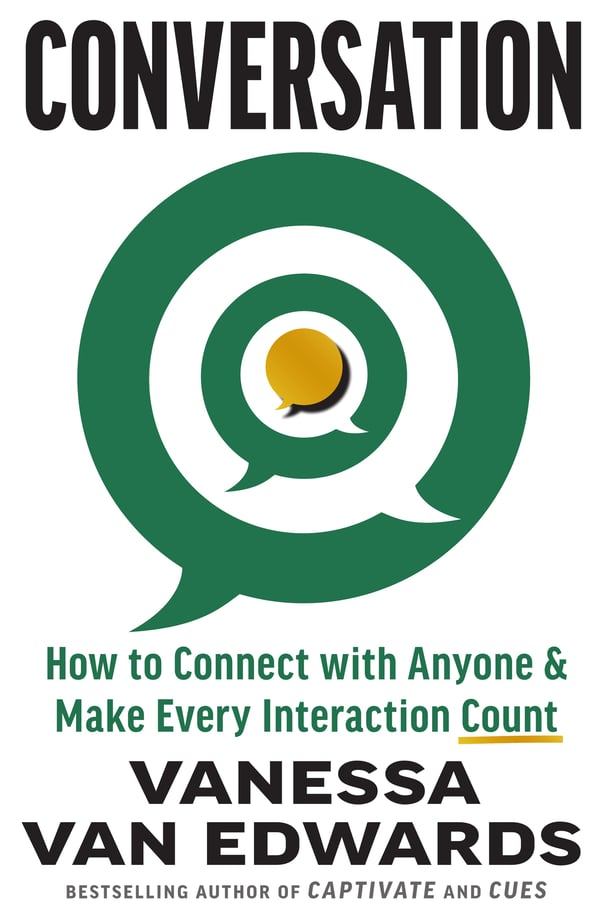
A new book by Vanessa Van Edwards
Every conversation is an opportunity.
If conversations have gotten harder, more awkward or less satisfying, you’re not imagining it. We’re simply out of practice. It’s time to find the joy in talking to each other again.
Lower the Stakes Before You Even Walk In
The best time to handle a high-stakes conversation is often weeks before it happens.
If you can see a big talk coming (a review, a negotiation, a tough decision with someone who matters), you can quietly lower the temperature in advance by building rapport first. One good way to do that with a boss, a client or anyone whose opinion matters is to ask them for advice.
It feels backwards. It’s easy to assume that asking for help makes us look like we don’t have it together. In practice, asking someone for advice on a hard problem flatters their judgement, gives them a stake in how things turn out and puts the two of you on the same side of the problem before the difficult conversation ever starts.
Tie the advice you ask for to how you want to be seen.
Instead of: “Do you have any feedback for me?”
Say: “I really want to be the person this team trusts with the high-pressure clients. What would you want to see from me to get there?”
You get useful guidance, and you plant the exact label you want in their mind before it ever counts!
Pro Tip Pick the one word you want someone to associate with you (dependable, sharp, unflappable) and build your advice question around it. People label you anyway, so you might as well choose the label.
How to Stay Calm When It Counts
Even with the perfect plan, your body may not get the memo. Dry mouth, a shaky first sentence, the sudden urge to fill every silence. Been there?
A few things genuinely help in the moment:
Slow your first sentence down on purpose. A calm opening pace tells your own nervous system that this is survivable, and it tells the other person you’re steady.
Let silences breathe… The pause after you make your ask feels like an hour to you and like two seconds to them. Resist the urge to talk into it.
Watch the other person instead of your script. The more you focus on reading and responding to them, the less room there is for your own panic. (Our guide on listening skills breaks down the cues that show you’re tuned in.)
Action Step: Right before you walk in, take one slow breath where the exhale is longer than the inhale. That single longer exhale nudges your body out of fight-or-flight faster than a pep talk will!
Where These Conversations Show Up Most
The same five moves apply to almost every high-stakes moment you’ll face:
Asking for a raise or promotion. (Walk through the specifics in our guide on how to ask for a raise.)
Talking to your boss, a senior leader or someone whose decision shapes your career. (Here’s how to talk to VIPs without freezing up.)
Giving feedback that might sting, or handling a tense relationship with a difficult person.
Frequently Asked Questions
What is the first thing to say in a high-stakes conversation?
Open with one specific, genuine line of appreciation before you raise the hard topic. Feeling appreciated makes people more willing to keep working with you, and it sets a warmer tone than diving straight into the problem. Skip the generic “thanks for your time” and name something real and specific.
How do you stay calm during a difficult conversation?
Slow down your first sentence on purpose, let silences sit without rushing to fill them and keep your attention on reading the other person. One slow breath with a longer exhale right before you start helps settle the physical symptoms of nerves faster than trying to talk yourself out of them.
What is the biggest mistake people make in high-stakes conversations?
Treating the conversation like a debate to win, when the relationship is on the line too. The second most common mistake is burying the hard topic under small talk and hoping it comes up gently. Naming the difficult thing out loud, early and plainly, actually lowers the tension in the room.
How can I prepare for a high-stakes conversation in advance?
If you can see a big talk coming, build rapport in the weeks before by asking the other person for advice tied to how you want to be seen. Asking someone for advice on a hard problem flatters their judgement and gives them a stake in the outcome, so you walk into the eventual conversation already on better footing.
You Can Handle the Hard Ones
Maya’s four-minute walk comes for all of us eventually. When yours does, you won’t be winging it. You’ll open with appreciation, name the hard part, anchor your ask to something you both want, say plainly what you’ll do and ask for help like someone who knows that’s a strength.
These are the conversations that move careers and deepen relationships. Walk into the next one steady, and watch what happens!