Influence Without Authority
It’s Thursday afternoon. Sales just promised a custom integration to close a six-figure deal, and engineering is two days from shipping the work that unblocks the entire mid-market segment.
Design wants another sprint to refine onboarding, and the CEO sent a Slack message at 11pm with “quick thought” and a screenshot. Five people are waiting on a decision you have no authority to actually enforce!
Sound familiar?
The communication game for product managers starts with an uncomfortable truth: you carry responsibility for product outcomes but cannot tell a single engineer to write a line of code. You can’t make a designer change a screen! You can’t force a sales team to position the product correctly.
Everyone who actually builds the thing reports to someone else!
As Marty Cagan puts it in Inspired, that’s the design of the role working exactly as intended.
PMs who try to act like “mini-CEOs” without the title often get labeled difficult, get frozen out of conversations, and watch decisions get made around them. The paradox is pretty much permanent, so the job is to get good at working inside it.
For product managers, communication isn’t a soft skill alongside the real work. It IS the work!
Influence is the actual product. Cagan calls it earning moral authority: the credibility that comes from deep knowledge of the customer, the data and the market. When you walk into a room having done that work, you don’t need a reporting line. People follow the argument on its merits!
That reframe changes the job description! Alignment conversations, leadership updates, decision memos, customer interviews, standups—these are how a PM without authority actually moves a product forward.
The First Ten Seconds of Any Meeting
Before you present a single slide, the people in the room have made up their minds about whether to trust your recommendation.
That’s just how our brains work!
Studies show people form reliable judgments about competence and trustworthiness in about 100 milliseconds. Longer exposure mostly just makes them MORE confident in the snap judgment they already made.
Wild, right?
Other research on “thin slice” judgments shows brief clips of behavior, even under 30 seconds, predict real interpersonal outcomes about as well as five-minute clips do. Tiny moments carry real weight!
Two things dominate those snap judgments: warmth (do you seem trustworthy?) and competence (do you seem capable?). Warmth is the one people read first, and competence that arrives without it comes off cold. For PMs that ordering is easy to get backwards, because the job rewards command of the problem and the data. The room hears your clarity better once it has a reason to be comfortable with you.
What This Means for Your Next Meeting
Three habits help here:
Open posture before you speak. Closed body language looks defensive even when the words are confident. The Science of People guide to body language covers the specific moves that build credibility.
Lead the first sentence with the recommendation. “We’re recommending we hold the Salesforce integration until Q2, and here’s why” hits completely differently than “So, there’s a lot going on with this Salesforce thing…”
Match the opening to the audience. Engineers want the problem stated precisely. Sales leaders want to know you understand their deal. Executives want both inside the first thirty seconds.
Bad first impressions can be corrected! But it takes real, sustained effort. The first one-on-one with someone often shapes the next twenty, because the initial frame filters how everything later gets read.
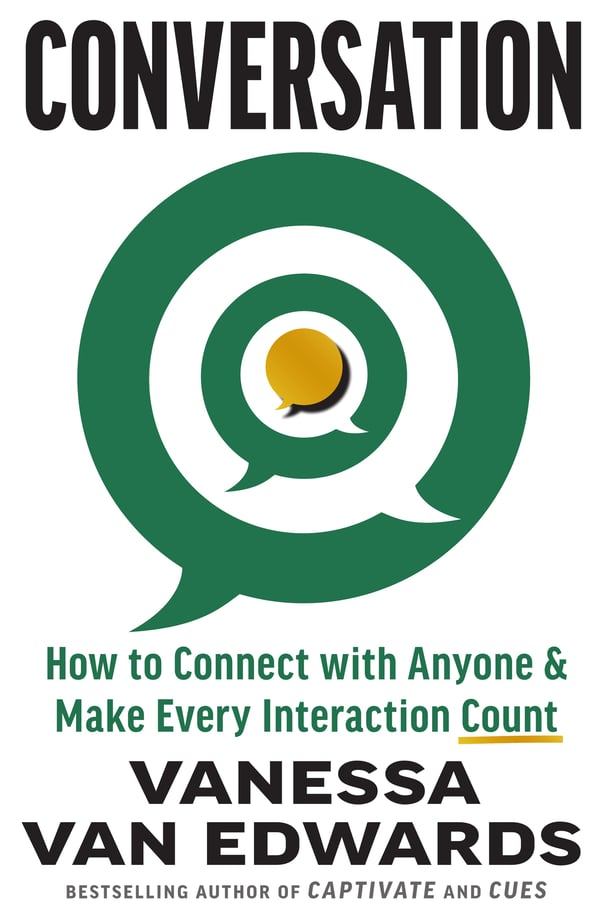
A new book by Vanessa Van Edwards
Every conversation is an opportunity.
If conversations have gotten harder, more awkward or less satisfying, you’re not imagining it. We’re simply out of practice. It’s time to find the joy in talking to each other again.
Map the People Involved Before You Need To
Get clear on who needs to be involved BEFORE things go sideways. No corporate fill-out-this-form process required. It just keeps you from scrambling when the pressure hits!
The RACI matrix is the basic tool. Every person who touches a feature or decision gets one of four roles:
- Responsible: who does the work
- Accountable: who owns the outcome (exactly one person, always)
- Consulted: who must be heard before the decision is made
- Informed: who needs to know after the decision is made
The line between Consulted and Informed is the easy one to get wrong. Treating an Informed person as Consulted creates unnecessary rounds of getting everyone to agree. Treating a Consulted person as merely Informed often creates surprise vetoes, the most expensive feedback there is, because it arrives after the work is done.
A Worked Example
A PM building an in-app notification system might map roles like this:
| Task | Responsible | Accountable | Consulted | Informed |
|---|---|---|---|---|
| Define notification rules | PM | PM | Eng Lead, Legal | Marketing, CS |
| Build the backend | Eng Lead | Engineering VP | PM, QA | Design |
| Design the UI | Designer | Design Lead | PM, CS | Eng Lead |
| Launch decision | PM | CPO | Marketing, Legal | Sales, Support |
Notice Legal as Consulted on notification rules, even though they’ll never build anything. Notification frequency and opt-out mechanics often touch compliance rules, and skipping that consultation doesn’t make Legal go away. It just makes them appear at the worst possible moment!
Three Things That Go Wrong When the Map Is Wrong
Decisions get re-litigated. A senior leader you mapped as Informed who considers themselves Consulted will often relitigate the decision in the next all-hands or a Slack thread. The work stays the same. It just costs more.
You get surprise vetoes from leadership. A VP who wasn’t consulted during the decision window will often block a launch rather than approve something they feel was decided around them.
Engineering quietly resents you. When engineers are Responsible but never Consulted on the shape of the solution, they experience you as handing down requirements. Sprint after sprint, that erodes the trust that makes fast iteration possible.
Action Step: Build the map BEFORE the kickoff, while there’s still time to shape it. Send the RACI as a pre-read with the meeting invite. When everyone sees their role clearly before the first conversation, the meeting shifts from “who’s in charge here?” to “here’s the decision we need to make together.”
Pro Tip If a single Accountable owner can’t be identified for a decision, that’s the first problem to solve, before the feature itself. Ambiguous accountability is behind a lot of cross-functional failures. The map makes the ambiguity visible while there’s still time to fix it.
Saying No Without Burning the Relationship
Saying no is the PM skill we use most and practice least. Every week brings a fresh queue: sales chasing a deal, a founder with a strong opinion, a customer-success rep relaying an urgent complaint.
Our instinct is to say yes to keep the peace. The cost is a roadmap that belongs to whoever pushed hardest last.
A well-structured no actually builds trust, because it turns a personal rejection into a shared trade-off!
Almost every request has some value. The question that actually helps is “What’s the best thing we’re not doing if we build this?”
That reframe changes the conversation from “your idea vs. my judgment” to “this opportunity vs. that opportunity.”
A no with no door is a dead end. A no with a path is a negotiation!
The Four-Part Graceful No
1. Acknowledge the real problem behind the ask. There’s a real problem hiding inside the request. Name it. “What I’m hearing is that your team loses deals when prospects can’t export to CSV. That’s a real friction point.” This shows the person you heard the why underneath the what.
2. Name the trade-off, concretely. Don’t just say the team is busy. Say what gets delayed. “If we pull two engineers onto this, we push the onboarding redesign, which we expect to reduce churn by about 8%—by six weeks.” A concrete trade-off invites the requester into the prioritization decision instead of locking them out of it.
3. Offer a path forward. Options include a condition that would move the feature up (“If we see this from five more enterprise accounts, it changes the calculus”), a lighter workaround (“Our existing API can get your team 80% of the way there”), or a timeline (“We’re revisiting the export story in Q3”).
4. Document the decision. The step most PMs skip. Write down what was requested, what was decided and why, somewhere the requester can see. This prevents the same conversation from coming back in three months with a new person who wasn’t in the room.
One Script: The Pushy CEO
“I know you want us to build the Salesforce integration for the Acme deal. Here’s where I’m stuck: our engineers are two weeks from shipping the permissions model that unblocks our entire mid-market segment. Pulling them now delays that for everyone. My recommendation is to hold the course and revisit in Q2 when we have capacity. If you want to override that call, I’ll need you to make that decision on the record, so the team understands the priority shift.”
That last sentence matters! It puts the decision on the record, and it makes an override a conscious choice instead of a quiet drift.
What Not to Do
Avoid the two most common failure modes… The vague deferral (“We’ll look at this next planning cycle”) and the false yes (“Let me see what I can do,” with no intention of doing anything). Both destroy trust faster than a clean no!
Requesters can tell when they’re being managed.
Roadmap Presentations: One Roadmap, Three Stories
The most common roadmap mistake is one deck for every audience, and it rarely works. The same roadmap that energizes a board meeting will bore an engineering team, and the sequencing conversation engineering needs will lose a sales team in thirty seconds.
The roadmap itself stays put. The story told about it has to match what each audience is actually trying to answer.

Leadership and the Board: Outcomes and Bets
Executives are evaluating whether the team is making the right strategic bets with limited resources.
Lead with the business question each initiative answers: “We’re betting that improving onboarding activation will unlock the SMB segment. Here’s the evidence and here’s what we’re building to test it.”
Use a Now / Next / Later structure to talk about confidence honestly. Now is committed and in motion. Next is validated and sequenced. Later is a directional bet, subject to learning. This framing protects you from being held to a Gantt chart that was obsolete the moment it was printed.
Cut: individual tickets, sprint timelines, design details. Keep: the strategic logic, the metric being moved, the risk being taken on.
Engineering: Sequencing and Dependencies
By the time you’re presenting the roadmap, engineers already know why the work matters. That alignment should come out of discovery. What they need now is a clear picture of what comes first and why.
For this audience, the roadmap is really a dependency conversation! Walk through the sequencing logic out loud: “We’re building the data pipeline in Q1 because both the reporting feature and the personalization engine depend on it. If that slips, both slip.”
Surface known technical risks and ask what’s been missed! Engineers disengage when a roadmap feels handed down, and they engage when you ask them to stress-test it!
Cut: business metrics and revenue projections. Keep: sequencing logic, known dependencies, open technical questions, scope boundaries.
Sales and Customer Success: What’s Coming and When
Sales and CS have one primary question: what can I tell my customers?
They need to know what’s coming, roughly when, and how to set expectations without over-promising.
This is the audience most likely to be burned by over-precision. Show them a date and it’ll end up in a customer email. Use language that communicates direction without creating contractual commitments: “We expect this in customers’ hands in the second half of the year. We’ll give you a heads-up six weeks before launch so you can prep your conversations.”
Cut: technical dependencies, sprint details, anything that sounds like a ship date. Keep: the customer problem being solved, the timing window, the messaging they can use right now.
Action Step: Keep one source-of-truth roadmap internally, then build three lightweight presentation layers on top of it. The discipline of translating the same strategy into three different stories is also a forcing function. If an initiative can’t be explained to leadership AND engineering AND sales, it isn’t well-defined yet.
Customer Interviews That Get Honest Answers
Plenty of PM customer interviews produce confident-sounding data that’s almost entirely useless. The culprit is usually question design.
When you ask “Would you use a feature that automatically synced your reports?” the customer says yes, you write “validated,” and six months later the feature ships to crickets.
This is the trap Rob Fitzpatrick named in The Mom Test: even your mother will say your idea is great to spare your feelings. The fix is a question set so grounded in past behavior that it produces honest answers from anyone, even someone who loves you and wants you to succeed.
The core rule: opinions about the future are fiction. Past behavior is the most reliable data.
If a customer can’t remember a specific instance of the problem being solved, the problem isn’t urgent enough to pay for.

8 High-Quality Questions
- “Talk me through the last time that happened.” Forces a specific, recent event. If they can’t remember a recent example, that’s data.
- “What else have you tried?” Workarounds such as spreadsheets, manual processes and duct-taped tools are evidence the problem is real. No workaround at all is a warning sign.
- “How are you dealing with it now?” Reveals the current solution and where it breaks. That’s where our actual competition lives.
- “Why do you bother?” Surfaces motivation and stakes. Some problems are annoying but carry no real cost, and therefore no urgency.
- “What are the implications when it goes wrong?” Distinguishes a minor friction from a costly failure. Listen for dollars, hours or downstream consequences.
- “When was the last time that happened?” Use as an anchor when answers drift into generics (“I usually…”). Struggling to name a date means the problem is rare.
- “What made you stop using [previous solution]?” Uncovers the root pain that caused churn from alternatives. Often reveals what competitors got wrong.
- “Would you be willing to try an early version next month?” Converts the conversation from compliments to commitment. Declining to spend reputation or time is meaningful data!
4 Questions to Stop Asking
- ❌ “Would you use a product that did X?” Hypothetical future behavior. People are terrible at predicting their own actions.
- ❌ “Do you think this is a good idea?” Invites social validation rather than honest assessment. The answer is almost always yes.
- ❌ “What would your dream product look like?” Generates a feature wish list rather than problem insight.
- ❌ “Don’t you hate when that happens?” A leading question that telegraphs the answer you want.
Three Red Flags That Feel Like Progress
- Compliments (“That’s such a great idea!”) are what Fitzpatrick calls “the fool’s gold of customer learning.” Validating, zero predictive value.
- Fluff (“I do X,” “I would definitely buy that”) is generic or hypothetical with no factual anchor. Respond with: “Can you walk me through the last time that came up?”
- Unprompted feature requests (“You should add a button that does X”) shouldn’t be transcribed as requirements. Dig into the problem underneath: “What would that let you do that you can’t do today?”
Pro Tip After every customer conversation, ask whether anything was learned that would change a decision. If the answer is no, and the session produced only encouragement and vague agreement, the questions were wrong.
Writing PRDs That Actually Get Read
A Product Requirements Document does more for you than any other document you write.
A well-structured PRD aligns engineering, design, and leadership before a single line of code gets written. A bad one, the classic wall of text, gets skimmed once, misunderstood twice, and quietly ignored after that.
Usually the ideas in it are fine and the structure is what buries the point!
Two frameworks fix this…
BLUF (Bottom Line Up Front) comes from military writing: state the most important conclusion first, then provide supporting context. Readers should never reach paragraph four to figure out what’s being asked of them.
The Pyramid Principle (a writing method from McKinsey) extends that into full documents: lead with the governing thought, then support it with grouped evidence beneath. Readers absorb top-down while writers draft bottom-up, and the discipline is keeping those two directions separate.
Applied to a PRD, the result is a structure any reader, staff engineer or VP of Sales, can navigate in under two minutes:
| Section | What It Answers |
|---|---|
| TL;DR | What are we building and why does it matter? (2–3 sentences max) |
| Problem / Why Now | What specific pain exists, and what makes this the right moment? |
| User & Customer Evidence | What research or data confirms this is real? |
| Solution Shape | The proposed approach: enough to align on direction without writing a full spec |
| Success Metrics | How will we know it worked? 1–2 primary metrics, one guardrail |
| Open Questions | What’s still unresolved and who owns each answer? |
| Details / Specs | Full requirements, edge cases, technical notes for readers who need depth |
The order is deliberate! The TL;DR and Problem sections do the persuasion work. The Details section does the reference work. Most readers will never reach the bottom, and that’s fine, because the document is designed so they don’t have to.
Before and After
Before (wall of text):
“This document outlines the requirements for the new notification system we’ve been discussing. As you know, we’ve had several conversations with the customer success team about the volume of support tickets related to users missing important updates in the dashboard. Engineering has flagged some concerns about the current event-queue architecture that we should address. I’ve also attached some notes from customer interviews conducted in Q3…”
This buries the ask. It mixes evidence with context! It gives the reader no clear sense of what decision they need to make.
After (BLUF + Pyramid):
TL;DR: Building a configurable notification system to reduce missed-alert support tickets by 40%. Decision needed: approve scope before sprint planning Thursday.
Problem / Why Now: 23% of Q3 support tickets cite “missed critical alerts.” Churn interviews name this as a top-three friction point. Competitor X shipped a similar feature in September.
Success Metrics: Primary: support tickets tagged “missed alert” down 40% in 60 days. Guardrail: notification opt-out rate stays below 8%.
The rewritten version front-loads the decision, names the evidence, and makes the success bar explicit before the reader gets to the solution details.
Most readers will never reach the bottom of a PRD. Design the top so they don’t have to!
Pro Tip Keep the Open Questions section genuinely open (not rhetorical), and update it in place so the answers live with the questions. The PRD works best as a living document all the way through discovery.
Slack and Async: Write So People Actually Reply
A PM does more of the job in writing than out loud. Slack threads, doc comments, shared specs. That’s the highest-volume communication surface we touch, and the one that gets the least deliberate attention.
For most async messages, the aim is to reduce the reader’s mental work.
Write Slack Messages That Get Answered
When our Slack messages go unanswered, it’s often because the message asks too much mental work upfront. Apply BLUF: lead with what’s needed.
❌ “Hey, so I was looking at the analytics dashboard earlier and noticed something interesting about the onboarding funnel. Do you have a few minutes to chat?”
✅ “Quick decision needed: should we gate the export feature behind the paid tier? Recommendation: yes, because of X. Happy to discuss async or in a 10-min call, your call.”
The second message tells the reader exactly what’s being asked, gives a default recommendation, and offers two paths forward.
Handle the “Quick Question” DM
The async trap that fragments our day. When a teammate sends a vague opener (“hey, got a sec?”), the instinct is to say “sure!” and wait for the follow-up.
A better response:
“Go ahead and drop it here. I’ll get back to you within [timeframe].”
This turns an open-ended interruption into a bounded async exchange. It keeps the answer on record. And it sets a realistic response expectation without feeling dismissive.
A useful self-check before hitting send: Does this message make it easier or harder for the reader to take the next step? If the answer is harder, rewrite the opening line.
Eng vs. Design vs. Sales: Be the Translator
Every PM eventually hits the same wall. Three functions, each with a legit point of view, each pulling in a different direction at the same time.
Sales is on a customer call promising a feature that doesn’t exist yet. Design is pushing back a sprint because the interaction model isn’t right. Engineering is quietly building a scope-reduction proposal.
Nobody is wrong. And you’re in the middle of all of it.

What Each Function Is Actually Asking For
When sales says “we just need one more feature for this deal,” they’re saying: we don’t have a compelling enough story to close without it. That’s a positioning problem as much as a product problem.
When design says “we need more time to refine this,” they’re saying: the current solution creates friction we’ll have to fix in a future sprint anyway. That’s a technical debt argument dressed in UX clothing.
When engineering says “can we scope this down?” they’re saying: we don’t have enough clarity on requirements to estimate confidently, and we’d rather ship something small than miss a deadline on something large.
Restating each function’s request in its real terms does two things. It shows the team they’re being heard. And it shifts the conversation from competing demands to a shared problem.
Put the Trade-Off in the Room
The most common PM mistake here is taking sides, or worse, appearing to take sides. Once engineering thinks you’re “a sales person with a laptop,” collaboration breaks down. Once sales thinks you “always protect engineering,” the trust needed to negotiate roadmap commitments evaporates.
A more durable pattern is to put the trade-off in the room where everyone can see it. Name it out loud.
“If we build this feature for the deal, we delay the reliability work by one sprint. Engineering, what does that actually cost us? Sales, what does losing this deal actually cost us?”
Once the real numbers are visible, each function usually discovers it was missing the other’s context.
Most cross-functional tensions dissolve the moment the real numbers hit the table.
Disagree and Commit
Fake consensus is one of the most expensive habits in product development.
A room full of people nodding along, privately planning to relitigate the decision the moment they’re back at their desks, looks like alignment and behaves like chaos.
For PMs without formal authority, fake consensus is especially tempting. It feels like influence. It produces none.
The fix is the pattern Jeff Bezos made famous at Amazon: disagree and commit. Surface the disagreement out loud, make the call, then everyone commits to executing as if it were their own decision, including the people who objected.
The Four Steps
1. The decision-maker calls the decision. Someone with explicit accountability (you, sometimes an executive sponsor) names the choice being made and owns the outcome. Ambiguity about who is deciding is often where fake consensus hides. If nobody owns the call, people tend not to commit to it.
2. Dissenters get heard. Before the decision closes, open a brief structured window: “If you see a risk we haven’t named, say it now.” This is a pressure release. People commit more genuinely to decisions they disagreed with when they know their objection was registered rather than steamrolled. Write down the dissent: “Engineering flagged a performance risk under heavy load. We’re proceeding and will revisit at the 30-day mark.”
3. Everyone commits publicly. Ask each person in the room to verbally confirm they’ll execute behind the decision, even if they’d have chosen differently. This often feels uncomfortable the first time. That discomfort separates real commitment from passive non-resistance.
4. Document the decision with the reasoning. Record what was decided, who decided it, what the key dissents were, and what would trigger a revisit. This one artifact prevents the most common post-launch failure mode: “I never agreed to this.”
Special Note Disagree-and-commit turns into a silencing tool the moment step two goes missing. The pattern only really works when objections are genuinely considered before the decision closes. PMs who skip step two and jump straight to “okay, we’re committing” manufacture the same fake consensus they’re trying to escape. Just with better paperwork.

Your Move
The PM role is built around influence. The communication moves above turn that paradox from a frustration into a real edge.
Five things to apply this week:
-
Build a RACI for your top-priority feature. If a single Accountable owner can’t be named, that’s the first problem to solve before anything else moves.
-
Rewrite the next Slack message that needs a response. Lead with the decision being asked for. Cut everything before the ask. Offer a default recommendation.
-
Audit your next customer interview. Count how many questions ask about past behavior vs. hypothetical future behavior. Aim for 80% past, 20% future. If the ratio is reversed, the data we’re collecting is mostly fiction.
-
Run a real disagree-and-commit on the next contested decision. Surface the dissent out loud. Capture it in writing. Then ask for verbal commitment from everyone in the room.
-
Tell the roadmap three different ways this quarter. One version for leadership, one for engineering, and one for sales. If the same deck still works for all three, the strategy isn’t sharp enough yet.
For more on the psychology of influence and communication, our guide to conversation goes deeper on the conversational mechanics that make these moves land.
Frequently Asked Questions
How fast do people form first impressions in meetings?
Research shows people form reliable judgments of competence and trustworthiness in about 100 milliseconds. More time mostly just hardens the snap judgment they already made. For PMs, posture, vocal tone, and the opening sentence in the first ten seconds set the frame within which all later data gets interpreted.
Can a bad first impression be corrected?
Yes, but it takes deliberate, sustained effort. First impressions create an anchor: the initial frame shapes how later information gets read. Correcting a poor first impression takes repeated, contradicting evidence over time. The practical implication is to invest heavily in the first interaction, whether that’s a 1:1, a kickoff meeting, or an early demo.
What's the most important communication skill for a PM?
Influence without authority. Because PMs are accountable for outcomes but can’t command anyone to do anything, every communication surface, from leadership updates to customer interviews to PRDs, is a tool for building the credibility that makes others follow the argument. The underlying skill is the same across all of them: make the trade-off visible enough that other people can own the decision alongside you.
How should a PM handle disagreement with senior leadership?
Start with the shared goal: “We both want what’s right for the company.” Then ask the diagnostic: “Are we misaligned on what’s right here?” If yes, agree on whose advice to seek to break the tie. If no, problem-solve collaboratively. For decisions that need to move forward without consensus, use disagree-and-commit: surface the dissent, capture it in writing, make the call and commit to execution. Avoid the two failure modes: fake consensus (everyone nods, no one commits) and silent escalation (going around the disagreement to a higher authority without naming the conflict).
How do I run a customer interview that actually produces useful data?
Anchor every question in specific past behavior. “Talk me through the last time that happened” is worth ten times more than “Would you use a feature that did X?” Look for workarounds. They’re evidence the problem is real! Treat compliments as zero data. After every conversation, ask: did I learn anything that would change a decision? If not, the questions were wrong.