In This Article
Every emotion grouped by family, with an intensity ladder, the science of naming feelings, and five ways to steady yourself.
Having trouble understanding what you feel beyond happy, sad, or angry?
Below is the whole list. We sorted every emotion word into six families and laid each one out from mild to intense. Further down, you’ll find out why having the extra words changes what you do next.
What Are Emotions?
Emotions are short-lived mental and physical states, set off by a specific event or thought, that change how you feel, what your body does, and what you’re inclined to do next. They last seconds to minutes, arrive with a trigger you can usually point at, and come with an urge to act.
Emotions often get mixed up with feelings and moods. Here’s how psychologists tell the three apart:
| Emotion | Feeling | Mood | |
|---|---|---|---|
| How long it lasts | Seconds to minutes | Minutes to hours | Hours to days |
| What starts it | A specific event | The emotion you just had | Often nothing you can point at |
| What it does | Changes your body and gives you an urge | You become aware of the emotion | Affects everything you do |
| What it looks like | Your stomach drops when your boss says “got a minute?” | Knowing you’re afraid of the meeting | Being short with everyone all afternoon |
Each one has a different fix. Putting a name to an emotion can take some of the sting out of it. A mood usually won’t budge that way; it tends to respond to sleep, food, movement, or daylight.
Emotions evolved to protect you. Fear keeps you away from things that could hurt you, and disgust keeps you away from things that could make you sick. Sadness pulls you back toward the people you need. How well you read these emotions in yourself and others is the core of emotional intelligence, and it starts with how to read people.
Emotions may not be reactions that simply happen to you. Under the theory of constructed emotion, your brain builds each one out of three ingredients: what your body is doing, what’s happened to you before, and the situation you’re in right now. A pounding heart at a wedding becomes joy. The same pounding heart in an empty parking garage becomes fear.
That also means the number of emotions you can feel isn’t fixed, and scientists have argued about the count for sixty years.
The Complete List of Emotions
Here is the full vocabulary, organized the way psychologists commonly group it: six families at the top, 25 branches underneath, and 135 specific words under those branches1.
Use it as a lookup. Start with the family that feels closest, pick the branch, then scan the words until one of them makes you go oh, that one.
Love
| Branch | The words |
|---|---|
| Affection | adoration, affection, love, fondness, liking, attraction, caring, tenderness, compassion, sentimentality |
| Lust | arousal, desire, lust, passion, infatuation |
| Longing | longing |
Notice how lopsided this family is. Affection gets ten words, while longing gets exactly one. If you need more words for missing someone, yearning and pining belong on that branch too.
Joy
| Branch | The words |
|---|---|
| Cheerfulness | amusement, bliss, cheerfulness, gaiety, glee, jolliness, joviality, joy, delight, enjoyment, gladness, happiness, jubilation, elation, satisfaction, ecstasy, euphoria |
| Zest | enthusiasm, zeal, zest, excitement, thrill, exhilaration |
| Contentment | contentment, pleasure |
| Pride | pride, triumph |
| Optimism | eagerness, hope, optimism |
| Enthrallment | enthrallment, rapture |
| Relief | relief |
Joy is the biggest family on the page, and its branches feel very different from the inside. Zest makes you want to move, while contentment makes you want to stay put. If you tell your team you’re “happy” with the quarter when you actually mean “relieved,” they’ll plan the next quarter wrong.
Surprise
| Branch | The words |
|---|---|
| Surprise | amazement, surprise, astonishment |
That’s the whole family, just one branch with three words. Surprise may be too brief to need more. By the time you reach for a precise word, it has usually turned into something else, like delight or dread.
Anger
| Branch | The words |
|---|---|
| Irritation | aggravation, irritation, agitation, annoyance, grouchiness, grumpiness |
| Exasperation | exasperation, frustration |
| Rage | anger, rage, outrage, fury, wrath, hostility, ferocity, bitterness, hate, scorn, spite, vengefulness, dislike, resentment |
| Disgust | disgust, revulsion, contempt, loathing |
| Envy | envy, jealousy |
| Torment | torment |
It’s common to reach for “frustrated” no matter which branch you’re on. But if the accurate word is resentment, “frustrated” won’t get you anywhere. Resentment is about something that happened and never got settled, and it tends to stick around until somebody says it out loud.
Sadness
| Branch | The words |
|---|---|
| Suffering | agony, suffering, hurt, anguish |
| Sadness | depression, despair, hopelessness, gloom, glumness, sadness, unhappiness, grief, sorrow, woe, misery, melancholy |
| Disappointment | dismay, disappointment, displeasure |
| Shame | guilt, shame, regret, remorse |
| Neglect | alienation, isolation, neglect, loneliness, rejection, homesickness, defeat, dejection, insecurity, embarrassment, humiliation, insult |
| Sympathy | pity, sympathy |
The neglect branch might surprise you. Loneliness, rejection, embarrassment, and homesickness all file under sadness, because each one is a way of feeling cut off from people. Sympathy is in this family too. Feeling sorry for someone means feeling their disconnection alongside them.
Fear
| Branch | The words |
|---|---|
| Horror | alarm, shock, fear, fright, horror, terror, panic, hysteria, mortification |
| Nervousness | anxiety, nervousness, tenseness, uneasiness, apprehension, worry, distress, dread |
The difference between these two branches is timing. Horror hits when the scary thing is happening now, and nervousness when it might happen later. Mixing them up points you at the wrong fix. You can’t brace for a threat that’s already in the room, and you can’t run from one that hasn’t arrived.
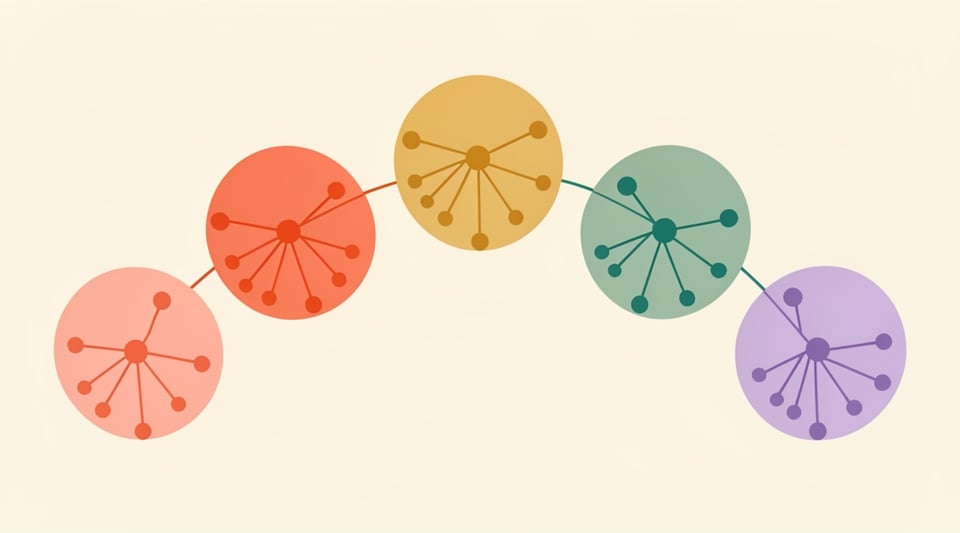
Action Step: Pick the feeling you had most recently and run it down. Family first, then branch, then the word. If the word you end up with is different from the one you would have said out loud, write both down and look at them next to each other.
Most people can name three emotions while they’re feeling them. There are 135 words waiting.
Find the Right Word on the Intensity Ladder
Each family above ranges from barely there to all the way up. Pull out a few words from each level and you get a ladder you can climb in either direction:
| Family | Barely there | In the middle | All the way up |
|---|---|---|---|
| Anger | annoyed, grouchy | frustrated, exasperated | furious, seething |
| Sadness | disappointed, glum | hurt, sorrowful | anguished, despairing |
| Fear | uneasy, apprehensive | anxious, distressed | panicked, terrified |
| Joy | content, pleased | glad, cheerful | elated, euphoric |
| Love | fond, warm | affectionate, tender | adoring, devoted |
| Disgust | put off | repelled, revolted | loathing |
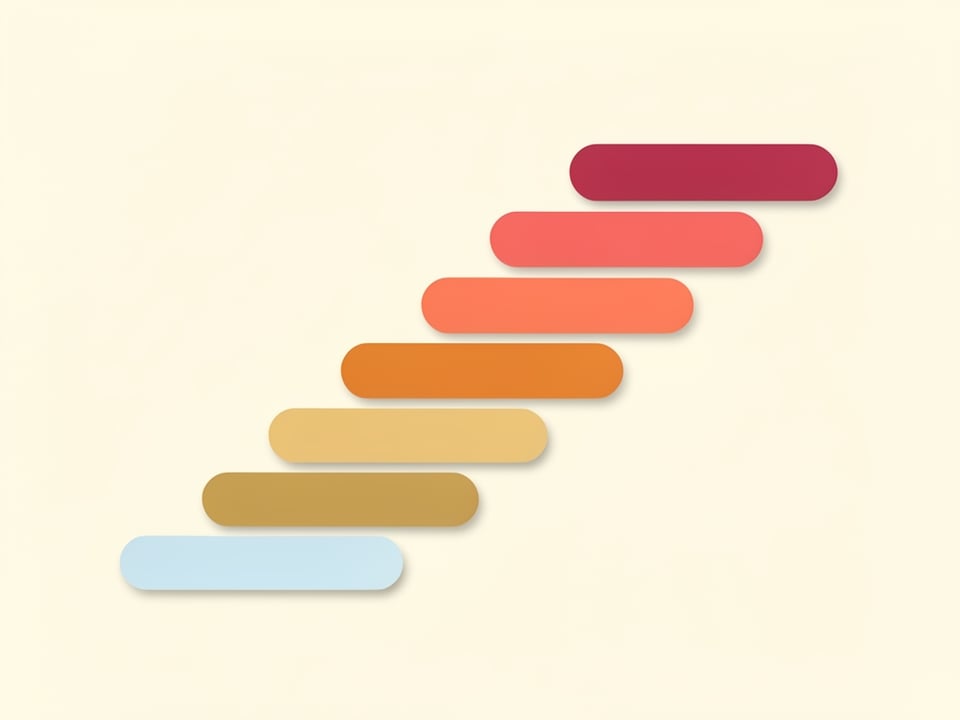
The rung often matters more than the family, because the rung is what other people react to.
Say a project manager finds out a deadline has slipped for the third time. They tell the team they’re “frustrated.” Middle rung. The team hears a normal amount of annoyance, apologizes, and keeps going at the same pace. What the manager actually felt was closer to furious—the top rung, the point where they were about to go to their director. Nobody in the room knew that, because the word they used was a rung below the feeling.
The rung is what other people respond to. Pick the rung before you pick the word.
The reverse mistake can cost you more. Announcing you’re “furious” about a typo spends credibility you’ll want later for something that deserves it.
Try This: Before you name a feeling out loud, decide how hot it is. If it’s a middle-rung feeling, use a middle-rung word. It takes two seconds, and it keeps a typo from sounding like a crisis.
How Many Emotions Are There?
It depends on who you ask. The research-backed answers range from six to twenty-seven. Here are the models, smallest first.
The 6 Universal Emotions (Paul Ekman)
Work with the isolated Fore people of Papua New Guinea in the 1960s and 1970s turned up six facial expressions that were recognized across every culture studied:
- Anger
- Disgust
- Fear
- Happiness
- Sadness
- Surprise
Contempt was added as a seventh in the 1990s—the one-sided smirk. Positive states like amusement, contentment, and pride came later still, though those lack a distinct expression everyone reads the same way.
The 8 Primary Emotions (Robert Plutchik)
Plutchik’s wheel arranges eight primaries in opposing pairs, the way a color wheel arranges complements:
- Joy ↔ Sadness
- Trust ↔ Disgust
- Fear ↔ Anger
- Surprise ↔ Anticipation
Each one has intensity levels (annoyance, anger, rage), and neighbors blend into compound feelings. Joy plus trust gives you love. Anticipation plus joy gives you optimism. The full wheel, and how to use it on yourself, is in our guide to the emotion wheel.
The 27 Distinct Emotions (Cowen & Keltner)
The largest modern count comes from 853 people watching 30 short videos and describing what they felt, in their own words, before rating it, and 27 categories emerged2:
Admiration, adoration, aesthetic appreciation, amusement, anger, anxiety, awe, awkwardness, boredom, calmness, confusion, craving, disgust, empathic pain, entrancement, excitement, fear, horror, interest, joy, nostalgia, relief, romance, sadness, satisfaction, sexual desire, and surprise.
Two of those, relief and interest, get left off most versions of this list circulating online, and contempt often gets added in their place. Contempt belongs to Ekman’s set instead.
The study also found that these categories have soft edges. Anxiety shades into fear, and fear shades into horror, with no hard line where one stops and the next starts.
Where the “34,000 Emotions” Number Came From
If you’ve searched this question before, you may have seen the figure 34,000. No study ever measured it.
A 2025 case study in Accountability in Research traced the claim through science writing, popular science, and pseudoscience, and found the references underneath it didn’t support the number3. It’s usually credited to Plutchik, who never published it. The most likely origin is somebody doing arithmetic on all possible blends and intensities of eight primaries and treating the result as a count of real feelings.
The 10 Most Common Emotions People Experience Daily
What do people actually feel on an ordinary day? Researchers collected more than 65,000 moments people logged as they were living them, and here’s what came up most4:
| Rank | Emotion | How often people felt it |
|---|---|---|
| 1 | Joy | 35% of check-ins |
| 2 | Love | 30% |
| 3 | Anxiety | 29% |
| 4 | Satisfaction | 27% |
| 5 | Alertness | 24% |
| 6 | Hope | 22% |
| 7 | Sadness | 20% |
| 8 | Amusement | 16% |
| 9 | Pride | 13% |
| 10 | Disgust | 11% |
Positive feelings won, by a lot. People reported them more than 2.5 times as often as negative ones. Forty-one percent of check-ins were purely positive; only 16% were purely negative.
A third of the time, people felt both at once. Mixed states made up 33% of check-ins, which is why “how are you?” is such a hard question to answer honestly.
Anxiety came third. It beat satisfaction, hope, and every other unpleasant emotion on the list. If your week feels more anxious than you think it should, you’re in ordinary company.
Alertness at 24% and hope at 22% often get left off this list, even though both are in the top six. Anger came in below both, at 10%. Contempt, which we’ll get to in a minute, showed up in just 1% of check-ins. It’s rare, but it does more damage than almost any other emotion on this list.

What Each Core Emotion Is Trying to Tell You
Each of the eight core emotions from the wheel above has a purpose. Here’s what each one is for, what sets it off, and what you can do with it.
Anger
Anger fires when your goals get blocked, when you feel threatened, or when you’re using it to cover something you’d rather not feel, like hurt or embarrassment.
That “blood boiling” sensation is adrenaline arriving. If you’re somewhere anger isn’t welcome, like a status meeting, you might go quiet instead. Somewhere that feels safer, it can come out as a raised voice, an accusation, or squared-up shoulders.
Anger also changes how you view risk. It can make you feel invincible, which is why you say things at 4 p.m. that you’d never say at 4:15.
Anger isn’t all bad, though. It’s often what finally gets people to send the email, file the complaint, or say the thing they’ve been swallowing for six months. It also fades fast, so it’s a poor time to decide anything big and a good time to get something started.
Action Step: The next time you’re angry and there’s nothing useful to do with it, point it at a blank page for fifteen minutes. Brainstorm, draft, or sketch options. You already have the energy, and it won’t last.
Anticipation
Anticipation is what you feel while waiting for something you know is coming, and it swings between excitement and dread depending on nothing more than context. Picking up a car you saved two years for usually feels like excitement, and walking onstage can feel like dread. Waiting on a first date? Probably both.
Physically, the two feel almost the same, with a faster pulse and damp hands. The situation is what tells your brain which label to use.
Stage fright is anticipation turned all the way up. The opening line you practiced disappears, and your feet feel nailed to the floor.
Action Step: When anticipation tips into something you can’t sit with, run 5-4-3-2-1. Name 5 things you can see, 4 you can hear, 3 you can touch, 2 you can smell, 1 you can taste. It drags your attention out of the imagined future and back into the room you’re actually in.
Disgust
Disgust evolved to keep our ancestors away from spoiled food and sources of disease, which was a great trait to have when the alternative was food poisoning. But it stretches well past food.
If I asked you to list some things that are disgusting, what would you say? My list (and I imagine yours too) would include:
- Vomit
- Rotting food
- Feces
- And lots of other stereotypically disgusting things
Did those make you say “ewwww?” Me too!
Disgust thresholds vary a lot from person to person, and yours probably affects more of your day than you’d guess: which foods you’ll try, which chair you’ll sit in, which stranger you’ll stand next to.
Fear
Fear activates around things you don’t understand, can’t control, or suspect will hurt you. A lot of modern fears are bigger than the actual danger. The small spider in the corner of the bedroom and the swirl of dread at a party door both trace back to instincts that kept people alive in truly dangerous places.
Three things take the edge off:
- Rehearse the predictable ones. Job interview, dentist, the conversation you’ve been putting off. Walk through what will actually happen. The less you know about what’s coming, the scarier it tends to feel, and a rehearsal fills in some of the blanks.
- Find the one thing you control. Fear often comes from feeling out of control. Pick the smallest piece that’s still yours: the time you leave, the first sentence you say. Put your attention there.
- Soothe before you reason. Arguing yourself out of being afraid is slow work. Slow breathing, a walk, a familiar hobby, prayer: pick whichever one already works on you and use it first. More of these in our guide to stress management, and the big ones people actually report are in our roundup of the biggest fears.
Joy
Joy is your brain flagging something as good for you: sun on your face, an old friend in the doorway, work that went right. It pushes you toward more of whatever caused it, the opposite of disgust, which pushes you away.
According to the broaden-and-build model, positive feelings like joy widen what you notice and loosen up your thinking. They also leave something behind. The friendship you made while laughing is still a friendship on a bad Tuesday.
Sadness
People need each other to survive. Sadness is the emotion that keeps reminding you.
A small child separated from a parent gets sad, cries, and gets found. As an adult, you feel the same pull when you drift from someone who matters, and it nudges you to close the gap.
Sadness can be useful, too. Feeling sad about where you are in your career or a relationship is often what finally gets someone to change it.
How to Be Less Sad:
- Do one small thing that usually lifts your mood, before you feel like doing it
- Tell one person, out loud, in specific words
- Move your body and eat an actual meal
- Name what’s causing it and deal with that, instead of circling the feeling
Surprise
Surprise is your reaction to anything you didn’t see coming, good or bad: a first grandchild, or the back end of the car letting go on ice. The jolt itself is over in seconds. Making sense of it can take a lot longer.
Surprise: Embrace the Unpredictable and Engineer the Unexpected breaks the sequence into four steps:
- Freeze: you’re stopped, usually with a gasp
- Find: you work out what just happened
- Shift: your view of things moves, because something new got in
- Share: you have to tell somebody
Trust
Trust is what lets you be vulnerable with somebody: hand over a burden, leave a child, say the unflattering true thing. Trustworthiness is whatever the other person does that makes you willing to.
Plutchik counted trust as a basic emotion, but many psychologists today see it as closer to an attitude you form about someone. Fear can hit in an instant, while trust usually grows over weeks. And unlike fear, trust has no facial expression that people recognize across cultures.
Either way, every relationship you have depends on it.
Contempt and Disdain: The Most Destructive Emotions
Contempt is looking down on someone: moral superiority mixed with disgust. It shows on the face as a one-sided smirk. In conversation, it looks like eye-rolling, sarcasm with an edge, and mockery dressed as a joke.
Across four decades of watching couples argue in a lab, contempt turned out to be one of the strongest signals that a marriage was heading for divorce5. It’s the worst of the four behaviors that research group calls the Four Horsemen: criticism, contempt, defensiveness, and stonewalling.
There may be a physical cost, too. Couples whose arguments turn hostile tend to show weaker immune function in the day after a fight.
Disdain is contempt’s quieter cousin: scornful disapproval that says “you’re beneath me.” Both wear down the respect that working relationships depend on.
The antidote is appreciation, shown regularly during ordinary weeks. When you notice something the other person did right, you can say it specifically and tie it to who they are: “Thank you for helping our neighbor move that couch. You’re a generous person.” That means a lot more than a quick “thanks.”
Guilt, Despair, and Anxiety: Emotions Beyond the Basics
Guilt
Guilt is self-evaluation with a verdict attached: I did something wrong. Shame says I am wrong, which is a different and much heavier thing. Guilt is one of the few unpleasant emotions that tends to be useful. People who feel guilt are more likely to apologize and make amends.
Despair
Despair is sadness at the far end of the branch: hopelessness, the sense that nothing you do will change the situation. Sadness often eases with company and comfort, and guilt eases once you’ve made things right. Despair usually needs more support than that, and a therapist or doctor is a good place to start.
We are so honored to help you find authentic connections! If you are struggling to find the help you need, please note that all content found on this website is not to be considered professional medical advice. It is always best to consult a doctor or licensed therapist with any questions or concerns in regards to your physical or mental health. For a good resource for therapists, you can check out Mental Health America’s helpful list.
Anxiety
Anxiety came third on the daily list above, reported in about 29% of the moments people logged. Where fear reacts to a threat in the room, anxiety reacts to one that might arrive later. That’s what makes it so hard to argue with, since the thing you’re worried about hasn’t happened yet.
A little anxiety can push you to prepare, but too much can swallow your whole day. If yours is the second kind, our guide to anxiety tips has the strategies worth trying first.
What to Do When No Word Fits
Some people read the whole list above and still come up blank, with nothing but static where the feeling should be.
That experience has a name: alexithymia, from the Greek for “no words for emotions.” Researchers estimate it affects roughly 1 in 10 people. It’s a trait that everyone has to some degree, and some people have a lot more of it.
People with alexithymia still feel things, but the feelings come in fuzzy. You might notice your jaw is tight and your shoulders are up around your ears without being able to connect that to I’m grieving.
If that sounds like you, try starting with your body. For one week, swap “What am I feeling?” for “What am I noticing?” Maybe it’s a tight throat, a heavy stomach, or hands that won’t stay still. Sensations tend to be easier to catch than feelings, and once you’ve caught one you can usually trace it back to a family on the list above.
Our guide to why you can’t cry goes deeper on this, and the emotion wheel gives you a visual way in when a list of words isn’t working for you.
Where You Feel Each Emotion in Your Body
When researchers asked hundreds of people to color in a blank body outline showing where they felt each emotion, the same patterns kept coming up.
People felt anger in their chest and arms, fear in their chest, and disgust in their throat and stomach. Happiness lit up almost the whole body, while sadness left the arms and legs feeling heavy. The same patterns turned up in Western European and East Asian participants, which suggests these links go deeper than language6.
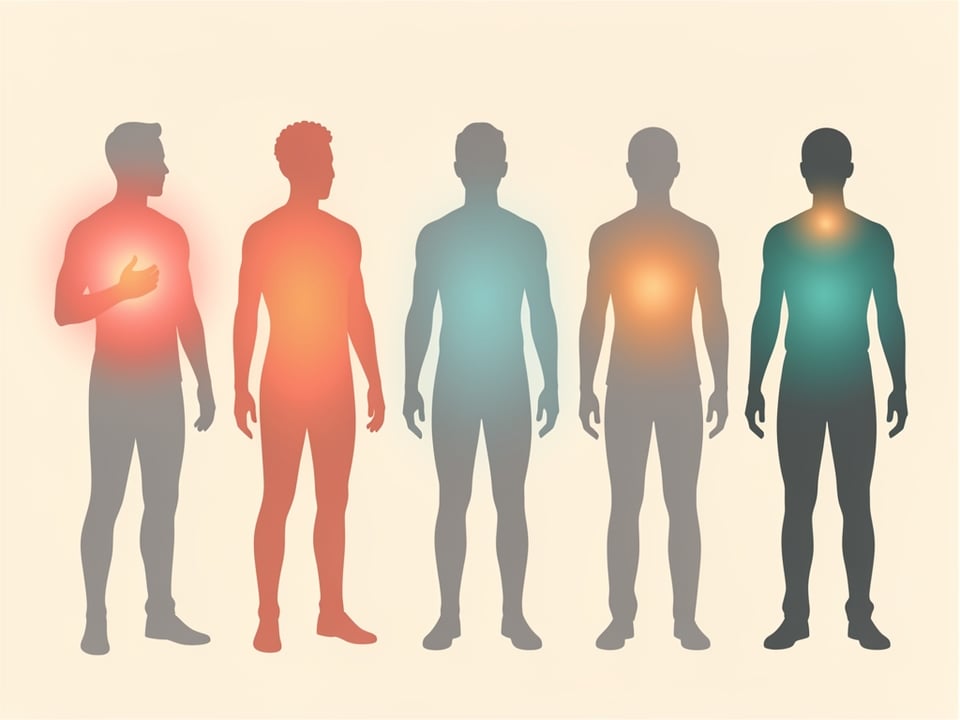
That may be why phrases like “gut feeling,” “heartache,” and “cold feet” are less metaphorical than they sound.
Try This: When the word won’t come, go looking for the location instead. Where in your body is something happening? Chest, throat, stomach, jaw, hands. Then check it against the maps. A tight throat and a turning stomach, for example, might point to disgust before you’ve found the word for it.
Our full breakdown of the research is in emotion maps: how emotions change in the body.
The Top 10 Positive Emotions
The broaden-and-build model singles out ten positive emotions. Each one gives you a different urge and leaves something different behind.
| Positive Emotion | What it makes you want to do | What it builds over time |
|---|---|---|
| Joy | Play, mess around, engage | Skills and physical capacity |
| Gratitude | Give something back, creatively | Loyalty and social bonds |
| Serenity | Savor it, stay put | Resilience |
| Interest | Explore, poke at it, learn | Knowledge and expertise |
| Hope | Keep going anyway | Perseverance |
| Pride | Aim at something bigger | Self-confidence |
| Amusement | Bond with whoever’s laughing | Friendships and trust |
| Inspiration | Raise your own standard | Motivation and purpose |
| Awe | Zoom out | Perspective and humility |
| Love | Everything above, at once | Deep social connections |
Everything in the right-hand column is something you keep after the good mood fades.
Pro Tip: Pick the one in the left column you’ve felt least this month and go engineer it on purpose. Awe might be the easiest to create on short notice: a long view, a big building, or a documentary about something enormous. It’s also easy to stop making time for as an adult.
High Energy vs. Low Energy Emotions
Psychologists often plot emotions on two axes instead of sorting them into families: how activated you are, and how pleasant it feels. Four quadrants come out of it.
| Pleasant | Unpleasant | |
|---|---|---|
| High Energy | Excitement, joy, enthusiasm | Anger, fear, anxiety, frustration |
| Low Energy | Contentment, calm, serenity | Sadness, boredom, loneliness, despair |
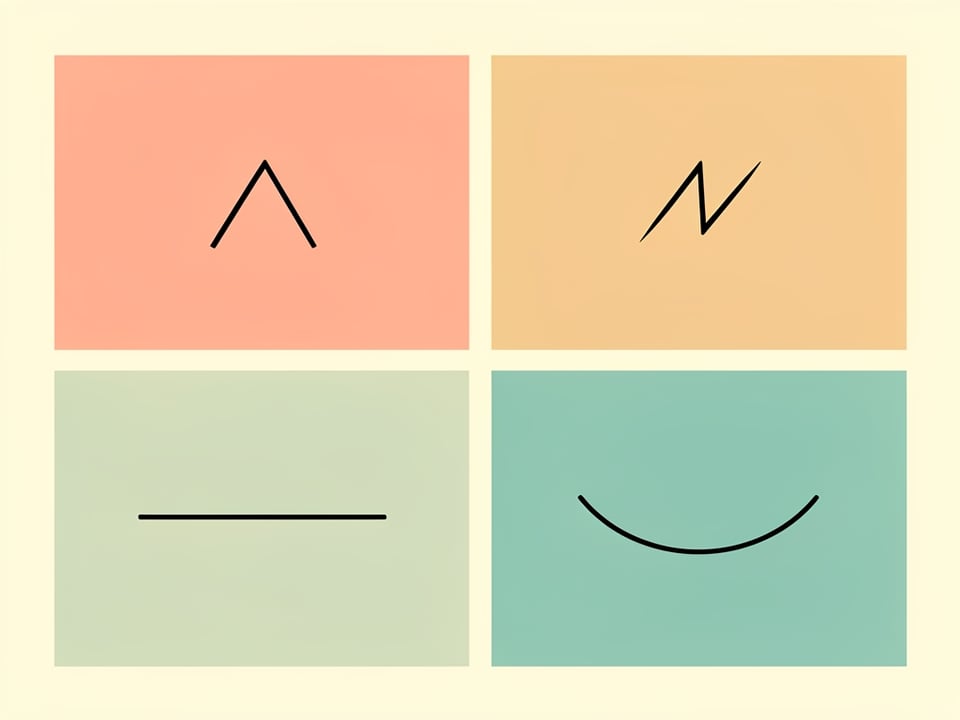
High energy and unpleasant, so angry or anxious or wound up? You need to come down. Slow breathing, a walk, cold water, anything that lowers the dial.
Low energy and unpleasant, so flat or bored or lonely? Breathing exercises probably won’t help much. You need to come up. Movement, sunlight, a person, a task with a finish line.
Getting this backwards is an easy mistake. It’s common to meditate through a low mood or go for a run during a panic, then decide neither one works.
Action Step: Next time you feel off, skip straight to the two questions. Energy up or down? Pleasant or unpleasant? Then pick from the matching side.
What Happens in Your Brain During an Emotion
You may have heard that underneath your thinking brain sits an older, more primitive “emotional brain,” and under that a reptilian one, and emotion happens down in the basement while reason happens upstairs.
It’s a tidy story, but it’s wrong. It even has a name: the triune brain model, proposed in the 1960s and largely abandoned by the scientists who study brain evolution. Many animals turn out to have broadly similar brain structures, and versions of the so-called emotional parts appear well outside mammals. The structures labeled “emotional,” like the amygdala and hippocampus, also do plenty of thinking and memory work.
Emotion and thinking use the same brain networks, and they influence each other constantly.
You don’t have a lizard brain. Emotion and thinking share the same circuitry.
During an emotion, signals travel through your brain as electricity. Electricity can’t jump the gap between cells, so at each junction the signal switches to chemicals called neurotransmitters, crosses the gap, and switches back.
Those chemicals affect mood, but the popular version of this story is badly oversimplified. No single chemical causes any emotion. Feelings emerge from many regions, circuits, hormones, past experience, and the situation you’re standing in. Saying dopamine causes happiness is like saying gasoline causes road trips.
The main players, briefly:
Dopamine handles motivation and reward prediction. It flags when something turned out better or worse than you expected, which is how your brain learns what to chase. It’s more about wanting than liking.
Oxytocin turns up in closeness, with a baby or a partner or an old friend, and it’s bound up with trust and bonding.
GABA slows the rate your neurons fire. It’s the chemistry of settling down.
Acetylcholine supports alertness and sustained attention, and it’s part of how you get from asleep to awake.
Serotonin contributes to mood regulation, sleep, and digestion, as one part of a much larger system. Exercise, daylight, and sleep all support it.

How to Control Your Emotions: 5 Evidence-Based Strategies
Naming an emotion gets easier with practice, and managing one takes a bit longer. Here are five strategies with research behind them, roughly in the order to try them.
1. Use the “Name It to Tame It” Technique
When people put a feeling into words, activity drops in the amygdala, the brain’s threat detector, and rises in the prefrontal cortex, the part that handles self-control7. Naming a feeling works a bit like tapping the brakes on it.
Naming it to tame it only works if you have the name.
The more specific the word, the better. “I feel bad” doesn’t help much. “I feel mortified because I said something clumsy in front of my boss” gives your brain something concrete to work with.
That’s why the list at the top of this page matters. Naming it to tame it only works if you have the name.
Action Step: Set three phone alarms: 10 a.m., 2 p.m., 6 p.m. When one goes off, take thirty seconds and answer one question as precisely as you can: family, branch, rung. After a few weeks, you may notice the naming starts happening on its own.
2. Apply Cognitive Reappraisal (The Reframe)
Reappraisal means changing how you interpret the situation that caused the feeling. A setback, for example, becomes useful information, and a hard conversation becomes a chance to settle an old issue.
When a strong negative emotion hits, try asking yourself three questions:
- What story am I telling myself? (“They didn’t invite me to the gym. They must be done with me.”)
- What else could explain it? (“They know I’m always slammed on Friday afternoons.”)
- What would I say to a friend telling me this? (“Didn’t they buy you lunch last week?”)
The more often you work through these, the less hold the story tends to have. It might be what keeps you from leaving the passive-aggressive comment or quietly dropping someone from the birthday list. (If these sound silly and extreme, it’s because when we’re emotional, adults do act silly and childish, which is exactly why learning to regulate emotions matters.)
Action Step: Write the three answers down on paper. Putting them on the page makes you slow down and actually think each one through.
3. Practice Acceptance (Stop Fighting the Feeling)
Acceptance means noticing a feeling and letting it be there, without spending energy fighting it. You might say to yourself, “I notice I’m anxious right now,” and then get on with the meeting.
Pushing feelings down is the common alternative, and it tends to backfire. Emotions pushed down tend to come back with interest, usually as physical tension or as something unfair you say to somebody who didn’t earn it.
4. Check Your Physical State First (The Body Budget Audit)
Adults often lose their cool for the same reasons toddlers do: they’re hungry, tired, too hot, too cold, or uncomfortable. Treat yourself like a kid, just for a minute.
Before you try to process a strong feeling, run the checklist:
- Have you eaten?
- Did you sleep?
- Are you too hot or too cold?
- Is something you’re wearing annoying you?
- Is something in the room getting at you, like a clicking pen or a flickering light or a hum?
Each of those can wear down your patience. Fix the physical thing first. Sometimes the feeling eases on its own, and if it doesn’t, you’re in better shape to try the strategies above.
5. Use Strategic Distraction (With a Timer)
Distraction tends to help most early, before the emotion has fully built. Once you’re deep in it, reappraisal or acceptance may help more.
Keep it short and on purpose: five minutes of something light, a few pages of a book, or a walk around the block. Set a timer so distraction doesn’t quietly become avoidance. At the ten-minute mark, check in: has the intensity dropped? If it has, you can now think clearly about what set it off.
Pro Tip: Stack them. Name the feeling (“I’m exasperated”), accept it (“this is a reasonable reaction to the third slipped deadline”), then choose your move based on the rung: reappraisal for the middle, a physical reset or a timed break for the top.
Being able to control your emotions means you are more likely to make better choices, rather than rash decisions in the heat of the moment that you might regret when your brain chemistry settles back down. And controlling your emotions will get easier each time you practice these strategies. I promise!
Why Expanding Your Emotion Words Matters
Having only three words for everything can cause real problems. When you can’t say what you’re feeling, it’s harder to figure out what to do about it, and it’s easy to fall back on whatever you did last time.
Across three studies, people who drew fine distinctions between their emotions reported somewhere between 16% and 43% less daily aggression on the days they were angry than people who lump their feelings together8.
At work, people with stronger emotional skills tend to get better performance ratings, especially in jobs that involve dealing with people all day.

If you’ve ever lost an argument you should have won, or been labeled “difficult” after one bad afternoon, the missing piece might have been the words for what you felt.
Action Step: Start a feelings log. End of the day, three to five emotions, as specific as you can stand. When you write “angry,” stop and push: frustrated? indignant? resentful? exasperated? After a few weeks, you’ll have more words ready when you need them.
Frequently Asked Questions
What are the 27 emotions?
The 27 categories identified in a 2017 study at UC Berkeley are: admiration, adoration, aesthetic appreciation, amusement, anger, anxiety, awe, awkwardness, boredom, calmness, confusion, craving, disgust, empathic pain, entrancement, excitement, fear, horror, interest, joy, nostalgia, relief, romance, sadness, satisfaction, sexual desire, and surprise. Versions of this list circulating online often drop relief, interest, or sexual desire and add contempt, which belongs to Ekman’s set instead. The study also found that the categories blend into each other at the edges.
What are the 10 most common emotions?
Across more than 65,000 moments people logged as they happened, the most frequently reported emotions were joy (about 35% of the time), love (30%), anxiety (29%), satisfaction (27%), alertness (24%), hope (22%), sadness (20%), amusement (16%), pride (13%), and disgust (11%). Alertness and hope often get left off published versions of this list, even though both rank in the top six.
Is there an agreed number of emotions?
No. Ekman’s cross-cultural work identified 6, later 7. Plutchik’s wheel has 8 primaries. A 2017 Berkeley study found 27 categories. Atlas of the Heart catalogs 87 emotions and experiences. The count depends on the method: ask about facial expressions and you get a small number, ask people to describe what they felt in their own words and you get a large one. The theory of constructed emotion goes further and argues there’s no fixed number at all, because the brain builds each emotion in the moment.
What's the difference between an emotion, a feeling, and a mood?
An emotion is short (seconds to minutes), has a trigger you can usually name, and comes with a body change and an urge to act. A feeling is the conscious experience of that emotion: the part you notice and can describe. A mood lasts hours or days, often has no identifiable cause, and colors everything you do. In practice, naming helps with emotions, while moods usually respond better to sleep, food, movement, and daylight.
What are the 7 primary emotions?
Ekman’s seven universal emotions, recognized across the cultures studied through facial expressions, are anger, contempt, disgust, fear, happiness, sadness, and surprise. The original research with the Fore people of Papua New Guinea in the 1960s and 1970s identified six; contempt was added in the 1990s.
What are the 8 core emotions?
Plutchik’s eight primary emotions are anger, anticipation, disgust, fear, joy, sadness, surprise, and trust. His wheel arranges them in opposing pairs (joy against sadness, trust against disgust, fear against anger, surprise against anticipation), with intensity levels running inward and compound emotions forming between neighbors.
What are the top 10 positive emotions?
The broaden-and-build model singles out ten: joy, gratitude, serenity, interest, hope, pride, amusement, inspiration, awe, and love. Each one creates a different urge and leaves behind something that lasts, like new skills, knowledge, or closer relationships.
Are there really 34,000 emotions?
No, and the figure traces to no study. A 2025 case study in Accountability in Research followed the claim through science writing, popular science, and pseudoscience and found the references underneath it didn’t support the number. It’s often credited to Plutchik, who never published it. The most likely origin is someone calculating all possible blends and intensities of eight primary emotions and reporting the arithmetic as a count of real feelings. Research-based counts range from 6 to 27 categories, and one widely used inventory lists about 135 emotion words.
List of Emotions Takeaway
There are far more emotions than most of us have words for. Here’s how to start using more of them:
- Run today’s feeling down the tree. Pick the strongest thing you felt in the last twenty-four hours, find its family, then its branch, then the word. Do it once and you’ll see why three words wasn’t enough.
- Set the three alarms. 10 a.m., 2 p.m., 6 p.m., thirty seconds each. Do it for a few weeks and naming will start to come faster.
- Pick the rung before you speak. In your next disagreement, decide how hot the feeling actually is before you choose the word for it. Then say the accurate one out loud.
- Match the strategy to the quadrant. Bring your energy down if you’re wound up, or up if you feel flat, and check which one you’re in before reaching for a fix.
- Go body-first when the word won’t come. Throat, chest, stomach, jaw, hands. Find the location, then work backward to the feeling.
If you want the visual version of all this, and a faster way to find your feeling when you’re in the middle of one, start with our guide to the emotion wheel.