At a crowded birthday party, you spot two guests who would genuinely hit it off, except they’ve never met and both look a little stranded near the snack table. You walk one over to the other: “You two have to talk about restoring old motorcycles.” Then you step away. Forty-five minutes later they’re still deep in it, swapping numbers.
That small move has a name. You just acted as a connector!
Being the person who brings others together is one of the most quietly powerful social skills there is. Connectors are the people everyone remembers, the ones whose names come up when someone says, “Oh, you have to meet so-and-so.” We all know someone like that. And it’s far more formula than magic.

What Is a Connector?
A connector is someone who actively introduces people to each other, linking friends, colleagues and acquaintances who would benefit from knowing one another. Connectors make introductions freely, and in doing so they become the hub that ties a whole community together. Most of us hoard a little without ever meaning to.
Classic research on the strength of weak ties found that our loose, casual connections, not our closest friends, are how most of us stumble into new jobs, ideas and opportunities.1 When you become the person who creates those bridges between others, you turn into the center of an enormous web of goodwill.
So connecting people quietly makes you indispensable!
The Secret Ingredient: Conversation Keywords
The hardest moment in any introduction is the silence right after “Nice to meet you,” when two strangers privately panic about what on earth to talk about. We’ve all stood in that silence.
Great connectors solve that problem before it happens. In her book Conversation (Portfolio/Penguin Random House), Vanessa Van Edwards calls the fix a conversation keyword: a word or phrase that instantly unlocks stories and shared ground.
A conversation keyword is whatever the two people have in common. “You both ran your first marathon last year.” “You’re both obsessed with sci-fi.” “You both just moved here from the Midwest.” Say it out loud as you introduce them, and you’ve handed them the answer to “What do we talk about?”
Why does this work so well? Because feeling similar to someone is one of the fastest routes to liking them. A 2008 meta-analysis on attraction found that perceived similarity reliably increases how much people are drawn to each other.2 Naming a commonality up front gives two people a head start on clicking. That’s the whole trick!
The best introduction hands two people a reason to keep talking after you walk away.
Pro Tip The more commonalities you can name, the more connected the pair will feel. “You both love rock climbing, you both have toddlers, and you both somehow survived consulting” gives them three doors into the conversation instead of one!
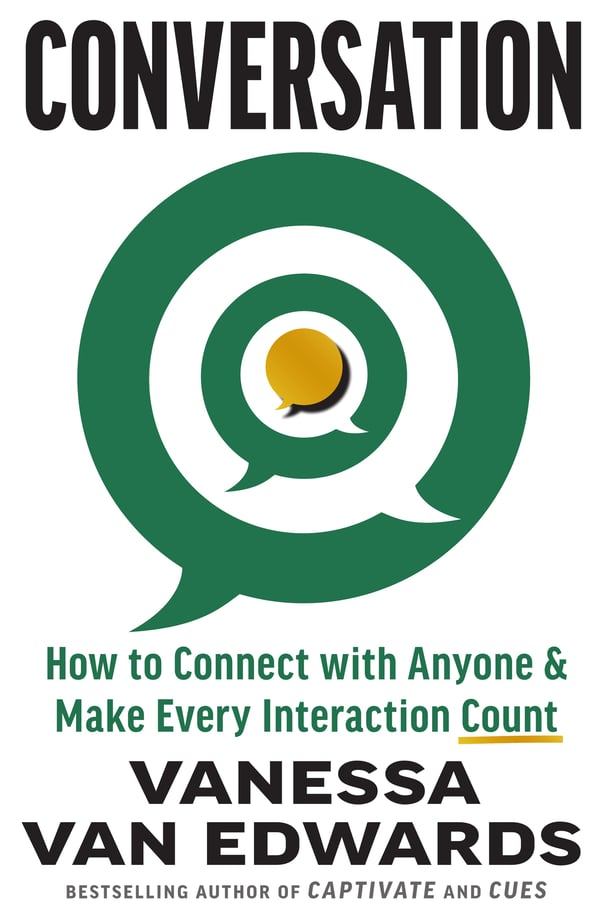
A new book by Vanessa Van Edwards
Every conversation is an opportunity.
If conversations have gotten harder, more awkward or less satisfying, you’re not imagining it. We’re simply out of practice. It’s time to find the joy in talking to each other again.
The Connector’s Intro Formula
Introductions over email or text deserve the same care. A great written introduction follows four simple parts:
1. The purpose: one specific reason these two should connect. “I’ve been meaning to introduce you two because you’re both building businesses on your own terms.”
2. A warm, complimentary intro for each person: a sentence that makes each one look good to the other.
3. The conversation keywords: the things they have in common, laid out plainly so the first conversation writes itself.
4. A clear next step: a low-pressure nudge to actually meet. “I’d love for you two to grab a coffee. Would either of you be free next week?”
That structure clears everything out of the way, so the two people can just show up and connect!
Action Step: Think of two people in your network who should know each other. Send a four-part intro email today using the formula above. One introduction can change someone’s year!
Making In-Person Introductions
In person, the same principles apply in fast-forward. When you bring two people together, do three things:
Say each person’s name clearly so nobody has to awkwardly ask later.
Drop in the conversation keyword (the shared interest, background or goal) so they have somewhere to go.
Then, when the conversation catches, gracefully step back. Your job is to light the spark rather than host the whole fire!
If you freeze on names or feel unsure mid-introduction, our guide on listening skills can help you stay present instead of scrambling.
How to Introduce People Online
Most introductions now happen over email, LinkedIn, or a Slack channel, and the same formula travels perfectly to a screen. A few digital-specific moves help:
Double opt-in first. Before you connect two busy people, send each a one-line heads-up: “Mind if I introduce you to Devon? I think you two would click.” It spares everyone the awkward surprise and shows you respect their time.
Put the keywords in the subject line. “Intro: two founders obsessed with climate tech” does more work than a bare “Introduction.” The shared interest is right there before they even open the message.
Move yourself to BCC after the handoff. Once you’ve made the introduction and named what they share, drop to BCC so the two of them can carry on without an audience.
Action Step: Open your inbox right now and find one pair you’ve been meaning to connect. Send the double opt-in today!
Make Connecting a Habit
The best connectors build introductions into a routine instead of waiting for the perfect moment.
In her book, Vanessa shares a simple ritual: once a quarter, look through your network and ask who should know each other, then send a few introduction emails. 15 minutes, four times a year… that’s all it takes to slowly become the hub of your whole circle.
And the payoff keeps coming. Every good introduction you make gets remembered, and the people you connect send opportunities back your way for years.
Try this: Put a recurring 15-minute “who should I connect?” block on your calendar every quarter. Your future network will thank you!
Be the Person Who Brings People Together
The same approach works everywhere we have a network:
At work, connecting a new hire with the colleague who’ll help them most.
In your friend group, introducing two people you’re sure would hit it off.
In your industry, linking someone who needs advice with someone who has it.
Each introduction costs you a few minutes and earns you something lasting: a reputation as the person who makes good things happen for others. (And when a network gets complicated, our guide on dealing with difficult people helps.)
Frequently Asked Questions
What makes someone a good connector?
Good connectors pay attention to what people care about and actively look for ways to link them. The key skill is spotting commonalities (shared interests, goals or backgrounds) and naming them when you make the introduction. They also introduce generously, without keeping score, which is why people trust and remember them.
How do you introduce two people over email?
Use a four-part formula: state the purpose of the introduction, give each person a warm one-line intro, point out what they have in common (their “conversation keywords”), and suggest a clear, low-pressure next step like grabbing a coffee. This removes the awkwardness and gives the pair an easy way to start talking.
Why is introducing people a valuable skill?
Because loose connections are how most of us find jobs, ideas and opportunities, a pattern documented in research on the “strength of weak ties.” When you become the person who builds bridges between others, you turn into the hub of a wide, generous network, and people naturally think of you when opportunities arise.
What should I do after I introduce two people?
Once the conversation catches, step back and let it breathe. Your role is to spark the connection rather than manage it. In person, that means physically giving them space to talk. Over email, it means letting them take the next step themselves rather than staying copied on every message.
You Could Be Someone’s Favorite Introduction
When you spot two people who should know each other, don’t let the moment slide by. Name what they share, make the introduction, and step back.
One small connection can turn into a friendship, a job or a partnership that neither person saw coming. Go be the reason it happens!