Shelly Gable at UC Santa Barbara studied how couples respond when a partner shares good news. How someone answers your win turned out to predict relationship satisfaction better than how they answer your setback. Of the four ways people respond, exactly one builds anything.
Which is a strange thing to learn, because nobody thinks of themselves as bad at this. The warmth is genuinely there. It just stays inside, where it does nobody any good.
A landmark 2018 study from Yale found that after conversations, people consistently underestimate how much the other person liked them, a phenomenon researchers call the “liking gap.” You might walk away thinking they probably thought I was boring. Meanwhile, they’re thinking the same thing about themselves.
The problem is that your warmth is invisible to them!

What Are Magic Phrases to Be More Likeable?
Magic phrases are specific, science-backed expressions that make you instantly more likeable by making others feel seen, valued and remembered. Rooted in research on reciprocal liking, positive labeling and active listening, these phrases shift your focus from trying to be impressive to being genuinely interested.
Vanessa Van Edwards has spent two decades researching what makes people connect, and in Chapter 2 of her book Conversation: How to Connect with Anyone & Make Every Interaction Count (Portfolio/Penguin Random House), she breaks down five specific phrases that close the gap between how much you feel toward someone and how much they actually perceive.
Before we get to the five phrases, though, there’s a strategy underneath all of them…
Be a “First Liker”: The Strategy Behind All 5 Phrases
It’s common to carry one belief around without ever questioning it: I’ll be warm once they’re warm to me first.
It sounds reasonable. It’s also the reason most conversations stay shallow.
The most popular people are the ones who like the most people.
One of the most consistent findings in social psychology is the reciprocal liking effect: people like people who like them first. In a classic 1986 study by Curtis and Miller, participants who were told a stranger liked them behaved more warmly, shared more about themselves, and disagreed less, which made the stranger actually like them more.
Vanessa calls this being a “first liker”: the decision to proactively show warmth before waiting for the other person to show theirs. The most popular kids in a high school tend to be the ones with the longest list of people they like.
Being a first liker means choosing to express genuine appreciation first, to specific people. Spreading generic warmth to everyone dilutes it.
TalentSmart, which sells emotional-intelligence assessments, reports that 90% of top performers score high on EQ. That figure comes from a vendor’s own materials, so treat it as an industry claim. And in a study of over 51,000 leaders published in Harvard Business Review, Zenger and Folkman found that only about 1 in 2,000 leaders who were strongly disliked were also rated as highly effective.
So why do we hold back? Because of something called the signal amplification bias. A 2003 study by Vorauer and colleagues found that people believe their friendly cues, whether smiling, being interested or leaning in, are far more obvious to others than they are. The internal heat of your own warmth feels obvious from the inside, so it seems like it must be radiating outward. But to the other person, your behavior often looks neutral.
If you think you’re being warm, you probably are, just less visibly than you imagine. That’s what these five phrases fix. Each one takes warmth you already feel and makes it visible.
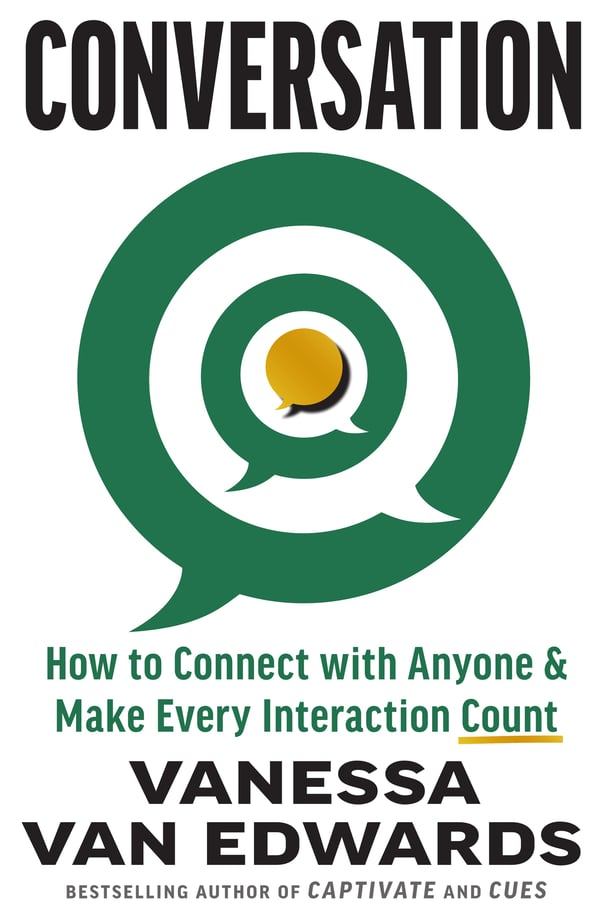
A new book by Vanessa Van Edwards
Every conversation is an opportunity.
If conversations have gotten harder, more awkward or less satisfying, you’re not imagining it. We’re simply out of practice. It’s time to find the joy in talking to each other again.
Phrase #1: “I Was Just Thinking of You”
What it is: A simple reach-out, via text, email or in person, that tells someone they occupy brain space in your life even when they’re not around.
Why it works:
Say a song comes on that reminds you of a friend. You pass a restaurant where you had a great meal with a colleague. A meme makes you think of your sister. You feel a flash of warmth, and then you do nothing. You assume they already know you care.
They don’t.
A 2021 study by Boothby and Bohns found that people who reach out to others consistently underestimate how happy it makes the recipient and overestimate how awkward it will feel. The senders predicted moderate pleasure, and recipients reported far more. The feared awkwardness? It almost never materialized!
Related research by Boothby showed that we also underestimate how much others think about us after social interactions, a “thought gap” that leaves people feeling less connected than they are. “I was just thinking of you” fills that gap with concrete proof.
When to use it: When a song, article, restaurant, meme or memory genuinely reminds you of someone. Text it immediately, before you can overthink it. The research says the awkwardness you’re imagining won’t happen.
Script:
“Hey! I just walked past that taco place we went to last year and I was just thinking of you. How have you been?”
“Saw this article about urban gardening and immediately thought of you. How’s the balcony garden going?”
Action Step: Right now, think of one person who crossed your mind this week. Send them a text that starts with “I was just thinking of you because…” Notice how good it feels to send, and how warmly they respond!

Phrase #2: “You’re Always So [Positive Trait]”
What it is: A specific, identity-level compliment that names a positive quality you genuinely admire in someone.
Why it works:
When you tell someone “Great job on that presentation,” you’re complimenting an action. It feels nice. But when you say “You’re always so clear when you explain complex things,” you’re complimenting their identity. That reaches something deeper.
Psychologists call this the positive labeling effect. When people are given a positive trait label, they tend to behave in ways that confirm it. A classic study by Alice Tybout and Richard Yalch found that voters who were told they were “above-average citizens” were significantly more likely to actually vote.
The key is specificity. “You’re so nice” is generic and forgettable. “You’re always so thoughtful about including everyone in the conversation” is a mirror. It shows them a version of themselves they may not see clearly, and they’ll associate that feeling of being understood with you.
When to use it: When someone does something you genuinely admire, and you’ve noticed it more than once. The word “always” tells them you’ve been paying attention over time, which makes the compliment far more meaningful.
Script:
“You’re always so good at making new people feel welcome. I really admire that about you.”
“You know what I love about you? You’re always so calm under pressure. I don’t know how you do it.”
Pro Tip Avoid traits that could feel like a backhanded compliment (“You’re always so quiet” or “You’re always so honest”). Stick to qualities that are unambiguously positive and that you genuinely mean.
Phrase #3: “Last Time We Talked, You Mentioned…”
What it is: A callback to a specific detail from a previous conversation: a project they were excited about, a trip they were planning, a goal they shared.
Why it works:
Of all the questions you can ask in a conversation, a follow-up question does the most. It proves you were actually listening, and it invites the other person to keep talking about something they care about. That’s why callbacks to an earlier conversation work so well.
“Last time we talked, you mentioned…” is the ultimate follow-up question. It proves you weren’t just nodding along in your last conversation. You committed their words to memory. Being remembered is a social gift, and a rare one.
Picture running into someone months after you first met. Instead of the usual “Good to see you again!”, you open with: “Last time we talked, you were about to launch that podcast. Did you do it?” Their face lights up, and you get twenty minutes instead of two! Compare that to the standard “So, what do you do?”, which produces a job title and a dead end.
When to use it: At the start of any follow-up conversation, whether at work, at a party, via email or on a call. It works especially well when you reference something the other person was excited about.
Script:
“Last time we talked, you mentioned you were training for a half marathon. How’s it going?”
“You told me about that pottery class you were thinking about. Did you end up signing up?”
Pro Tip Keep a simple note in your phone after meaningful conversations. Just 2–3 details: their name, what they were excited about, and one personal fact. It takes thirty seconds and makes you unforgettable.

Phrase #4: “Tell Me More”
What it is: Three words that show deep interest and take a conversation deeper.
Why it works:
A Harvard neuroscience study by Diana Tamir and Jason Mitchell found that talking about yourself activates the same reward centers in the brain as food and money. People spend about 30–40% of everyday speech talking about their own experiences, and that number jumps to roughly 80% on social media. In the study, participants were even willing to give up money for the chance to share their opinions.
Talking about yourself activates the same reward centers in the brain as food and money. When you say “tell me more,” you’re giving someone permission to access that reward.
That’s what makes “tell me more” so powerful. It’s a neurological gift. You’re telling them: what you’re saying matters, and I want to go deeper. It’s tempting to do the opposite: respond with your own story, pivot to a new topic, or offer unsolicited advice. “Tell me more” resists all of those impulses and stays with the other person’s experience.
When to use it: Whenever someone shares something they clearly care about: a project, a challenge, a passion, even a frustration. The phrase works as a response to almost anything, and it nearly always deepens the conversation.
Script:
“Wait, you built that from scratch? Tell me more.”
“That sounds like it was really hard. Tell me more about what happened.”
“You mentioned you’re changing careers. Tell me more about what’s driving that.”
Pro Tip Pair “tell me more” with body language that matches: lean in slightly, maintain eye contact, and put your phone away. The words only land if your nonverbal cues back them up.
Phrase #5: “That’s Amazing, How Did You Do That?”
What it is: An enthusiastic, curious response to someone’s good news that celebrates their win and invites them to relive it.
Why it works:
Back to the finding this article opened with: How you respond to someone’s good news predicts relationship quality better than how you respond to their bad news.
Dr. Shelly Gable at UC Santa Barbara studied how couples respond to positive events and identified four distinct styles. Only one, Active Constructive Responding, is linked to increased relationship satisfaction, trust, and commitment. The other three all erode relationships, including the polite “Nice, congrats.”
Here’s how the four styles look when a colleague says, “I just closed that big deal”:
| Response Style | What It Sounds Like | Effect |
|---|---|---|
| Active Constructive | “That’s amazing! How did you pull it off? I want to hear everything.” | Builds trust and connection |
| Passive Constructive | “Nice, congrats.” (goes back to email) | Feels dismissive |
| Active Destructive | “Are you sure you can handle the extra workload?” | Erodes trust |
| Passive Destructive | “Oh. Hey, did you see the email about Friday’s meeting?” | Makes them feel invisible |
In Gable’s 2006 study of dating couples, how partners responded to good news was a stronger predictor of whether the couple would break up within two months than how they responded to bad news. Passive and destructive responses to good news were the biggest red flags.
“That’s amazing! How did you do that?” is Active Constructive Responding in a single sentence. The enthusiasm (“that’s amazing”) validates their win. The question (“how did you do that?”) invites them to relive the experience, amplifying their positive emotions. Because you’re now associated with that amplified joy, they feel closer to you.
When to use it: Whenever someone shares a win, big or small. A promotion, a completed project, a personal milestone, a recipe that turned out great. The enthusiasm of your response matters more than the size of the win.
Script:
“That’s amazing! How did you pull it off? I want to hear everything.”
“Wait. You ran the whole 10K? That’s amazing. How did you train for it?”
“You got the interview? That’s amazing! How did you land it?”
Pro Tip The word “how” is doing the real work here. It turns your response from a dead-end compliment (“Congrats!”) into an invitation to share the story.

How to Use All 5 Phrases Together (Your Action Plan)
Here’s a quick-reference table and a five-day challenge to build the habit.
Quick Reference
| Phrase | Best Context | What It Does |
|---|---|---|
| “I was just thinking of you” | Texting, emailing, bumping into someone | Makes your warmth visible |
| “You’re always so [trait]” | After someone does something you admire | Gives them a positive identity label |
| “Last time we talked, you mentioned…” | Start of any follow-up conversation | Proves you were listening |
| “Tell me more” | When someone shares something they care about | Keeps the conversation deep |
| “That’s amazing! How did you do that?” | When someone shares good news | Amplifies their joy and bonds you to it |
The 5-Day Magic Phrase Challenge
Try one phrase per day for five days:
- Monday: Text someone “I was just thinking of you because…” with a genuine reason.
- Tuesday: Tell a colleague or friend “You’re always so [specific trait]” when you notice something you admire.
- Wednesday: Open a conversation with “Last time we talked, you mentioned…” and follow up on something they shared.
- Thursday: When someone shares something they care about, resist the urge to pivot and say “Tell me more.”
- Friday: When someone shares good news, any good news, respond with “That’s amazing! How did you do that?”
By the end of the week, you’ll notice a shift in how people respond to you, and in how you feel about your own conversations!
For more research-backed strategies on becoming instantly likeable in any interaction, check out Vanessa Van Edwards’s complete framework in Conversation (Portfolio/Penguin Random House).
Frequently Asked Questions
What are the 5 magic phrases that make you more likeable?
The five magic phrases, identified by behavioral researcher Vanessa Van Edwards, are: (1) “I was just thinking of you,” (2) “You’re always so [positive trait],” (3) “Last time we talked, you mentioned…,” (4) “Tell me more” and (5) “That’s amazing! How did you do that?” Each phrase is backed by peer-reviewed research and designed to make others feel seen, valued and remembered.
How can I be instantly more likeable?
Stop trying to be impressive and start being interested! A question you could only have asked because you were listening does more than anything you could have prepared. The fastest shift you can make: replace “How are you?” with a question that invites someone to share something they’re excited about, like “Working on anything exciting lately?” Being a “first liker”, proactively showing warmth before waiting for the other person, triggers the reciprocal liking effect, where people naturally like you back.
What makes someone likeable according to science?
Science points to three core drivers: (1) Reciprocal liking, meaning we like people who like us first (Curtis & Miller, 1986); (2) Genuine curiosity, meaning asking questions, especially follow-ups, that invite people to keep talking about what they care about; and (3) Warmth + Competence, meaning the most charismatic people balance approachability with capability. In a study of 51,000 leaders published in Harvard Business Review, only about 1 in 2,000 who were strongly disliked were also rated as effective.
Do magic phrases work at work?
Yes. Likability is closely tied to professional success, and these phrases are emotional intelligence in action. They work in meetings (“Last time we talked, you mentioned…”), in emails (“I was just thinking of you”), in one-on-ones (“Tell me more about that project”) and when celebrating team wins (“That’s amazing! How did your team pull that off?”).
Are these phrases manipulative?
No. These phrases express warmth we already feel but fail to show. Research on the signal amplification bias (Vorauer et al., 2003) found that people believe their friendly cues are far more obvious to others than they actually are. If you think you’re being warm, the other person often can’t tell. These phrases make real warmth visible! The key is authenticity: use them only when you genuinely mean them.
How quickly do people form likability judgments?
Fast, about one-tenth of a second, according to research by Willis and Todorov at Princeton (2006). Giving people more time to evaluate only increases their confidence in that snap judgment, not its accuracy. This is why first impressions carry so much weight, and why using these phrases early in a conversation matters.