Researchers at Harvard, Yale and Cornell sat strangers down together and asked them to talk. Afterwards each person answered two questions: how much did you like the other person, and how much do you think they liked you? The second number came back lower than the first, over and over. Two people left the same conversation each quietly convinced they had been the less-liked one.
The effect held between people who had known each other for months.
That distance, between how a conversation felt to you and how the other person actually experienced it, is one of the most reliably documented gaps in social psychology, and it tilts in your favor far more often than you’d guess.
It might be the single most useful thing you learn today!
People Already Like You More Than You Think
That phenomenon has a name: the liking gap.1
The opening study was one of five. Across all of them, people consistently underestimated how much their conversation partner liked them and enjoyed their company.
The liking gap showed up:
- After brief getting-to-know-you conversations in the lab
- In college dorm-mates tracked across an entire academic year
- In workshops where strangers interacted over several weeks
Even after months of knowing someone, people still underestimated how much they were liked. The liking gap held across a range of relationships and settings2.
People consistently underestimate how much their conversation partners like them and enjoy their company, and this gap persists for months.
Why does this happen? You have front-row access to your own harsh inner critic. You hear every stumble, every awkward pause, every sentence that came out wrong. The other person is focused on the overall feeling of the conversation, the warmth you showed, and the connection they felt. Your bloopers reel plays on a loop in your head, but everyone else just saw the highlight tape!
You’re almost certainly more likeable than you think you are. The problem is your self-assessment.
Now the question becomes: if people already like you more than you realize, what happens when you intentionally apply the science of likeability?
Why Likeability Matters More Than You Realize
Likeability is a survival advantage. A meta-analysis of 148 studies involving over 308,000 people found that strong social relationships give you a 50% greater chance of survival, making social connection as powerful a health factor as quitting smoking!3
Likeable people earn more. Research found that people rated as more attractive and confident earn noticeably more, with the combined effect of these traits worth thousands of dollars annually, even among people whose job performance is the same.4
Likeable people get chosen. In one of my favorite studies, Tiziana Casciaro and Miguel Sousa Lobo studied how people choose work partners.5 They created four workplace archetypes:
| Archetype | Warmth | Competence |
|---|---|---|
| Lovable Star | High | High |
| Lovable Fool | High | Low |
| Competent Jerk | Low | High |
| Incompetent Jerk | Low | Low |
The key finding? The “Lovable Fool” was consistently preferred over the “Competent Jerk,” meaning warmth beats competence when people choose who to collaborate with. When given the choice between working with someone who is skilled but difficult or someone who is warm but less skilled, people overwhelmingly choose warmth.
Competence still matters. But if you have to lead with one quality, lead with warmth.
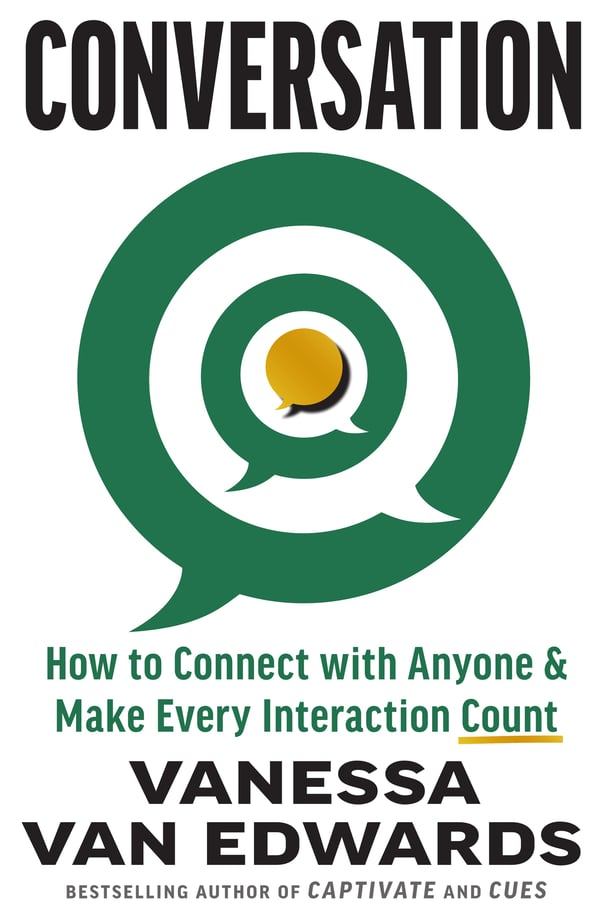
A new book by Vanessa Van Edwards
Every conversation is an opportunity.
If conversations have gotten harder, more awkward or less satisfying, you’re not imagining it. We’re simply out of practice. It’s time to find the joy in talking to each other again.
The Two Dimensions People Judge You On
When we meet someone, we evaluate them almost instantly on just two dimensions. Asch demonstrated the shape of it in 1946: a single trait word like “warm” or “cold” reorganizes every other judgment a person makes about a stranger.6
- Warmth. Do I trust this person? Are they on my side?
- Competence. Can this person actually deliver?
Between them, these two dimensions account for most of what we decide about a stranger! And warmth is evaluated first.
Mapped against each other, warmth and competence create four quadrants, and the emotions they trigger are radically different:
| High Competence | Low Competence | |
|---|---|---|
| High Warmth | Admiration (in-group, allies) | Pity (elderly, disabled) |
| Low Warmth | Envy (rich, outsiders) | Contempt (outcasts) |
Lead with competence before you have established warmth and you land in the “envy” quadrant. People may respect your credentials, but they won’t feel connected to you, and they might even feel threatened.
Warmth is evaluated first. If you lead with credentials before establishing trust, you trigger envy instead of admiration.
Think about the last networking event you attended… Did the person who immediately rattled off their title, company, and achievements make you feel drawn to them? Probably not. But the person who smiled, asked you a genuine question, and seemed truly interested? That’s warmth-first.
The goal is warmth before competence. Establish trust, then demonstrate your expertise!
This is what I teach in my book Captivate and it’s at the heart of developing real charisma.
10 Research-Backed Techniques to Be Instantly Likeable
1. Ask Follow-Up Questions
If you only change one habit, make it this one! A follow-up question is the one conversational move you can’t prepare in advance. It proves you were actually listening to this person.
Why? A follow-up question says two things at once:
- “I’m listening” (warmth)
- “I understand what you said well enough to go deeper” (competence)
It’s the conversational equivalent of a two-for-one deal!
The difference between a good and great follow-up question:
| Type | Example |
|---|---|
| Generic | “That’s cool. What else?” |
| Good follow-up | “You mentioned you just moved to Austin. What brought you there?” |
| Great follow-up | “You mentioned you moved to Austin for the food scene. What’s been your best discovery so far?” |
Great follow-up questions reference specific details from what the person just said. This is what I call threading in my book Captivate. You pick up a thread from their story and pull on it!
Try this today: In your next conversation, challenge yourself to ask at least three follow-up questions before changing the topic. Notice how the other person’s energy shifts when they realize you’re genuinely tracking what they’re saying!
For more ways to keep conversations flowing, check out my guide to conversation starters.
2. Lead with a Warm Vocal Tone
Our voices communicate likeability before our words do. Research by Alex Pentland at MIT’s Human Dynamics Lab found that tone of voice predicts outcomes in negotiations, job interviews and pitches, often more accurately than the actual words spoken.7
Specifically, the vocal patterns associated with likeability include:
- Varied pitch (not monotone)
- Moderate pace (neither rushing nor dragging)
- Warm inflection at the end of greetings (slight rise that says “I’m happy to see you”)
- Matching energy to the other person’s level
Here’s a simple test… say “Hey, great to see you!” in two ways. First, flat and hurried. Then slower, with a genuine smile on your face (yes, smiling changes your vocal tone even on the phone8).
The difference is the vocal equivalent of a warm handshake versus a limp one!
Action step: Before your next important conversation, whether it’s a meeting, a phone call or a first impression moment, take three seconds to smile before you speak. The warmth will be audible!
3. Use the Person’s Name (Strategically)
Dale Carnegie was right that a person’s name is the sweetest sound in any language. But modern research adds an important nuance: frequency matters.
A study published in Brain Research found that hearing our own name activates unique brain regions associated with self-identity and self-representation.9 It lights up the brain in a way no other word does.
But there’s a catch… Using someone’s name too frequently feels manipulative and salesy. The sweet spot:
- Use it once near the beginning of the interaction (“Sarah, great to meet you”)
- Use it once when making a key point (“Here’s what I think is interesting about your idea, Sarah…”)
- Use it once at the close (“Sarah, I really enjoyed this conversation”)
Three times, maximum. This creates a sense of personal connection without triggering the “this person read a sales book” alarm.
4. Find Uncommon Commonalities
We’ve all heard that people like others who are similar to them. But researcher Edward Jones found something more specific: rare similarities create disproportionately strong bonds.10
Finding out you both went to the same college? Nice. Finding out you both collect vintage typewriters? Now you’re bonded!
I call these uncommon commonalities: shared interests, experiences or quirks that feel unique rather than generic. They work because they create an instant feeling of “you’re my kind of person” rather than “we have something basic in common.”
How to find uncommon commonalities quickly:
- Go past surface-level topics. Instead of “Where are you from?” try “What’s the most random hobby you’ve picked up recently?”
- Share something slightly unusual about yourself first. This gives the other person permission to share something quirky too.
- Listen for the odd detail. When someone says something unexpected, pull on that thread.
Script: “I have a slightly weird question. What’s something you’re into right now that most people wouldn’t guess about you?”
This is the kind of technique that turns small talk into real conversation. I go deep on this in my book Captivate.
5. Be Strategically Vulnerable (The Pratfall Effect)
In 1966, psychologist Elliot Aronson discovered something counterintuitive: highly competent people become more likeable after making a small mistake.11
In the experiment, participants listened to a person answer quiz questions brilliantly (getting 92% right). When that brilliant person accidentally spilled coffee on themselves, their likeability increased. But when an average performer spilled coffee, their likeability decreased!
This is the Pratfall Effect, and it works because small blunders make competent people seem more human and relatable!
Highly competent people become more likeable after making small, relatable mistakes. The blunder is what makes them human.
How to use this (without sabotaging yourself):
- Acknowledge a minor struggle honestly. “I’ve been trying to figure out this new phone for a week and I still can’t find the flashlight.”
- Laugh at yourself first. When you make a small mistake, own it with humor before anyone else can react.
- Share a genuine learning moment. “I completely botched my first attempt at this recipe. Turns out you really can’t substitute baking soda for baking powder.”
The key rule: The Pratfall Effect only works when you’ve already established competence. If people don’t see you as capable yet, mistakes will work against you. Establish credibility first, then let your humanity show.
6. Give Genuine, Specific Compliments
Research by Norihiro Sadato at the National Institute for Physiological Sciences found that receiving a compliment activates the same reward center in the brain as receiving cash.12 A genuine compliment really is a bit like handing someone money.
But generic compliments (“You’re awesome!”) are the equivalent of tossing someone a nickel. Specific compliments are where the real value lives.
| Generic (Low Impact) | Specific (High Impact) |
|---|---|
| “Great presentation!” | “The way you opened with that customer story completely reframed how I think about our product.” |
| “You’re so smart.” | “The connection you made between the data and the real-world application. I hadn’t seen that before.” |
| “Nice work on the project.” | “The way you structured the timeline saved us at least two weeks. That was really smart planning.” |
The formula: Specific observation + impact it had on you.
Research also shows that people who give compliments are liked more, and that we consistently underestimate the positive impact our compliments have on others.13 The act of noticing and naming what someone does well creates a bond in both directions.
Action step: Before your next meeting, identify one specific thing each person has done well recently. Mention it naturally during the conversation. Watch what happens to the energy in the room!
7. Mirror Their Body Language (Subtly)
Body language mirroring is one of the most well-researched likeability techniques in behavioral science. When you subtly match someone’s posture, gestures or energy level, it activates what researchers call the chameleon effect.14
Tanya Chartrand and John Bargh found that people who were subtly mimicked by a confederate (who matched their posture and gestures):
- Rated the interaction as smoother
- Liked the confederate more
- Felt more connected to them
The participants had no idea they were being mimicked!
How to mirror naturally:
- Match their energy level first. If they’re calm and thoughtful, don’t burst in with high energy. If they’re animated and excited, bring your energy up.
- Gradually adopt similar postures. If they lean forward, lean forward a few seconds later. If they cross their legs, do the same (not immediately, but after a natural delay).
- Match their speaking pace. Fast talkers feel rushed by slow talkers and vice versa.
Warning: Mirroring must be subtle. If someone notices you’re copying them, it backfires immediately. The goal is to create unconscious rapport rather than a mime show.
8. Remember and Reference Small Details
This might be the most underrated likeability technique… Research on relational memory shows that referencing details from previous conversations is one of the strongest signals of caring.15
Think about how it feels when someone says: “Hey, how did your daughter’s piano recital go? You mentioned she was nervous about it last time.”
That question takes five seconds to ask. But it communicates hours’ worth of caring!
The system that makes this work:
- After meaningful conversations, write down 2-3 personal details the person mentioned (their kid’s name, a trip they’re planning, a challenge they’re working on).
- Before your next interaction, glance at your notes.
- Bring up one detail naturally within the first few minutes.
Keep a “people file” in your phone’s notes app. It sounds clinical, but it’s actually one of the most caring things you can do. It says “you mattered enough for me to remember.”
This is core to what I teach about building deeper connections. In my book Captivate, I call this technique highlighting. You highlight the details that matter to people and reflect them back.
9. Be the First to Show Warmth
Most of us are waiting for the other person to be warm first.
It’s a standoff! You’re thinking, “I’ll be friendly once I know they’re friendly.” And they’re thinking the exact same thing. The result? Two guarded people having a stilted conversation.
Research on reciprocal liking, the finding that we tend to like people who like us16, means that whoever shows warmth first sets the tone for the entire interaction.
Practical ways to show warmth first:
- Smile before they do. Not a forced grin, but a genuine expression that says “I’m glad to be here.”
- Offer a sincere observation. “I’ve been looking forward to meeting you. [Name] speaks so highly of you.”
- Use open body language. Uncrossed arms, visible palms, a slight lean forward.
- Give them your full attention. Put your phone away. Turn your body toward them. Make eye contact.
Most of us are waiting for the other person to be warm first. Whoever breaks the standoff sets the tone for the entire interaction.
This one technique has transformed how I handle networking events, speaking engagements, and even awkward dinner parties. Stop waiting for the other person to go first.
If you want a deeper dive on making strong first impressions, I have a full guide on the science behind those first few moments.
10. End on a High Note (The Peak-End Rule)
Nobel Prize-winning psychologist Daniel Kahneman discovered the peak-end rule. We judge an experience based primarily on two moments, the peak (most intense point) and the end.17
This means how you end a conversation matters disproportionately for whether people remember you as likeable.
Most of us let conversations fizzle: the energy drops, someone glances at their phone, and you both mumble “well, it was nice talking to you” while already looking for the exit.
Instead, engineer a strong ending:
- End with a specific callback. “I’m definitely going to try that restaurant you mentioned. I’ll let you know what I think.”
- Express genuine appreciation. “This was one of the best conversations I’ve had all week. Thank you.”
- Give them a reason to reconnect. “I’d love to continue this conversation. Can I send you that article I mentioned?”
The formula: Specific reference to something they said + genuine emotion + a bridge to future connection.
Nail the ending and you become someone they actively want to see again! For more techniques on how to navigate the full arc of a conversation, including the tricky parts, check out my guide to how to hold a conversation.
What Makes Someone Instantly Unlikeable
Understanding likeability also means understanding its opposite. Here are the behaviors that destroy it fastest:
1. Conversational narcissism. Sociologist Charles Derber identified the pattern of consistently shifting conversations back to yourself.18 Every story they tell reminds them of their own (better) story. Every question becomes a launching pad for your own monologue.
2. Phubbing (phone snubbing). Research from Baylor University found that pulling out your phone during a conversation significantly decreases the other person’s satisfaction with the interaction and their perception of the relationship.19
3. One-upping. Related to conversational narcissism, but more specific: responding to someone’s experience with a “better” version of it. “You ran a 5K? I just did a marathon.”
4. Unsolicited advice-giving. When someone shares a problem, jumping straight to “Well, what you should do is…” tells the person you value being right more than understanding their experience.
5. Name-dropping and credential-stacking. Remember the warmth/competence model: leading with competence signals before establishing warmth triggers the envy quadrant rather than admiration.
All five behaviors prioritize your own status over the other person’s experience. Likeability is about genuinely showing up for the person in front of us!
The Likeability Myth: It’s the Opposite of People-Pleasing
Being likeable is not the same as being a people-pleaser.
People-pleasing is about managing other people’s emotions at the expense of your own authenticity. It’s saying yes when we mean no, laughing at jokes we don’t find funny, and contorting ourselves into whatever shape we think the other person wants.
Genuine likeability is the opposite. It comes from a place of security rather than anxiety! Research on authentic self-expression shows that people who express their genuine thoughts and feelings are rated as more likeable, even when those thoughts are different from the group’s.20
These techniques remove the barriers between your genuine warmth and the other person’s experience of it.
You’re already warmer, more interesting, and more likable than you realize (remember the liking gap?). These techniques simply help us express what’s already there more clearly.
Vanessa’s Conversation Framework: Three Levels
After 15 years of studying human behavior, including my TEDx talk and working with thousands of professionals, I’ve found that every great conversation operates on three levels. I break this framework down fully in my book Captivate, and here’s the overview:
Level 1: The First Five Minutes
This is where first impressions are formed. Your goals:
- Establish warmth through open body language, eye contact and a genuine smile
- Use a strong conversation opener (not “So, what do you do?” but “What’s been the highlight of your week?”)
- Show interest with your first follow-up question
Level 2: The First Five Conversations
This is where acquaintances become connections! Your goals:
- Find uncommon commonalities
- Share strategically vulnerable stories
- Remember and reference personal details
- Move past small talk into meaningful topics
Level 3: The First Five Months
This is where connections become relationships! Your goals:
- Be reliably warm and consistent
- Show up during the hard moments too
- Create traditions and shared experiences
- Be willing to have honest, sometimes uncomfortable conversations
The techniques in this article are designed primarily for Levels 1 and 2, the critical window where likeability is established. For a deep dive into all three levels, check out my full conversation framework.
Frequently Asked Questions
Can you be likeable without being extroverted?
Absolutely. Likeability has nothing to do with being the loudest person in the room. In fact, many of the most likeable behaviors (asking follow-up questions, remembering details, giving specific compliments) come more naturally to introverts. Introversion is about where you get your energy rather than how warmly you connect with others.
How long does it take to make a likeable first impression?
Princeton researchers found people form first impressions from a face in as little as one-tenth of a second, though those impressions can still be updated with new information. The first 30 seconds are critical for establishing warmth, but you have the entire conversation to build on that foundation.
Is likeability the same as charisma?
Not exactly. Charisma is a broader quality that encompasses presence, influence, and magnetism. Likeability is one component of charisma, specifically the warmth component. You can be likeable without being particularly charismatic, but you can’t be charismatic without being likeable.
What if I’m naturally awkward in social situations?
Remember the liking gap. You’re almost certainly less awkward than you think! But beyond that, “natural” social skills are mostly practiced social skills. The techniques in this article are about learnable behaviors. Start with one technique (I recommend follow-up questions) and practice it until it feels natural before adding another.
Does likeability matter in professional settings?
More than most of us realize. The Casciaro and Lobo research showed that warmth often trumps competence when people choose collaborators. It matters everywhere people choose people: likeability helps leaders win a room, helps salespeople get a second meeting, and helps a candidate stand out against someone equally qualified.
Can you be too likeable?
If “too likeable” means people-pleasing, yes, that backfires. But genuine likeability based on warmth, interest, and authenticity? The research says no. People who consistently demonstrate these qualities build stronger relationships, have better health outcomes, and experience less social conflict.
How do I recover if I made a bad first impression?
A first impression is durable rather than permanent: consistent evidence to the contrary can override it, but it takes time. If you came across as cold, focus on demonstrating warmth in your next several interactions. If you came across as incompetent, find opportunities to demonstrate competence without bragging. The key is consistency over time rather than one grand gesture!
Do these techniques work in different cultures?
The core dimensions, warmth and competence, appear to be universal across cultures. However, the specific behaviors that signal warmth and competence vary significantly. Eye contact norms, personal space preferences, and conversational patterns differ across cultures. The principles in this article are based primarily on Western research, so adapt the specific behaviors to your cultural context.
Key Takeaways
- Ask three follow-up questions in your next conversation before you change the subject.
- Smile and ask a real question before you mention your title or what you do.
- Own the small blunder. Once people already see you as capable, laugh at your own mistake before anyone else can.
- Go first on warmth. Assume the other person is waiting, and break the standoff yourself.
- Engineer the last thirty seconds: a callback to something they said, genuine thanks, and one reason to reconnect.
- Write down two personal details after a conversation that mattered, then bring one up next time you see them.
- Trust the liking gap. Walk out assuming the person enjoyed it more than your inner critic claims.
- Treat your relationships as a health investment. The survival research puts social connection alongside quitting smoking.
- Boothby, Cooney, Sandstrom & Clark, “The Liking Gap in Conversations,” Psychological Science (2018)
- Boothby et al. (2018), The Liking Gap in Conversations — Psychological Science (PubMed)
-
doi.org/
10.1371/ journal.pmed.1000316 -
doi.org/
10.1037/ a0015497 -
hbr.org/
2005/ 06/ competent-jerks-lovable-fools-and-the-formation-of-social-networks - Asch, “Forming Impressions of Personality,” Journal of Abnormal and Social Psychology (1946)
-
mitpress.mit.edu/
9780262162562/ honest-signals/ -
doi.org/
10.1037/ amp0000147 -
doi.org/
10.1016/ j.brainres.2006.07.121 -
doi.org/
10.3758/ BF03342263 -
doi.org/
10.1016/ j.neuron.2008.03.020 -
doi.org/
10.1177/ 0146167220949003 -
doi.org/
10.1037/ 0022-3514.76.6.893 -
doi.org/
10.1037/ 0022-3514.51.2.284 -
doi.org/
10.1016/ j.chb.2015.07.058 -
doi.org/
10.1177/ 1948550611407689