
Most people think persuasion requires charisma, manipulation, or some innate gift. They’re wrong. Research in behavioral psychology reveals that ethical influence comes down to specific, learnable techniques—and the most effective ones have nothing to do with tricking people.
Persuasive communication is the strategic use of messages to influence attitudes, beliefs, or behaviors. It combines logic, emotion, and credibility to move people toward a desired outcome. The purpose of persuasive communication extends beyond simply “winning”—it’s about creating understanding, building consensus, and achieving mutually beneficial results.
What makes a persuasive argument? The most compelling arguments combine three elements: credibility (the audience trusts the source), logic (the reasoning is sound), and emotional resonance (the message connects to what the audience cares about). When all three align, persuasion becomes almost effortless.
Why is persuasion important in business? Every negotiation, pitch, and leadership moment depends on the ability to influence others ethically. Leaders who master persuasion build stronger teams, close more deals, and navigate conflicts more effectively. The techniques below draw from decades of peer-reviewed research in social psychology. Each one works because it aligns with how human brains actually process decisions.
What Is Persuasion?
Persuasion is the process of changing someone’s attitude, belief, or behavior through communication. It can happen through spoken words, written messages, or a combination of logic, emotion, and credibility. Ethical persuasion—also known as authentic influence—focuses on mutual benefit rather than exploitation.
What is persuasive communication at its core? It’s any message designed to shift how someone thinks, feels, or acts. This includes everything from a sales pitch to a heartfelt conversation with a friend. The purpose of persuasive communication is to bridge the gap between different perspectives and create alignment around shared goals or values.
The techniques below draw from decades of peer-reviewed research in social psychology. Each one works because it aligns with how human brains actually process decisions.
Be Bold
The biggest barrier to being persuasive isn’t technique—it’s fear. Fear of rejection causes people to hedge, apologize, and obscure what they actually want.
When requests are unclear, others can’t respond clearly. Vague asks produce vague results.
Common fear-driven mistakes:
- Adding unnecessary apologies before requests
- Using qualifiers like “maybe,” “possibly,” or “I was just wondering if…”
- Burying the actual ask in paragraphs of context
- Leaving next steps ambiguous
Action Step: Before any pitch, meeting, or negotiation, write down three things: (1) What you want, (2) How you can help the other person, and (3) The specific next step you’re requesting. Remove qualifiers from your language and state your request directly.
Use a Value Proposition
A value proposition is a brief statement (about 30 seconds) explaining what you do and why it matters to the listener. Think of it as your “elevator pitch”—a clear, compelling summary that makes people want to learn more. The goal isn’t to describe your job—it’s to frame your work as a solution to someone else’s problem.
Crafting Your Value Proposition
Weak value propositions describe activities. Strong ones describe outcomes. The difference lies in focusing on what the other person gains rather than what you do.
| Instead of This | Say This |
| “I plan events for corporate meeting planners.” | “Meeting planners hire me to make them look like superstars to their executives.” |
| “I write books.” | “I’m the national best-selling author of Captivate and Cues.” |
| “I’m a financial advisor.” | “I help families sleep better at night knowing their retirement is secure.” |
| “I run a marketing agency.” | “I turn invisible brands into industry leaders.” |
Notice how each strong example focuses on the transformation or benefit the listener receives. This shift from “what I do” to “what you get” is the foundation of effective value propositions.
Common mistakes to avoid:
- Using jargon your audience doesn’t understand
- Focusing on features instead of benefits
- Making claims you can’t back up with evidence
- Being so vague that you could be describing anyone
Trigger the Golden Question
A well-crafted value proposition triggers what practitioners call the “golden question”: when someone asks “How?”
“How?” signals genuine interest. It means the listener has moved from passive hearing to active curiosity. The goal of every opening statement should be to earn that question.
Example in action:
- Hiring manager: “Why should we bring you on board?”
- Candidate: “Decision-makers hire me because my problem-solving expertise directly impacts strategic objectives.”
- Hiring manager: “How do you do that?”
- Candidate: “My work in loss prevention recovered over $200,000 in revenue at my last company. That skill set would contribute to your goals from day one. What’s your highest priority project in that area?”
Notice how the candidate ends with a question that continues the conversation and positions them as a problem-solver rather than a job-seeker.
The Framing Effect
The framing effect demonstrates that people react differently to identical information depending on how it’s presented. This isn’t manipulation—it’s recognizing that word choice shapes perception.
Would you rather buy yogurt that’s “80% fat-free” or “20% fat”? The information is identical. The emotional response is not.
How the Framing Effect Influences Decision-Making
How does the framing effect influence decision-making? It works by activating different mental frameworks depending on whether information is presented as a gain or a loss. Our brains process potential losses more intensely than equivalent gains—a phenomenon called loss aversion.
In a classic study by Tversky and Kahneman1http://www.stat.columbia.edu/~gelman/surveys.course/TverskyKahneman1981.pdf, researchers asked participants to choose between two treatments for 600 people with a deadly disease:
Gain frame:
- Treatment A: “200 people will be saved”
- Treatment B: “33% chance of saving all 600, 66% chance of saving no one”
Result: 72% chose Treatment A.
Loss frame (same options, different words):
- Treatment C: “400 people will die”
- Treatment D: “33% chance no one dies, 66% chance all 600 die”
Result: 78% chose Treatment D—even though it’s mathematically identical to Treatment B.
The lesson: People are risk-averse when thinking about gains and risk-seeking when thinking about losses. This insight applies to everything from medical decisions to marketing messages to salary negotiations.
How to apply framing ethically:
- Lead with gains: “Save $100” resonates more than “Avoid losing $100”
- Use positive language: “95% success rate” beats “5% failure rate”
- Connect to the listener’s goals: Frame benefits in terms of what they care about
- Match the frame to the situation: Use loss framing when you need people to take action to avoid a negative outcome
Action Step: Before your next persuasive conversation, write down your main points. Reframe each one to emphasize what the listener gains. Test both versions aloud to feel the difference.
The Power of Social Proof
Social proof is when people copy others’ actions to determine what’s correct in a situation. It explains why restaurant reviews matter, why bestseller lists drive sales, and why people look up when others look up.
The Science Behind Social Proof
In a classic experiment by Milgram, Bickman, and Berkowitz (1969), researchers had people stop on a busy New York City street and stare upward. When one person looked up, 42% of passersby also looked up. When a group of 15 people looked up, 86% of passersby followed.
The effect plateaus—you don’t need millions of testimonials. You need enough to establish a pattern. Research suggests that even a handful of genuine testimonials can significantly influence decisions, especially when they come from people similar to the target audience.
How to Use Social Proof Ethically
How do you use social proof ethically? The key is authenticity and relevance. Ethical social proof means sharing genuine experiences from real people—never fabricating testimonials or inflating numbers. It also means matching the proof to your audience: a testimonial from someone similar to your prospect carries more weight than a celebrity endorsement.
Four ways to use social proof ethically:
- Display testimonials prominently: Place positive feedback where decision-makers will see it. Include specific details and, when possible, photos or names to increase credibility.
- Share specific numbers: “10,000 customers” or “4.8-star average from 500 reviews” carries weight. Specificity signals honesty.
- Show relevant endorsements: A fitness expert endorsing gym equipment matters more than a celebrity. Match the endorser to your audience’s values.
- Highlight engagement: “Join 50,000 subscribers” signals that others have already validated the choice.
What to avoid:
- Fake reviews or testimonials (unethical and often illegal)
- Cherry-picking only perfect reviews (audiences trust a mix more)
- Using social proof that doesn’t match your audience
- Inflating numbers or making vague claims like “thousands of satisfied customers”
Action Step: Audit your website, pitch deck, or marketing materials. Are you showing social proof? If not, gather three testimonials or statistics that demonstrate others’ positive experiences. Make sure each one is genuine and relevant to your target audience.
The Foot-in-the-Door Technique
The foot-in-the-door technique works like this: First, ask for something small. Once someone agrees, they’re significantly more likely to agree to a bigger request later.
This works because of consistency bias—people want their actions to align with their previous behavior. Once someone has said “yes” to a small request, they begin to see themselves as the type of person who says yes to such requests.
The Research Behind the Technique
In the original research by Freedman and Fraser (1966), experimenters asked homeowners to place a small “Be a Safe Driver” sticker in their window. Two weeks later, they asked the same homeowners to install a large, unattractive “Drive Carefully” sign on their lawn.
Results: Compliance jumped from 17% (large request only) to 76% (small request first, then large request). That’s more than a four-fold increase in compliance—simply by starting with a smaller ask.
The researchers theorized that agreeing to the small request changed how homeowners saw themselves. They became “the kind of person who supports driver safety,” making the larger request feel consistent with their identity.
Ethical application:
- Step 1: Make a small, easy request (“Could you review this one-page summary?”)
- Step 2: Express genuine appreciation
- Step 3: Make a slightly larger request (“Since you’re familiar with it, could you look at the full proposal?”)
- Step 4: Express appreciation again
- Step 5: Make the larger request (“Would you be interested in leading this project?”)
The key is genuine gratitude at each step—not mechanical escalation. People can sense when they’re being manipulated through a scripted sequence. Authentic appreciation makes each step feel natural.
Action Step: Identify an upcoming large request you need to make. Work backward to find two smaller requests that could precede it naturally. Practice the sequence with genuine appreciation at each stage.
The Reciprocity Principle
When someone does something for you, you feel compelled to return the favor. This isn’t just politeness—it’s a deeply wired psychological response. The reciprocity principle is one of the most powerful influence techniques because it operates almost automatically.
What is the reciprocity principle in persuasion? It’s the social norm that when someone gives us something, we feel obligated to give something back. This applies to gifts, favors, information, and even concessions in negotiations.
Dr. Robert Cialdini2https://www.influenceatwork.com/, whose research on influence has shaped the field for decades, identified reciprocity as one of the most powerful persuasion principles.
The evidence is striking. In a study by Strohmetz et al. (2002)3https://onlinelibrary.wiley.com/doi/10.1111/j.1559-1816.2002.tb00216.x/abstract, researchers tested how small gifts affected restaurant tips:
- One mint with the check: tips increased by 3%
- Two mints with the check: tips increased by 14%
- One mint, then returning to give a second while saying “For you nice people, here’s an extra mint”: tips increased by 23%
The personalized, unexpected gesture tripled the effect of simply giving more.
How to use reciprocity ethically:
- Give before asking: Offer valuable information, a genuine compliment, or a small favor before making your request
- Make it unexpected: Surprise increases the reciprocity effect
- Personalize it: Generic gifts are nice; thoughtful, specific gestures are memorable
- Don’t keep score: Give without expecting immediate return—the effect works over time
Action Step: Before your next important meeting, identify one small, unexpected favor you can do for the other person. It could be sharing a relevant article, bringing their preferred coffee, or offering a useful introduction.
The When-Feel-Need Technique
For persuasion with people you know well—colleagues, family members, partners—direct requests sometimes create defensiveness. The When-Feel-Need technique provides structure for difficult conversations without triggering resistance.
This approach comes from assertive communication research and has been used in conflict resolution for decades. It works because it separates observation from judgment and focuses on collaborative solutions.
The formula:
- When: Describe the specific situation (“When the microwave isn’t cleaned after use…”)
- I Feel: Share your emotional response (“I feel frustrated because it seems like I’m the only one maintaining the space…”)
- We Need: Propose a solution that benefits everyone (“Let’s create a cleaning schedule so no one person carries the burden.”)
This approach works because it avoids blame while clearly communicating impact. The “we need” framing positions the solution as collaborative rather than demanding. It also gives the other person room to respond without feeling attacked.
Why this technique works:
- Starting with “when” keeps the focus on specific behaviors, not character attacks
- “I feel” statements are harder to argue with than accusations
- “We need” invites collaboration rather than compliance
Common mistakes to avoid:
- Using “you always” or “you never” language
- Skipping the feeling statement and jumping to demands
- Proposing solutions that only benefit you
Action Step: Identify one ongoing frustration with someone you work or live with. Write out the When-Feel-Need statement before the conversation. Practice it until it sounds natural, not scripted.
Avoid Persuasion Paralysis
Too many options create decision paralysis. When people feel overwhelmed by choices, they often choose nothing. This phenomenon, sometimes called choice overload, can undermine even the most compelling offers.
Barry Schwartz explored this phenomenon in The Paradox of Choice, arguing that excessive options lead to anxiety and regret rather than satisfaction. The famous “jam study” by Iyengar and Lepper found that shoppers were more likely to purchase when offered 6 jam varieties versus 24.
When Choice Overload Happens
However, recent meta-analyses by Chernev et al. (2015)4https://www.sciencedirect.com/science/article/abs/pii/S1057740814000916suggest this effect depends on context. Choice overload is strongest when:
- The decision is difficult or unfamiliar
- Options are hard to compare
- The person lacks clear preferences
- There’s no obvious “best” choice
- Time pressure exists
Conversely, more options can actually be beneficial when people have clear preferences, expertise in the domain, or when the options are easy to compare. The key is understanding your audience and the decision context.
The practical takeaway remains: simplify when possible, especially for complex decisions. When you must offer many options, provide clear comparison tools and highlight recommended choices.
How to apply this:
- Present three options instead of ten
- Highlight a recommended choice with clear reasoning
- Remove options that create confusion without adding value
- Make the “best” choice obvious through visual hierarchy or explicit recommendation
- Group similar options into categories to reduce cognitive load
Action Step: Review your current proposals, menus, or offerings. Can you reduce options? Can you make the recommended path clearer? Test a simplified version and measure the response.
Want to level up your people skills? Check out our resource:
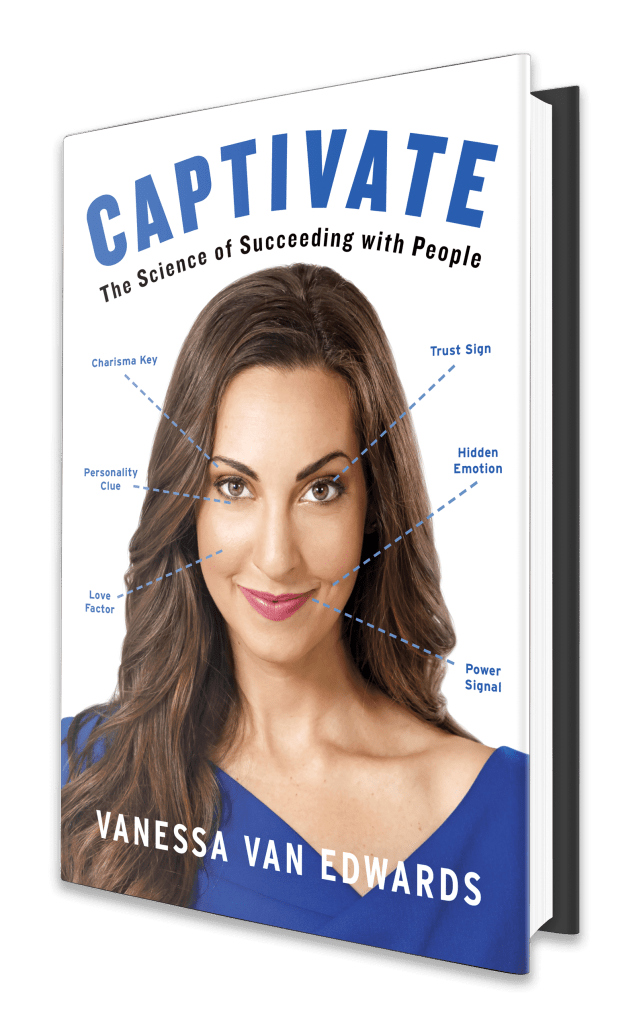
Succeed with People
Master the laws of human behavior and get along with anyone. Increase your influence, impact, and success.
Register below to get your FREE chapter of Captivate.
The Power of Story
“The most powerful person in the world is the storyteller.” – Steve Jobs
Data informs. Stories persuade. The human brain processes narrative differently than facts—stories create emotional engagement and improve memory retention. Research in neuroscience shows that stories activate multiple brain regions, including those responsible for sensory experience and emotion.
Why Stories Work
When we hear a story, our brains release oxytocin, the “bonding” hormone. This creates empathy and connection with the storyteller. Facts and statistics, by contrast, activate only the language-processing centers of the brain.
Stories also make information memorable. Studies suggest we remember stories up to 22 times better than facts alone. This is why the most persuasive communicators—from trial lawyers to TED speakers—rely heavily on narrative.
Effective story structure:
- Setup: Establish the situation and stakes
- Conflict: Introduce the challenge or obstacle
- Resolution: Show how it was overcome
- Connection: Link the story to your current point
Example:
A year ago, a project team faced disaster when their key supplier went out of business. The deadline loomed. Stress peaked. After dozens of calls and several sleepless nights, they found a replacement supplier just in time. The project succeeded.
That experience demonstrated something research confirms: persistence and collaboration overcome obstacles that seem insurmountable in the moment.
Tips for better storytelling:
- Use specific details (names, places, numbers) to increase credibility
- Include dialogue to bring characters to life
- Keep stories under 90 seconds for most business contexts
- Practice until the story feels natural, not rehearsed
Action Step: Identify one personal or professional story that illustrates a point you frequently make. Practice telling it in under 90 seconds with clear setup, conflict, and resolution.
Apply Labeling Strategically
Telling someone they embody a positive trait increases the likelihood they’ll act consistently with that label. This is known as the labeling technique, and research by Kraut (1973) demonstrated its power in charitable giving contexts.
In Kraut’s study, some donors were told they were “generous” or “charitable” people after making a donation. These labeled donors subsequently gave more in future appeals than donors who received no such label. The label created an identity they wanted to maintain.
Additional research on charitable giving found that when donors were told they were “among the highest donors,” they subsequently gave more than other groups. The label created an identity they wanted to maintain.
Ethical application:
- Tell a team member they’re “one of the most reliable people on the project”
- Acknowledge a client as “someone who really understands quality”
- Recognize a partner as “incredibly thoughtful about these decisions”
- Note that a colleague is “the kind of person who follows through”
The labels must be genuine. False flattery backfires. But authentic recognition of positive traits reinforces those traits and encourages continued positive behavior.
Navigate Difficult Personalities
Some people require adapted persuasion strategies. Narcissistic colleagues or bosses, for example, often respond poorly to direct requests that don’t acknowledge their self-image.
Two strategies that work:
- Put everything in writing: Email creates a record and gives everyone time to process before responding. This reduces the chance of being verbally sidetracked.
- Leverage their strengths: Narcissists often have genuine charisma and confidence. When pitching to clients or presenting to leadership, their natural showmanship can amplify your message—if channeled appropriately.
The goal isn’t to change difficult people. It’s to work effectively with them.
Action Step: Watch all four tips on dealing with narcissists:

Set Up the Action You Want
Persuasion ultimately leads to action—signing a contract, buying a product, agreeing to a proposal. The best persuaders make that action visible from the start.
Physical environments: If the goal is signing paperwork, have it visible when the person enters the room. When people see the inevitable action, they mentally prepare for it.
Digital environments: Use visual cues to direct attention. Eye direction in photos, arrows, and strategic placement guide viewers toward calls to action.
This isn’t trickery—it’s reducing friction between decision and action.
Action Step: Before your next meeting or presentation, identify the specific action you want. Make that action visible or easily accessible throughout the interaction.
Give Before You Ask
Reciprocity works best when the giving happens first—and when it’s unexpected.
Before asking for anything significant, consider:
- What valuable information can you share?
- What introduction could benefit this person?
- What small problem can you solve for them?
The gesture doesn’t need to be large. The mint study showed that personalization and unexpectedness matter more than size.
Frequently Asked Questions (FAQs) on Persuasion
What is persuasive communication?
Persuasive communication is the strategic use of messages—spoken, written, or visual—to influence someone’s attitudes, beliefs, or behaviors. It combines logical arguments, emotional appeals, and credibility to move people toward a desired outcome. Effective persuasive communication considers the audience’s needs, values, and concerns while presenting information in a compelling way.
What is the purpose of persuasive communication?
The purpose of persuasive communication is to create understanding, build consensus, and motivate action. Unlike manipulation, which serves only the persuader, ethical persuasive communication aims for mutual benefit. It helps bridge different perspectives, resolve conflicts, and achieve shared goals. In business, it drives sales, builds teams, and enables leadership.
How can someone be persuasive without being manipulative?
Ethical persuasion focuses on transparency, mutual benefit, and honest communication. The techniques in this guide work because they align with human psychology—not because they trick people. The test: Would you be comfortable if the other person knew exactly what you were doing? If yes, it’s persuasion. If no, it’s manipulation. Always ensure your persuasion serves the other person’s genuine interests, not just your own.
What is the most effective persuasion technique?
Effectiveness depends on context and audience. For most situations, storytelling combined with social proof creates the strongest impact. Stories engage emotions; social proof provides validation. Together, they address both the heart and the head. However, the reciprocity principle and framing effect are also extremely powerful when applied appropriately.
How can someone improve persuasion skills quickly?
Five high-impact actions: (1) Practice stating requests directly without qualifiers, (2) Collect and use social proof in all pitches, (3) Reframe one key message using gain-focused language, (4) Give something valuable before making requests, (5) Prepare one 90-second story that illustrates your main point. Practice these daily for two weeks and you’ll see noticeable improvement.
How does the framing effect influence decision-making?
The framing effect influences decision-making by activating different mental frameworks depending on how information is presented. When options are framed as gains, people tend to be risk-averse and choose the “sure thing.” When the same options are framed as losses, people become risk-seeking and choose the gamble. This happens because our brains process potential losses more intensely than equivalent gains.
How do I use social proof ethically?
Use social proof ethically by ensuring all testimonials and endorsements are genuine, relevant, and accurately represented. Never fabricate reviews or inflate numbers. Match your social proof to your audience—testimonials from people similar to your prospects carry more weight. Be transparent about the source of your proof, and include a mix of reviews rather than cherry-picking only perfect ones.
Persuasion Takeaway
- Be direct: State what you want clearly, without apologies or qualifiers
- Frame for gains: Present options in terms of what people gain, not what they avoid losing
- Show social proof: Demonstrate that others have already made the choice you’re recommending
- Give first: Offer value before asking for anything
- Start small: Use the foot-in-the-door technique for larger requests
- Simplify choices: Reduce options to make decisions easier
- Tell stories: Use narrative to make your points memorable and emotionally resonant
These persuasion techniques work because they respect how human brains actually process decisions. Master them, and persuasion becomes a skill—not a gift.Ready to take your communication skills further? Discover your unique communication style and learn how to leverage your natural strengths.
Article sources
- http://www.stat.columbia.edu/~gelman/surveys.course/TverskyKahneman1981.pdf

- https://www.influenceatwork.com/
- https://onlinelibrary.wiley.com/doi/10.1111/j.1559-1816.2002.tb00216.x/abstract
- https://www.sciencedirect.com/science/article/abs/pii/S1057740814000916

How to Deal with Difficult People at Work
Do you have a difficult boss? Colleague? Client? Learn how to transform your difficult relationship.
I’ll show you my science-based approach to building a strong, productive relationship with even the most difficult people.