If you’re looking for ways to boost your productivity, you’ve come to the right place. Whether you work remotely, in a hybrid context or onsite, there’s something here for everyone.
We’ve sorted the field into three groups:
- What actually works
- What’s worth a try
- What to stop believing
What Is Productivity? (Definition)
Productivity: n output measured against input. Increase what you produce relative to the time, energy and resources you put in, and you’ve become more productive.
Most advice skips the part that matters most, which is picking the right things to do and then guarding your attention while you do them.
Start With What the Research Actually Supports
These five strategies have the strongest evidence behind them. If you only change a few habits, change these.
Set Specific, Hard Goals
“Do your best” might be the weakest instruction you can give yourself. It feels motivating while doing almost nothing to change what you actually get done.
Decades of research on goal setting show that specific, challenging goals consistently produce more than vague or easy ones1. It’s one of the most replicated findings in all of work psychology.
The fix is tiny. Instead of “make progress on the report,” set “draft the first three sections by noon.” Name the number. Name the deadline.
A goal you can clearly hit or miss pulls effort out of you in a way an open-ended wish never will. And for brand-new or complex work, aim a learning goal at the process first (“find three approaches that could work”), then switch to performance targets once you actually know what you’re doing.
Turn Goals Into “If-Then” Plans
A goal tells you what, and an “if-then” plan tells you when and where. That second part is what makes it stick.
Deciding in advance that “if it’s 9 a.m. and I’m at my desk, then I open the document and write for 20 minutes” is one of the most dependable ways to follow through on an intention2. These plans work by wiring a specific cue to a specific action, so you don’t have to win a tiny argument with yourself every single time.
Build one by answering four questions:
- What is the exact action? (Write 500 words.)
- When will you do it? (At 7 a.m.)
- Where will you do it? (At the kitchen table.)
- How will you set it up? (Laptop open, phone in another room.)
The more concrete the plan, the less it depends on motivation.
Try this: Turn your “if-then” into positive self-talk out loud. Instead of a vague “I can do this,” say the whole plan: “At 7 a.m. I’ll write 500 words at the kitchen table, phone in the other room. Let’s go.” Saying the cue and the action together makes both harder to skip.
Protect Deep Work, Then Batch Everything Else
Focused work and constant availability can’t coexist.
After an interruption, getting back into deep focus takes real time, and a sticky piece of your attention stays snagged on whatever pulled you away long after you’ve turned back. Stack up enough of those little tugs and a two-hour task sprawls across a whole afternoon.
So defend your attention on purpose:
- Block one to two hours of uninterrupted time for your most demanding work, ideally when you feel sharpest. Treat it like a meeting you can’t move.
- Silence notifications and put your phone in another room. Out of sight genuinely beats face-down on the desk.
- Batch email and messages into two or three set windows a day instead of a trickle all day long. The total time is the same without the fragmentation.
A simple way to make this real is time blocking: treat your hours like a budget and assign each block to one job, rest included. Think of it like grocery shopping with a set amount of cash. Once you see where every dollar (hour) actually goes, you stop pretending you can afford everything.
Pro Tip If a whole task feels too big to block, chop it into pieces that each take about 20 minutes. Big, daunting projects are the ones we quietly avoid, and a 20-minute next step is small enough to just start.
Empty Your Head Onto the Page
You know that one undone thing that keeps tapping you on the shoulder all day? Did I email her back? Should I be doing that instead? That mental nagging quietly taxes your focus even while you work on something completely different.
The relief, it turns out, isn’t finishing the task. It’s planning it. Writing down a specific plan for an unfinished task clears those nagging intrusions3 so your attention is free for the task in front of you.
So get everything out of your head and into one trusted place:
- A to-do list, a notes app, a planner: pick one home
- For anything looping in your mind, write the next concrete step
- Tidy your files and workspace once, so your future self isn’t hunting mid-focus
That last one matters more than it sounds, since digging for misplaced documents is a daily drain for a lot of us. A consistent naming habit (something like Client_Project_MM-YY) quietly saves you that dig for years.
Take Real Breaks
Powering through with zero breaks feels noble. It’s actually a false economy, which is why timed work intervals like the Pomodoro method work as well as they do.
Short breaks reliably restore energy and cut fatigue4, and for routine or creative work they tend to lift your performance too. For intense cognitive work, give yourself a little longer than the standard five minutes to truly reset.
But what you do with the break is everything. Movement, daylight, a real lunch away from the screen, a few quiet minutes. All of these help you detach. Doomscrolling on the same screen you just worked on? That doesn’t count, and you know it.
Build yourself a short “recharge” menu you can grab from on autopilot:
- A lap around the block
- A real stretch
- One favorite song
- A few goofy jumping jacks
That way the break actually refreshes you instead of dropping you into a brand-new rabbit hole.
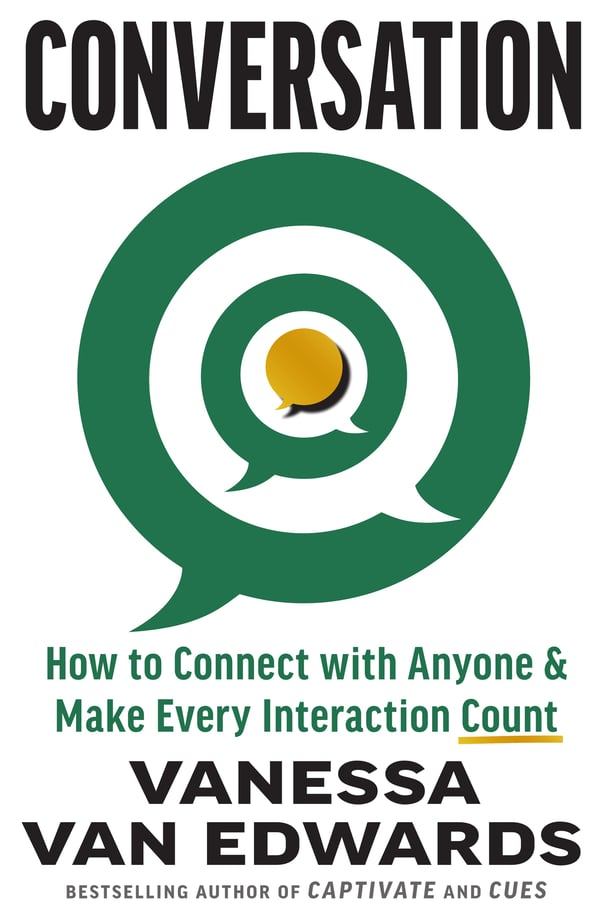
A new book by Vanessa Van Edwards
Every conversation is an opportunity.
If conversations have gotten harder, more awkward or less satisfying, you’re not imagining it. We’re simply out of practice. It’s time to find the joy in talking to each other again.
Habits Worth Trying
The evidence here is lighter, but these are sensible, low-risk and genuinely work for a lot of people. Treat this bucket like a sampler. Try a few and keep what clicks.
Match Tasks to Your Strengths With the Alphabet Method
Most of us pick what to do next based on how much time we have. What if you picked based on what you’re actually good at instead? The Alphabet Method ranks your work A through F:
- A work: things you’re great at and lose track of time doing
- B and C work: things you’re decent to average at
- D and F work: things you struggle with or dread
List your weekly tasks, rank them, then pour more of your hours into A work and delegate, batch or minimize the rest. The question changes from “do I have time for this?” to “is this even mine to do?”
Focus on the Vital Few With the 80/20 Rule
The Pareto Principle observes that roughly 80% of your results tend to come from about 20% of your effort, which is lopsided but often true.
You can’t do everything, so name the handful of tasks that drive most of your outcomes and aim your best energy right there. Remodeling a house? Start with the one room you’ll actually live in. Planning a project? Spend real time up front deciding what matters, then sprint.
Work With Your Energy
Many of us are sharpest in the first few hours after waking, and then spend that window on email.
Notice when your focus naturally peaks, then guard that window for your most important work. Energy rhythms vary from person to person, though, so treat “mornings are best” as a starting hypothesis and tune it to your own pattern.
Try this: Save shallow, low-stakes work (email, tidying files, scheduling) for your natural energy dips, and put creative or high-stakes thinking in your peak window. That afternoon slump is just your biology doing its thing, so stop treating it like a character flaw.
Learn to Say No and Delegate
Say yes too often and you slide into overcommitment, more task-switching and rushed work, which eventually chips away at the very trust you were trying to build by being so helpful.
So before you take something on, run it past three quick questions:
- Does this fit my goals and strengths?
- Does the timing steal from a higher priority?
- Is someone else honestly better placed to do it?
Set Up Your Space and Tools to Remove Friction
A workspace built for focus makes the whole day easier, right down to the colors in it. So set it up on your side:
- Keep the apps, files and tools you use most within easy reach
- Clear the visual clutter your eyes keep snagging on
- Let in natural light wherever you can
The right software helps too. A single calendar, a task manager you trust and a few automations doing the boring repetitive stuff for you. Pick tools you’ll actually open, like Todoist or Google Tasks for tasks, Asana or Trello for projects, and an AI assistant like Claude or ChatGPT for drafting and summarizing.
While you’re at it, learn the keyboard shortcuts for the apps you live in. Copy, paste, find, undo and switch-window shortcuts feel trivial one at a time, but they add up to real minutes reclaimed over a week of clicking around.
Honestly, the best system is just the one you’ll keep using.
Myths Worth Dropping
Some of the most repeated productivity advice is quietly working against you.
- “Multitasking saves time.” What feels like multitasking is rapid switching between tasks, and each switch costs you real time and accuracy5. Truly mindless pairings are fine (a podcast on your commute), but for focused work, do one thing at a time.
- “Willpower is a fuel tank you ration.” Treating self-control as a tank that empties as the day wears on leads to bad strategy. You’ll get far more from designing your environment so the right action is the easy one (phone away, tempting tabs closed, healthy defaults in place) than from gritting your teeth.
- “More time means better work.” Give a task all afternoon and it’ll often take all afternoon, with no gain in quality. Set a tighter, realistic deadline and protect it.
- “Inbox zero and a strict 25/5 Pomodoro are the answer.” Batching email helps, but compulsively emptying your inbox can just add anxiety and switching. Scheduled breaks help, but the exact 25-on, 5-off ratio isn’t magic. The pre-planned pause is the active ingredient, so pick a rhythm that fits your work.
Don’t Forget the Basics
If you feel unproductive, the real culprit is often physical or emotional.
So before you blame your willpower, run a quick check against Maslow’s hierarchy of needs:
- Are you hungry, thirsty, tired?
- Do you feel secure?
- Connected?
- Are you making progress toward something that actually matters to you?
Sleep, food, movement and connection are part of the work itself.
And if low motivation runs deeper and just won’t lift, it may point to something like depression or anxiety, which no planner can fix. Mental Health America’s directory is a kind place to start looking for support.
Finally, stay connected to your why. A clear reason for the work makes those focused hours feel worth protecting.
Frequently Asked Questions
What is the most effective productivity technique?
Setting specific, challenging goals and pairing them with an “if-then” plan for when and where you’ll act. Both are among the most reliable findings in productivity research, they cost nothing, and they work because they replace vague intentions with a clear cue and action.
Does multitasking actually hurt productivity?
Yes. What feels like multitasking is really fast switching between tasks, and every switch costs you time and accuracy. For focused work, single-tasking in protected blocks gets more done with less mental fatigue.
How often should I take breaks to stay productive?
Short breaks every hour or so reliably restore energy and reduce fatigue without hurting output. For intense cognitive work, take a slightly longer pause. What matters most is genuinely detaching. Move, get daylight or step away from the screen rather than scrolling on it.
Is the Pomodoro Technique scientifically proven?
Pre-scheduled breaks do help focus, but there’s no strong evidence that the exact 25-minutes-on, 5-minutes-off ratio is optimal. Treat the timing as a starting point and adjust the intervals to fit the kind of work you’re doing.
Productivity Key Takeaways
Take note of these key strategies to become more productive:
- Set specific, challenging goals with real deadlines.
- Turn each one into an if-then plan for when and where you’ll act.
- Protect uninterrupted blocks for deep work and batch email into a few windows.
- Get nagging tasks out of your head and into a trusted list.
- Take real breaks, and tend to sleep, food and connection.
- Stop multitasking, stop rationing willpower, and stop chasing inbox zero.
If you work from home, How to Work from Home Successfully in 7 Steps has more ideas tailored to a remote setup, and if you’re carrying a team along with you, so does boosting team productivity.