In This Article
Make your parties more fun and engaging with party games that spark conversation, make people laugh, and keep people entertained!
Do you want to turn a boring party or work event around and make it more interesting without getting too cheesy? Introduce a great party game to engage people, get them talking, laughing, and generally having fun. It’s also an excellent way to connect with friends and get acquainted with new ones!
And it’s not just about having fun either. Playing games also promotes teamwork, communication, and problem-solving skills. Plus, it’s a great way to break the ice in social situations, especially if you’re introverted.
In this article, we will dive into a list of some of the best games to play at parties of all types and also look at some of the social benefits as well as tips for hosting a great party.
What Are the Best Games To Play at Adult Parties?
The best party games to play with adult groups include elements that get everyone involved but are not too complicated to learn quickly. You can really kill the energy in the room by spending an hour going over the rules of a new game. Opt for games where the rules can be learned in five minutes or less and don’t leave anyone out—ideally, games designed for five or more people.
Not sure where to start? We got you covered! Here’s a list of the absolute best party games for adults for all kinds of party types, including games you can play remotely!
Fun Party Games For Adults
When it comes to planning a fun-filled evening with friends, party games are a must-have! There are so many great options to choose from, but here are our top five picks for the most enjoyable games to play in an adult group (including bachelor and bachelorette parties!):
- Would You Rather
This is a classic getting-to-know-you conversation game that is sure to deliver some lively and hilarious conversation.
To play, ask would you rather question to the group and have everyone respond. There’s not really any winning or losing in this game, but it’s a sure way to bring some levity to the group! Need some questions to get started? We got you covered! Here are a few to get you started:
- Would you rather only be able to eat sweet or savory food?
- Would you rather never be able to read another book or never watch another movie?
- Would you rather meet your great-great-grandparents or your great-great-grandchildren?
- Would you rather be a fantastic storyteller, inspired by embarrassing moments, or never do anything embarrassing but not have funny stories?
Check out our full list of 246 Would You Rather Questions.
- Celebrity Look-Alike
Ask each guest to bring a photo of a celebrity that they resemble. Then let people try to guess who their celebrity doppelganger is. This can be a casual background game to play throughout the party and a fun way to get people mingling!
- Heads Up!
This fast-paced game challenges players to guess words and phrases based on clues given by their teammates. With categories ranging from pop culture to history, Heads Up1 is a great way to get everyone involved and engaged. You can also pick up this game in your App Store via Warner Bros. Games & Apps!
4. Cards Against Humanity
This hilarious and irreverent game is perfect for a group of adults who aren’t afraid to let loose and have a good time. With outrageous prompts and plenty of opportunities for off-color humor, Cards Against Humanity2 is sure to have everyone laughing. (Attention: some content in this game is R-rated.)
- Pictionary
A classic game that’s always a crowd-pleaser, Pictionary is a great option for a group of creative and competitive friends. Whether you’re an artist or not, this game is sure to bring out your inner Picasso. It’s also a great affordable option with pictionary word generators3 now available online!
- Mafia
This is a classic party game that’s perfect for a group of friends who enjoy a bit of mystery and intrigue. In Mafia4 players must work together to figure out who among them is the secret killer, while the killer tries to eliminate the other players without getting caught.
- The Dating Game
Based on the TV show, _The Dating Game5 this is a fun game that’s perfect for groups of singles. One person is chosen to be the “bachelor” or “bachelorette,” and the other players act as contestants trying to win a date with them.
The contestants have to answer questions and try to impress the bachelor/bachelorette, who then the bachelor/bachelorette chooses their favorite contestant for the date.
Party Games For Families
If you’re having a family gathering, choosing a game that everyone will enjoy may feel a bit stressful. What’s something Grandpa can play that your sister will also enjoy? Try some of these ideas for your next family party!
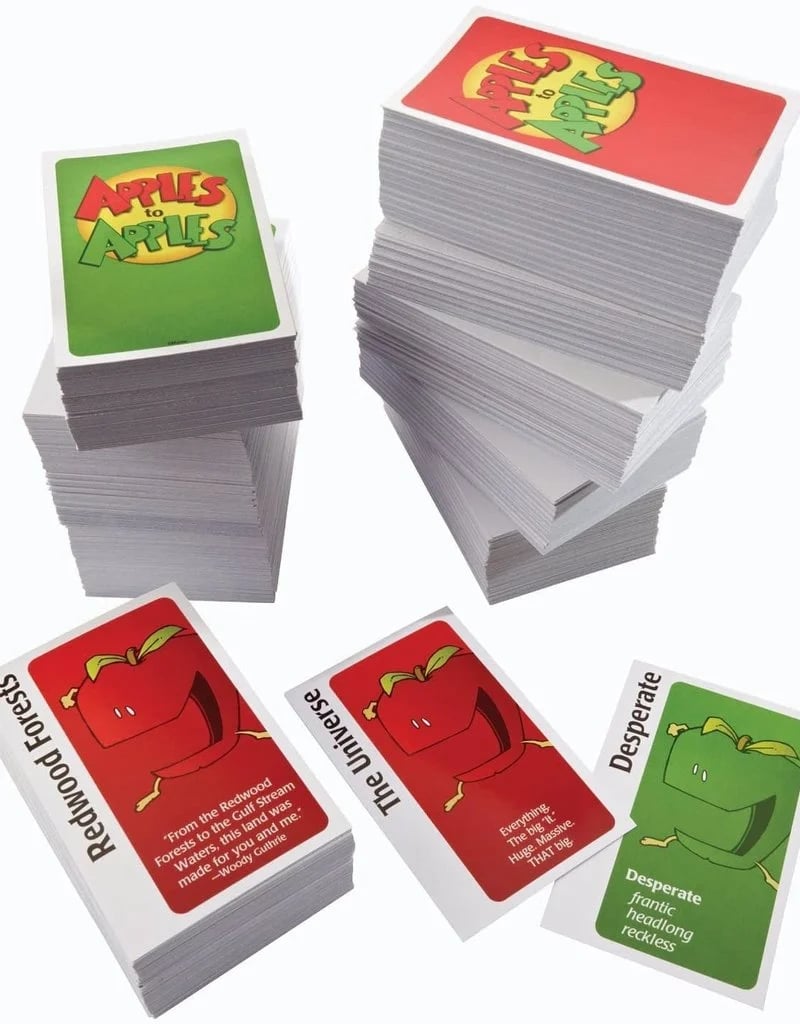
This is a fun wordplay game for a mixed-age group and is often referred to as a cleaner version of Cards Against Humanity. It’s an easy-to-learn, fast-paced game that’s great for families.
In this game, you can also enjoy the added fun of trying to figure out the personality type of the dealer and what word they might pick! To win, pick words that you think the dealer will choose to describe the word they drew.
Similar to Pictionary, this is a hilarious drawing game where players sketch out clues and try to guess what their teammates have drawn.
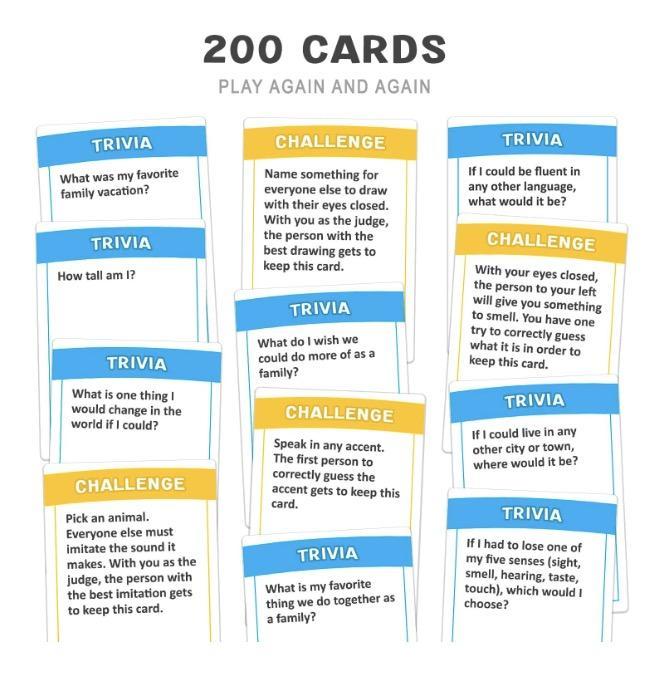
In this game, challenge your family to trivia about each other and see who knows you best. It’s a great way to inspire fun and hilarious conversations.
Party Games For Large Groups
Are you planning a party for a large group of 10 or more? Here are some fun game ideas to keep everyone entertained:
- Karaoke
Set up a karaoke machine or use a karaoke app and let your guests belt out their favorite tunes. (Be careful, some introverts in the group may not be as keen on this idea!)
- Pictionary Telephone
This game combines the classic games of Pictionary and Telephone. Play this game as a large group or split the group into teams. To play, one person draws a picture of a word or phrase and then passes it to the next person, who tries to guess what it is and writes it on a piece of paper.
The next person then draws their interpretation of the word or phrase passed to them, and so on.
You can also try a version where you draw on someone’s back, and they then have to draw what they thought the person drew on the next person’s back, and so on. It’s a fun and creative game that’s perfect for groups.
- Reverse Charades
In this game, teams act out a word or phrase for one player to guess. The twist is that instead of one person acting out the word, the entire team acts it out together. It’s a fun and silly game that’s perfect for getting people laughing.
- Fishbowl
This fun and fast-paced game combines elements of Charades, Taboos, and Password. Players write down words or phrases on slips of paper and put them into a bowl. They then take turns trying to get their teammates to guess the word or phrase by acting it out, giving clues, or using a single word. It’s a great icebreaker and can be played with teams or as individuals.
Retirement Party Games
Add an element of fun to your retirement party with a group game that not only honors the retiree but also keeps people engaged and entertained. Try some of these ideas!
- Retirement Trivia
Create a list of questions related to the retiree’s career and personal life. This game will test the guests’ knowledge of the retiree and provide an opportunity to reminisce and celebrate their accomplishments.
- Memory Lane
Create a slideshow of photos from the retiree’s life and career and ask guests to guess the year or occasion of each picture. This game will allow guests to see the retiree’s life in retrospect and appreciate their contributions.
- What’s in the Bag?
Fill a bag with items that represent the retiree’s career or hobbies. Guests can take turns reaching into the bag and guessing what each item represents. This game will test guests’ knowledge of the retiree’s interests and can spark conversation about their passions.
- Retirement Roast
This involves guests taking turns saying something funny, memorable, or heartfelt about the retiree. It’s also a fun way to honor and celebrate the retiree’s contributions while also providing some lighthearted entertainment.
Trivia Party Games
Is your group hungry for only the best trivia questions and answers? Well, look no further! We’ve scoured the greatest list of trivia games for you and your party:
- Pub Quiz
Create a variety of categories and questions, mimicking a traditional pub quiz. Teams compete to answer the most questions correctly, making it a great choice for larger groups.
Feel free to check out QuizBreaker for pre-made questions and themes to get started.
- Jeopardy!
Using an online Jeopardy! board, host a game where participants choose questions from different categories, earning points for correct answers. This can be tailored to fit any theme or occasion.
You can use JeopardyLabs to create your own customizable Jeopardy! game board. For virtual gatherings, a screen-sharing platform like Zoom works perfectly.
- Trivia Pursuit
A classic board game that tests players’ knowledge in various categories. This game can be played with physical cards or using an online version for virtual gatherings.
To play online, visit Trivial Pursuit on Pogo.
- Movie Trivia
Focus on movie-specific questions, from famous quotes to actors and plotlines. This is perfect for a film-themed party or a group of movie buffs.
For a comprehensive list of movie trivia questions, check out Fun Movie Trivia Questions.
- Music Trivia
Play snippets of songs and have participants guess the title and artist. This game is a hit for music lovers and can easily be adapted to different genres or decades.
Use a music streaming service like Spotify6 to create playlists or find pre-made music trivia playlists.
- Dungeons & Dragons (D&D)
A classic fantasy role-playing game where players create characters and go on epic adventures guided by a Dungeon Master. This game involves storytelling, strategy, and teamwork, and a lot of acting.
New to D&D? Wizards of the Coast7 provides starter kits and resources to help you get started. And if you’re interested in how D&D works, check out this video:
- Escape Room in a Box
Bring the escape room experience to your home with a role-playing twist. Players must solve puzzles and find clues to escape a fictional scenario within a set time limit.
Check out Escape Room in a Box for kits that provide everything you need for a thrilling game night.
- The Dating Game
Based on the classic TV show, one player takes on the role of the bachelor or bachelorette, while the others play potential suitors. The bachelor/bachelorette asks questions to determine which suitor is the best match.
For ideas and setup tips, visit The Game Gal.
- Spyfall
In this game, one player is a spy trying to blend in while the others are trying to identify the spy. Players ask each other questions to determine who knows the location and who is faking it.
Find the game and instructions at Cryptozoic.
- Vampire: The Masquerade
Players assume the roles of vampires navigating the complex politics and society of the undead. This game is rich in storytelling and character development.
Visit World of Darkness for game guides and resources.
Harry Potter Party Games
Throwing a Harry Potter-themed party? Try some of these fun party games with your group!
Put on your sorting hat and see which Hogwarts house you belong to! Take turns asking Harry Potter trivia questions and award points to the team that answers correctly.
Set up a makeshift Quidditch field and divide into teams. (Note, this game is best played outside!) Use brooms and hula hoops as props and try to score points by throwing a ball through the opposing team’s hoop.
- Horcrux Scavenger Hunt
Hide small objects around the party space that represent the Horcruxes from the Harry Potter series. The person who finds the most Horcruxes wins a prize!
Looking for more ways to boost the energy of your party with masterful conversation? Check out this helpful resource!
Christmas Party Games
Looking for some fun party games to play at your Christmas gathering? Here are our top five picks that are sure to bring laughter and joy to your festivities:
- White Elephant gift exchange
This classic game is always a hit. Each person brings a wrapped gift and puts it in the center of the room. They then take turns choosing a gift or stealing one that someone else has already opened. The game continues until all gifts have been opened.
- Christmas charades
Get everyone laughing with this classic game of charades. Start with everyone writing down a few Christmas-themed songs, movies, or phrases, and drop them into a bowl or hat. Split into teams, set a one-minute timer, and take turns acting out Christmas-themed phrases, songs, or movies. The team with the most correct guesses wins!
- Name That Tune: Christmas Edition
Play snippets of popular holiday songs and see who can guess the song’s name the fastest. This game is sure to get everyone in the holiday spirit.
- Christmas trivia
Test your knowledge of Christmas traditions, movies, and music with a fun trivia game. Split into teams and see who can answer the most questions correctly. For a list of great Christmas trivia questions, check out QuizBreaker.
- Christmas Mad Libs
This silly game is always a crowd-pleaser. Fill in the blanks of a Christmas-themed Mad Libs8 story with random words, and then read the hilarious results out loud.
DIY Craft Party Games
Combine creativity and fun with these DIY craft party games that allow guests to make something memorable while enjoying each other’s company.
- Canvas Painting
Set up individual canvases and painting supplies. Provide a theme or let guests paint freely. At the end of the party, everyone can share their artwork.
For supplies and ideas, you can visit Michaels9 or Joann.
- Jewelry Making
Provide beads, strings, and other materials for guests to create their own jewelry. This hands-on activity is relaxing and gives everyone a personalized keepsake to take home.
Check out Beadaholique10 for a wide variety of jewelry-making supplies.
- DIY Photo Booth Props
Supply craft materials for guests to create their own photo booth props. After making their props, they can use them in a photo booth setup for fun pictures.
For inspiration and printables, visit Pinterest11 or Etsy.
- Scrapbooking Station
Set up a scrapbooking area with photos, stickers, and decorative papers. Guests can create scrapbook pages commemorating the party or other significant events in their lives.
Find scrapbooking supplies and ideas at Scrapbook.com12 or Creative Memories.
- Tie-Dye Party
Provide white shirts, fabric dyes, and rubber bands. Guests can create their own tie-dye designs and take home a unique piece of clothing.
For tie-dye kits and instructions, you can visit Tulip Color13 or Dharma Trading Co..
Birthday Party Games For Adults
Looking for some fun group activities to play at a birthday party celebrating someone’s life? Here are five great options:
- Name That Tune: Birthday Edition
Create a playlist of popular songs during the birthday honoree’s birth year and play a few seconds of each one. The first person to guess the song correctly gets a point. The person with the most points at the end of the game wins.
- Two Truths and a Lie: Birthday Edition
Each person takes a turn sharing three stories or statements about the birthday honoree—two true and one false. The group then tries to guess which statement is the lie.
Halloween Party Games For Adults
Looking for some spooky fun this Halloween? Here are some of our most recommended games to play in a group at your Halloween party:
This classic game is perfect for Halloween night. Much like the game of Mafia, players take on the roles of villagers and werewolves, trying to identify and eliminate the other team. It’s a game of strategy and deception, and it’s sure to keep your guests on the edge of their seats.
- Halloween Superlatives
This is a fun game you can play in the background of your Halloween party. Pick out a set of superlatives and have everyone vote on the costumes people are wearing or the characters people are being.
Some examples include, “Most likely to die first in a vampire movie,” “Scariest sense of style,” or “The character I wouldn’t mind being deserted on an island with.” Have fun with it! After all the votes are in, give out prizes to the winners.
If you’re a fan of mystery and role-playing, this is a great game for a group of people at a Halloween party, especially if your friends are willing to play along with the idea of taking on a role and joining in a story. Before your party, assign roles and responsibilities, and have everyone show up ready to play and solve the crime. And, of course, costumes are encouraged!
Bachelorette Party Games
Looking for fun ways to celebrate a bachelorette party? Try out some of these bride-themed games with your friends!
- Bridal Bingo
This classic game is a hit at bachelorette parties and can be played throughout the evening. Create bingo cards with words or phrases you think you’ll hear or experience, and have guests mark off items as they hear or witness them throughout the night. The first person to hit bingo wins.
Create your own customized bingo card14 with Canva or use an online bingo card generator.
- Never Have I Ever
This game is about sharing embarrassing stories and wild experiences with friends. If you’re looking for a game guaranteed to get everyone talking and laughing, Never Have I Ever is the way to go. It’s also easy to play.
Before you start, everyone holds up five fingers and takes turns sharing something they’ve never done. If anyone has done it, they put down a finger (you can do the same thing with drinks, if you prefer!). The last person with fingers up wins!
- Love, Like, Leave
In this game, each person takes turns calling out three people, and everyone in the group has to declare whether they would love, like, or leave that person. (For a more risque version of this game, some people prefer to call it “Do, Date, Dump”). It’s best to play this game with celebrities or fictional characters—for example, Chris Pine, Chris Evans, or Chris Pratt.
Online Party Games
Are you looking for games to play online with your remote team or family? Here are our top recommendations.
Jackbox Games is a game collection for everyone. Jackbox games come in “packs” which each contain a handful of different games such as trivia, drawing, acting, and word games (among more!) that can be played remotely. Each player can join the game using a unique code and even play with their phone, making it easy and interactive.
I highly recommend Jackbox Party Pack 7, 3, or 8—those contain some of my faves such as Quiplash!
This game has become incredibly popular recently. Players work together to identify and vote off the “imposters” on their spaceship while the imposters try to sabotage and kill the crew.
This word game can be played remotely using a virtual board. Teams take turns giving their teammates one-word clues to guess the words on the board without accidentally leading them to the “assassin” card.
This game is all about coming up with funny responses to prompts. Players vote for their favorite responses, and the winner with the most votes at the end wins!
Charades and Acting Games
Charades and acting games are timeless party favorites that bring out the performer in everyone. These games are perfect for breaking the ice, encouraging laughter, and fostering a lively and engaging atmosphere at any gathering.
- Classic Charades
Set up individual canvases and painting supplies. Provide a theme or let guests paint freely. At the end of the party, everyone can share their artwork.
Check out Charades Ideas for a list of charades ideas and printable cards.
- Reverse Charades
In this twist on the classic game, instead of one person acting out a word for the group, the entire group acts out a word for one person to guess. This game is fast-paced and hilarious, making it ideal for large groups.
You can find the game and instructions at Reverse Charades.
- Heads Up!
Players hold a card or phone to their forehead displaying a word that they cannot see, while the other players give clues to help them guess the word. Heads Up! is a quick and fun game that gets everyone involved.
Download the app from Heads Up!.
- Acting Out
Players draw cards with scenarios or famous characters and must act them out without using words. The goal is to get the other players to guess correctly. This game is great for encouraging creativity and improvisation.
Check out Outset Media15 for game ideas and materials.
- Theatrical Improv
Players are given prompts or scenarios and must improvise a short skit on the spot. This game is perfect for those who love acting and storytelling. For improv game ideas and prompts, visit Improv Encyclopedia.
Holiday Party Games
Looking for some fun holiday-themed party games to play with your friends and family? Here are some great ideas for various holidays:
Get in the spirit of Hanukkah with a classic dreidel game. Just make sure to have enough gelt (chocolate coins) on hand! This is a great game for almost any number of people, and it’s easy to play.
- Name that dish
This is a fun game to play with your family or friends at Thanksgiving. Cook up a set of dishes and blindfold the guests who want to take part in the competition (don’t let any competitors see the dishes ahead of time!). Have them blindly taste each dish and identify what it is. Make it a challenge by mixing in some hard-to-guess dishes!
- Easter egg hunt
This is an age-old classic typically designed for kids. To add an adult twist, include fun or surprising prizes inside the eggs you know your friends will love. Maybe one of the eggs even has money inside!
Engagement Party Games
Looking for some fun and interactive games to play with your friends at an engagement party? Here are five of the best engagement-themed party games that are sure to keep your guests entertained:
This classic game is perfect for an engagement party. It involves questions about the bride and groom’s relationship and is a great way to get to know the couple better. Test people’s knowledge about how they met, the date of their first kiss, and maybe even what nicknames they have for each other! The person with the most correct answers wins!
- Couples trivia
Set this game up ahead of time by having the future bride and groom answer questions privately for both themselves and their partner. Questions might include, “What is your/their favorite food?” or “What was your/their childhood nickname?”
Then at the party, have them reveal their answers to the group. To get the group more involved, have the group answer the questions too. If someone in the group answers correctly and the bride or groom answers incorrectly, the point goes to the guest!
- Name That Love Song
This game involves playing a short clip of a popular love song and asking guests to guess the song’s name. This is a great way to get guests singing along and can be a lot of fun.
- Guess the Number of Kisses
This game involves filling a jar with Hershey’s Kisses and asking guests to guess the number of kisses in the jar. It’s a great background game that people can participate in throughout the party. The guest who guesses closest to the actual number wins the chocolate!
Graduation Party Games
Looking for a party game for a graduation party that really celebrates a graduate’s success while also adding a boost of fun to the group? Try some of these party game ideas!
- Graduation Trivia
Test your group’s knowledge of the graduate’s hobbies, personality, school, and major with a fun trivia game. Create questions that highlight their accomplishments and interests, and award prizes to the winners.
- Graduation Photo Booth
This is less of a game and more of a fun party element. Set up a photo booth with props and decorations that celebrate the graduate’s achievements. Encourage guests to take silly and memorable photos to commemorate the occasion. To add an extra dose of fun, create a hashtag people can use to post their photos on social media and award prizes to the most creative shots!
Outdoor Party Games
If it’s nice outside, bring your party game into the yard! Here are some of the most recommended outdoor party games.
- Bags or Cornhole Tournament
This is a popular yard game that will require purchasing Bags/Cornhole16 sets or building one17 on your own. It makes for the perfect outdoor game for a large group, especially if you add the element of a tournament to it. The last team standing wins!
- Olympics
Set up various games and challenges, such as a snowball toss or sled races (if it’s winter) or a water balloon toss or hula hoop competition (if it’s summer). You can set up your games like a tournament and include prizes for your gold medalists!
In this game, players take turns throwing a disc to land in the kan with the goal of getting 21 points to win (similar to Bags/Cornhole). Points vary depending on whether you hit the kan or land in the kan. Teammates can help deflect the disc to land in or closer to the kan to increase your point potential.
This game is growing in popularity as of late. It’s a combination of tennis, badminton, and ping pong, played on a smaller court with a lower net and a paddle instead of a racket. The rules are simple and easy to learn. The first team to reach 11 points, with a lead of at least 2 points, wins the game.
This is a great option for groups of a variety of skill levels and ages. The objective of the game is to roll your ball as close as possible to the target ball, also known as the pallino. To win at bocce, you need to have good aim, strategy, and a bit of luck.
Croquet is an entertaining option for people of all skill levels, but it requires a bit of strategy, precision, and hand-eye coordination. The object of the game is to hit plastic or wooden balls through a series of hoops with a mallet. The player who successfully completes the course and hits the finishing stake wins the game.
This is an easy game to set up and requires very little equipment. The objective of the game is to toss your bolas, which are two balls connected by a string, onto the rungs of a ladder. The higher the rung that your bola lands on, the more points you will score.
The objective of the game is to throw horseshoes at a metal stake placed in the ground. Each player takes turns throwing their horseshoes, trying to get as close to the stake as possible. Points are earned based on how close the horseshoe lands to the stake, with a ringer (landing around the stake) being worth the most points.
What Are the Social Benefits of Party Games?
The social benefits of party games include building stronger friendships and a sense of camaraderie with others. And it’s not just about having fun either. Playing games also promotes teamwork, communication, and problem-solving skills. Plus, it’s a great way to break the ice in social situations, especially if you’re introverted.
So, next time you’re looking for a fun way to enhance your social connections, why not suggest a game night with your friends?
How to Host a Party Game
Before you host your next party game, check out these tips on hosting a game night from Vanessa Van Edwards. She breaks it down into a few simple steps and things to consider.
- Set a goal. Are you hoping to get to know people better, laugh, or learn something new?
- Plan ahead. Think about the number of people, the personality mix, and the space you need.
- Choose the best game to match the goal, group, and space.
- Prepare people ahead of time. Let people know what to expect before they get there so they can mentally prepare themselves.
- Provide snacks and beverages—a must for any party! If you want to get fancy, you can even theme refreshments around your game or party type.
- Pay attention to the time. Don’t get started too late or let things drag on longer than people feel comfortable.
- Have a backup plan. If the game you picked isn’t jiving with your group, have a backup plan ready.
- Take suggestions. Before the next party, ask people for ideas and suggestions.
Party Game Key Takeaways
In summary, take note of these benefits and tips to have fun at your next party!
- Rember, the best party games to play with adult groups include elements that get everyone involved but are not too complicated to learn quickly.
- Playing games promotes teamwork, communication, and problem-solving skills.
- Playing games build stronger friendships and a sense of camaraderie.
- For a great game night, set a goal, plan ahead, and choose the right game for your mix.
For even more game ideas, check out our article, The 30 Best Games to Play With Every Kind of Friend.