
Your eyes are the most honest part of your face—but not a lie detector. Here are 34 eye behaviors, what each really signals, and where the popular reading goes wrong.
You’re three minutes into a first date, mid-story, when the other person’s eyes flick to the door—then back to you, a half-second too late. Your stomach drops. They’re bored. They want out.
Or do they?
That one glance could mean a dozen things. Boredom, sure. But also a stray thought, a hard memory or a half-second of figuring out what to say next. Here’s the thing: your eyes are the most honest part of your face—but they are not a lie detector. They’re a live feed of where your attention goes and how you feel, moment to moment.
There’s an old saying that the eyes are the windows to the soul. Nobody’s sure who said it first (it wasn’t Shakespeare), and it turns out to be mostly right—just not the way most people think. Eyes don’t catch liars on cue. They broadcast interest, effort and emotion in real time. Recent research can even watch two people’s pupils fall into sync as their attention locks together (Harrison et al., 2021, PNAS).
This guide breaks down 34 eye cues: what each one tends to mean, where the popular reading goes wrong and how to use them without coming off as a creep. The first rule before all of it—read the person, not the cue.
In this guide, you will learn:
- the cue that best indicates if someone is (truly) happy to see you
- how long eye contact should actually last, according to the research
- how to appear to be the best listener in the world, even if you’re terrible at it
- the real relationship between eye behavior and lying (it’s not what you were taught)
- and more!
Test Your Eye-Decoding Skills
If you think you have what it takes to know the hidden meaning behind the eyes, it’s time to put your skills to the test. We love conducting new experiments on human behavior here in our Science of People research lab, and we want to know how good you are at interpreting emotions from the eyes alone.
Watch our video below to learn how to read someone’s eyes:
First, Find Their Baseline
Before any single cue means anything, you need a baseline. A baseline is how someone behaves under normal, non-threatening conditions. Read changes from that baseline—not isolated gestures. Here are a few things to track:
- Watch their blink rate. People blink 16–20 times a minute, depending on lighting and humidity. If someone suddenly blinks faster or delays their blinking, that shift can signal interest, stress or concentration.
- Baseline their eyebrow movements. Are they eyebrow-expressive? Or do their eyebrows stay motionless like a tree stump?
- Watch their eye direction. A person may have a favorite side—left, right, up or down—when they’re thinking. A dramatic shift from that habit is the signal, not the direction itself.
Once you’ve established someone’s baseline, the cues below become meaningful. If you see one of these and it differs from their normal behavior, treat it as a flag worth a closer look—not a verdict.
One cue should never be read alone. Cluster your reads: a single squint is ambiguous, but a squint plus crossed arms plus a clenched jaw is a clear signal of discomfort. Watch timing, too—a blink that lands right after a specific word or number tells you more than random blinking ever will.
Eye behavior is also a big part of courtship and rapport. Let’s start with the cues that signal interest.
Eye Cues That Signal Interest and Attraction
The eyebrow flash
What It Means: The flash is a quick arch of the brows—less than one-fifth of a second—and like most gravity-defying gestures, it reads as positive. We use it to greet people, to thank someone or to add emphasis when talking. Babies just a few months old light up when their mothers do it.
The eyebrow flash is the unofficial cool kid’s greeting, and it’s used all around the world. See someone you recognize? Eyebrow flash. Want to get someone’s attention from across the room? Flash. Think someone’s looking good? Flash, flash, flash.
Eyebrows play a pivotal role in facial recognition. One study showed that removing eyebrows from photos of celebrities hurt people’s ability to recognize them more than removing the nose or the eyes. Eyebrows also protect us from dust, light and moisture1.
Even monkeys and apes communicate with this inborn gesture2. One exception worth noting: in Japan the eyebrow flash is often considered too intimate or improper between adults, so it’s used far less.
The golden rule: eyebrow flash people you like or those whom you want to like you.
The flash is a great greeting on its own, but paired with a smile and a quick up-down it tips into flirting:
Pro Tip: How to Know if Someone Is Happy to See You Here’s a tip most people miss. When you greet an old acquaintance, watch their brows. No movement at all, or barely any? They may not be thrilled to see you. A sharp rise—the flash—is a good sign they are.
Winking
What It Means: We generally take a wink as a sign of flirtation. It also gives a welcome split-second break that stops continuous eye contact from turning creepy—a way of softening a gaze that could otherwise feel threatening.
Fun Fact: Are Women Better at Reading Eye Cues Than Men? Dr. Simon Baron-Cohen at Cambridge ran a test where participants saw only a narrow strip of a face—just the eyes—and chose which mental state was being expressed, from “friendly” and “relaxed” to “desire for you” versus “desire for someone else.” Men averaged 19/25 and women 22/25. Both sexes read eye signals better than they read body signals, and women edged ahead. (This is the well-replicated “Reading the Mind in the Eyes” test.)
In this scene from Mean Girls, Regina asks Cady for a second alone with her friends. To keep it from reading as mean, she flashes a toothy grin and a friendly wink to signal she’ll be back (timestamp 0**P):
Pro Tip: A Wink Reads as Friendly… With a Catch In a 2009 study, actors winked at strangers after asking for the time. Afterward, most people described the wink as thankful, friendly or flirtatious. But an earlier study found a catch: people only liked being winked at when the winker was of the opposite sex. Read the room before you wink.
Single eyebrow raise
What It Means: A single raised eyebrow signals surprise. Add a warm smile and it can mean interest—but don’t rush in. Depending on context, it can also mean skepticism.
Watch the cluster. A raised brow with a smile, open posture and a head tilt? Green light. A raised brow with crossed arms and legs? Slow and steady.

Raising both eyebrows
What It Means: When both eyebrows shoot up and hold, it usually signals surprise—the good kind, like hearing good news, or the worried kind. It’s different from the eyebrow flash because the brows stay up longer.
Ever wonder why people raise their eyebrows mid-conversation? When we want to land an important point, we tend to raise our brows. It’s a natural warmth cue—a way of saying “look at me, this matters”—and a punctuator during speech.
Even monkeys recognize the gesture when someone raises their eyebrows.
A note on a popular claim: the Pease books describe women raising their brows and lowering their eyelids to create a “baby face” that triggers a protective instinct in men. It’s a fun idea, but treat it as pop-psychology rather than settled science—the evolutionary “releases hormones to protect” framing isn’t well supported. What is reliable: raised brows are a broad interest and warmth cue, used by everyone.
Pro Tip: How to Be a Really Good Listener When someone is speaking and really wants your attention, you’ll often see a cluster5:
- they look at you
- as they hit a big statement, they glance away briefly
- they look back to check if it landed
Here’s where you come in—raise your eyebrows and give a triple nod right as they finish. It reinforces that what they said made an impact, and it makes you memorable.
Rapid eye blinking
What It Means: Dr. David Givens, director of the Center for Nonverbal Studies, says rapid eyeblink (or “eyelash flutter”) signals raised psychological arousal, and “faster blinking may reflect sexual excitement.”
Watch this proposal on The Bachelor—lots of eye fluttering, all excitement (timestamp 3 or):
Flirty blinking, or “eye batting,” often pairs with a downward head tilt, which shrinks the face and makes the eyes look bigger.
But rapid blinking isn’t always flirtation. It can also flag an inner struggle3—you might see a flutter when someone hears something they don’t like, or when they’re straining to express themselves.
How Long Should Eye Contact Actually Last?
This is where eye-contact advice usually goes wrong. For years the rule of thumb was “more is better.” The research tells a more precise story.
When people feel looked at, they tend to feel liked, and eye contact is a powerful rapport builder. But there’s a sweet spot. In a study of nearly 500 people, Binetti and colleagues (2016, Royal Society Open Science) found the preferred duration of mutual gaze is about 3.3 seconds, with a comfort zone of 2–5 seconds. Almost nobody preferred less than 1 second or more than 9. Hold a glance for roughly three seconds and you signal engagement without pressure.
You may have seen the 50/70 rule—50% eye contact while speaking, 70% while listening—or a similar 60/40 split. These are useful, widely taught heuristics: moderate gaze signals engagement without dominance. Just know they trace to practitioner consensus, not a single landmark experiment, so treat them as rules of thumb rather than hard findings.
Aim for the 3-second sweet spot, and a bit more gaze when listening than when speaking.
A 2018 Nature study found new acquaintances spend roughly 60% of a short conversation gazing at each other’s faces—so moderate-to-generous face gaze is normal and expected when you’re getting to know someone.
Even brief eye contact pays off. Making eye contact just 30% of the time has been shown to significantly improve how much people remember of what you say. And mutual gazing increases feelings of closeness—it’s why the famous “36 questions” exercise ends with sustained mutual eye gazing as a relationship-building step.
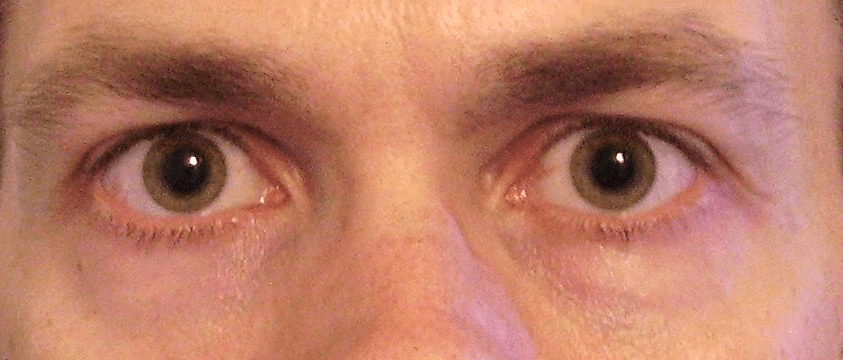
Pro Attraction Tip: How to Tell if Eye Contact Is Flirtatious Want to know if someone’s interested or just staring into space? Look for a cluster, per neuropsychologist Marsha Lucas: “after making eye contact, she looks down a bit, gathers or otherwise preens her hair, and then looks up at you while her chin is tipped.” An eyebrow flash of recognition after eye contact is another good sign.
How to Be More Persuasive and Memorable Speakers who use more eye gaze tend to come across as more persuasive, informed, sincere and credible, and they’re rated as more intelligent and more extroverted. Watch our video on decoding 7 body language cues:
On the other hand, you can overdo it. Hold a gaze a few seconds too long and it reads as threatening—or, when paired with silence, as disagreement. I call this the “disappointed dad stare.”
Pro Tip: Avoid the Stare Trap A common dating mistake: staring way too long. Someone keeps eye contact while talking and forgets to look away, which forces their date to either stare back or break away mid-sentence. Long eye contact is good—just look away occasionally so you don’t tip into creeper territory.
What Pupils Reveal—and What They Don’t
The Winning Poker Player Champion poker player Phil Hellmuth faced a choice: fold or raise. He folded—and dodged a major loss, because his opponent had a full house. How did he know? He watched his opponent’s pupils dilate when a certain card hit the table.
Pupils respond to arousal—of many kinds. A 2019 replication of Eckhard Hess’s classic pupil work confirms that pupils change size with interest and mental effort. Hess found heterosexual men and women dilated when viewing pinups of the opposite sex.
Here’s the important caveat that most “dilated pupils = attraction” advice skips: pupils dilate for lots of reasons—arousal, attention, hard thinking and, above all, changes in light. So a wide pupil is one possible signal of interest, not proof of it. Pupil size increases during problem-solving and peaks right as someone lands on a solution3, which has nothing to do with attraction.
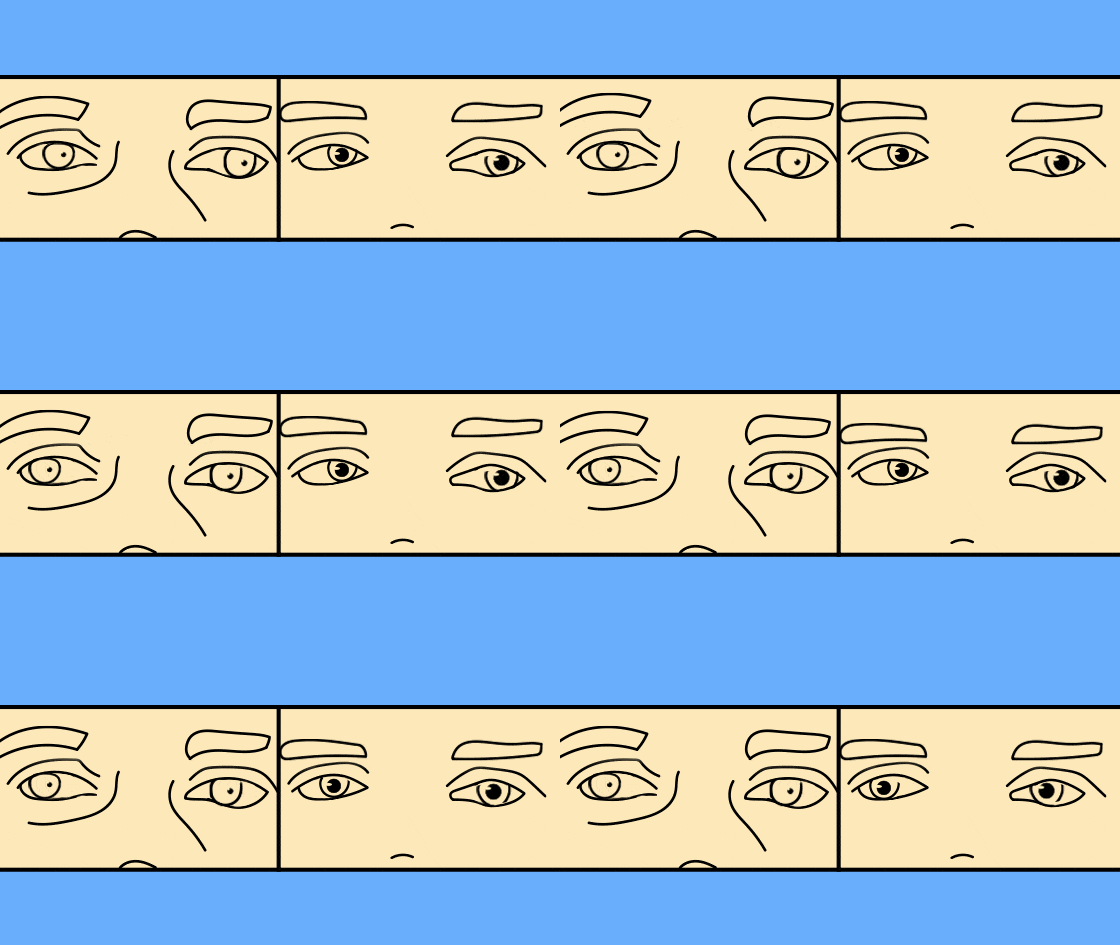
That said, dilation is a real signal in the right context. People rate models as more attractive when a photo is altered to enlarge their pupils2, and romantic encounters often feel more electric in dim light, where everyone’s pupils widen.
We dilate at things we like. Pupils widen more for familiar, preferred items—watch a child pick a favorite toy. Sienna’s eyes dilate the second she reaches for her Frozen dolls. The same shows up with food preferences and even with photos of liked versus disliked job candidates4—pupils widen for the liked, constrict for the disliked. Because dilation isn’t consciously controlled, it can leak a preference someone’s words deny (the dieter whose pupils light up at dessert).
We also dilate when angry. Anger cues elicit high levels of pupil dilation too (Frontiers study)—another reason to read the cluster, not the pupil alone.
Pupil decoding through history
- Ancient Chinese gem traders watched buyers’ pupils to gauge interest and set prices. Jade dealers wore dark glasses to hide their own dilation when handed a prized stone5.
- During the Italian Renaissance, women used belladonna berries—which are toxic—to dilate their pupils and look more attractive.
- Today, card players win fewer hands when opponents wear dark glasses, because they lose the pupil tell.
Eye Direction: Where People Look When They Think
You’ve probably heard that looking one direction means lying and another means remembering—the old NLP “eye-accessing cues” idea (look up-right to fabricate, up-left to recall).
Here’s the honest version: that lie-detection claim doesn’t hold up. Studies have failed to find that left/right eye movement reveals deception. What eye direction can loosely reflect is the kind of thinking someone’s doing. A classic 1972 study of mathematicians found those who looked left while thinking leaned on imagery, while those who looked right leaned on symbols. Use it as a soft hint about processing style, never as a lie test.
The deeper truth: looking away while thinking is a feature, not a tell. Research led by Gwyneth Doherty-Sneddon (PMC) shows people systematically avert their gaze more as questions get harder—because breaking eye contact frees up mental bandwidth. Force eye contact during problem-solving and accuracy drops sharply (from roughly two-thirds correct to about half). Train 5-year-olds to look away while thinking and their accuracy on tough questions improves. By age 8, kids avert their gaze for about three-quarters of their thinking time on hard questions.
Practical takeaway: If someone looks away while answering you, they’re probably managing cognitive load—thinking harder—not hiding something.

Looking left or right
What It Means: A sideways glance can signal doubt, reluctance, suspicion or simple thinking. Pair it with a furrowed brow and it leans toward suspicion or criticism; pair it with raised eyebrows and it leans toward interest or courtship. Either way, our eyes access these lateral, upward and downward cues when we’re processing a thought or emotion someone just put to us3.
Catch Nonmatching Gestures One of the more reliable deception hints has nothing to do with direction—it’s incongruence. When someone’s words say one thing while their gestures, head movements or expression say another, that mismatch is worth noticing. A classic example: someone insists “I’m thrilled for you” while their head subtly shakes no. The mismatch—not the eye direction—is the flag. Even then, treat it as a prompt to ask more, not a conviction.

Looking down
What It Means: Remember walking down the cereal aisle as a kid? Tony the Tiger looked down—right at short little you—and made powerful eye contact. That downward gaze can build instant connection.
In conversation, a quick look down can signal insecurity, an inner dialogue or simply thinking3. Culture matters here: in many East Asian cultures, direct eye contact with elders or higher-ups can read as rude, so looking down is normal and respectful—not a sign of weakness. And watch for the opposite move: if someone tilts their head back and looks down their nose at you, that usually signals superiority.
Looking up
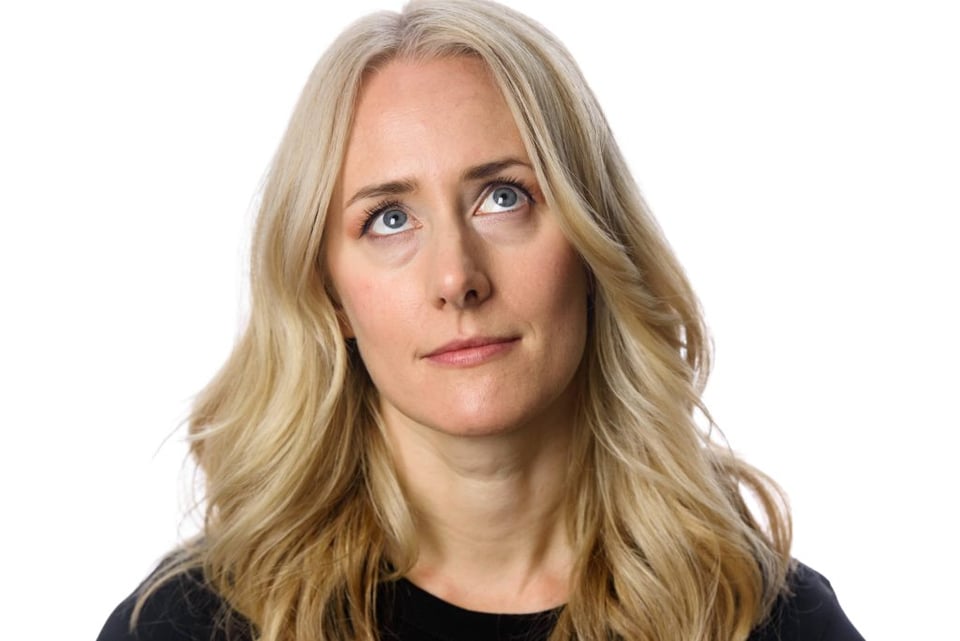
What It Means: Looking up often means someone is thinking about what to say next. Watch Daniel Radcliffe look up after a question while he searches for the right words (timestamp 1or ):
People also glance up at the ceiling or sky in moments of frustration or bad luck1—picture a golfer who blows a putt looking skyward to vent the tension.
Sideways glance
What It Means: With raised eyebrows or a smile, a sideways glance signals interest, and it’s more common in women than men. But watch this cluster:
- tilted head
- sideways glance or a brief eye roll
Together those two often mean “I hear you, but I’m not buying it—yet”3. The same glance with lowered brows or a furrowed forehead can signal suspicion or criticism.
We may even “eye point”—a quick, intense glance toward someone or something to silently flag it to a companion, then back to the listener to check they caught it5.

Looking at a watch (or phone)
What It Means: Where the eyes go, attention follows. When someone glances at their watch or phone mid-conversation, it usually signals mental disengagement—they have somewhere to be, or they’re wondering if the conversation has run long. If you catch it, it may be a good moment to wrap up or end the conversation gracefully. Read it in context, though: a single glance during a buzzing notification means less than repeated checking.
How to Read Anger, Fear and Sadness in the Eyes
The muscles around the eyes give away emotion. They relax when we feel neutral and tighten under stress—the eyes narrow, the brow tenses. Even babies’ facial muscles scrunch right before they cry. Here are the cues to watch.

Rubbing or touching between the eyes
What It Means: The fleshy spot between your eyebrows is the glabella. Rubbing or pinching it is usually a sign of high stress—a self-soothing move when someone is overloaded.
Lowered eyebrows
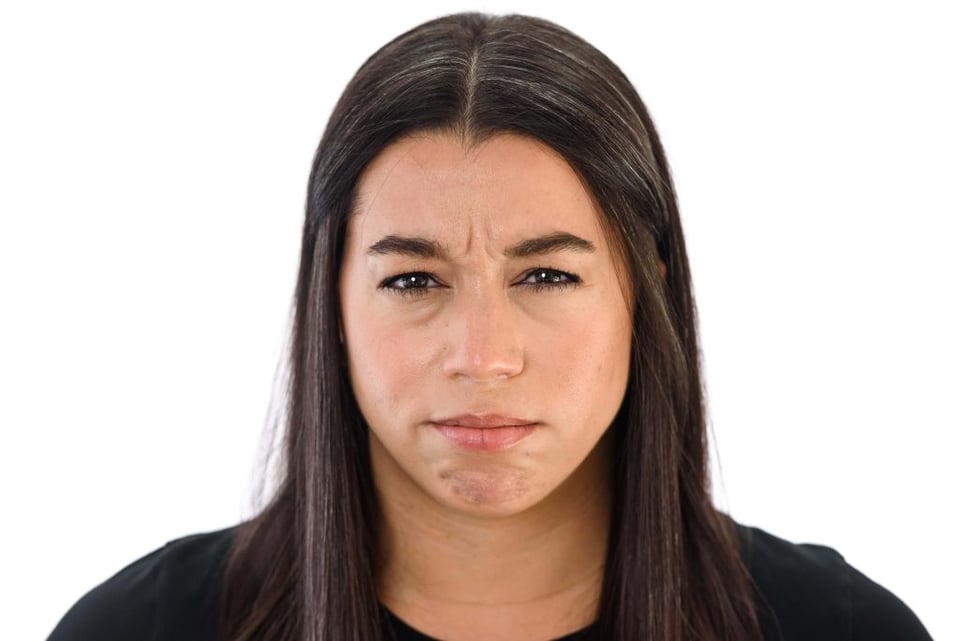
What It Means: Lowered eyebrows are typically a dominance gesture. A cross-cultural study found lowered brows read as dominant across most Western cultures, with some regional exceptions. A brief, reflexive brow-lower can mean someone doubts what you said. Dropped very low, it can signal defeat or insecurity3.
In one study, Strack and Neumann had participants furrow their brows while rating photos of celebrities; the furrowed group rated faces as less famous, as if the expression itself nudged them toward skepticism4.
Eyebrows can also expose incongruence. When sprinter Marion Jones faced doping allegations at a 2004 press conference, watch how her brows lift almost as if in fear (timestamp 2res):
You’d expect someone falsely accused to look angry, with lowered brows—but her expression doesn’t match her words. Three years later, in 2007, she admitted to doping, and the contrast is striking: now she’s tearful and showing genuine shame cues (timestamp 0ith):
Crying and fake crying
How to Tell Someone Is Fake Crying In 1994, Susan Smith claimed her children had been kidnapped; in reality she had murdered them. One giveaway was her fake crying—no tears, no nose touching, no swallowing, none of the involuntary signs of real distress. The eyes, and the rest of the face, leak the difference between performed and genuine grief.
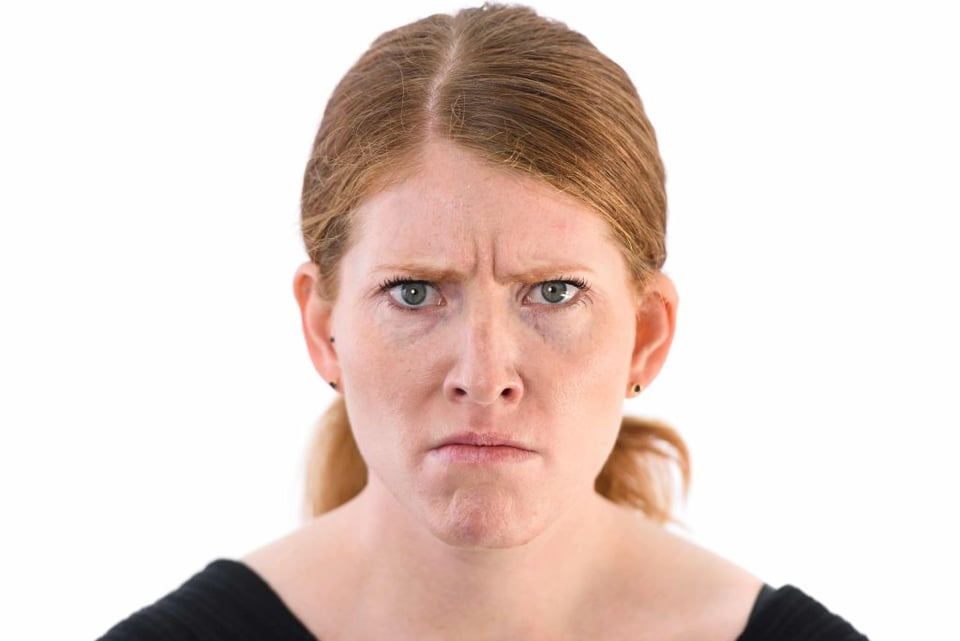
Angry stare
What It Means: Anger often shows as lowered brows and a head tilted slightly down, with a long, hard stare and little blinking.
Even cats stare each other down before a fight. Sometimes one backs off. Other times…
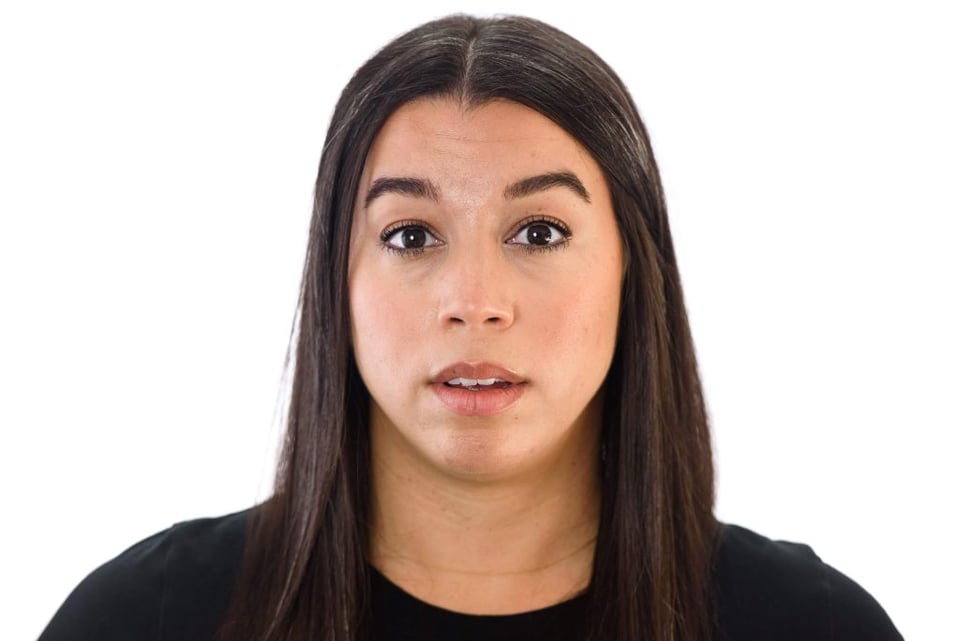
Widening eyes
What It Means: Wide eyes signal fear or surprise—sometimes called “flashbulb eyes” for the way they snap open. There’s a reason: a 2013 study found widening the eyes boosts the effectiveness of our visual periphery by 9.4%, helping us spot threats faster.
Here’s fear in the eyes from a true-crime case. Jennifer Pan, later convicted in her parents’ murder, talks to the lead investigator and looks to him for approval as she stumbles through her statement. Searching for approval plus widened eyes is a cue worth a second look (timestamp 11 ca):
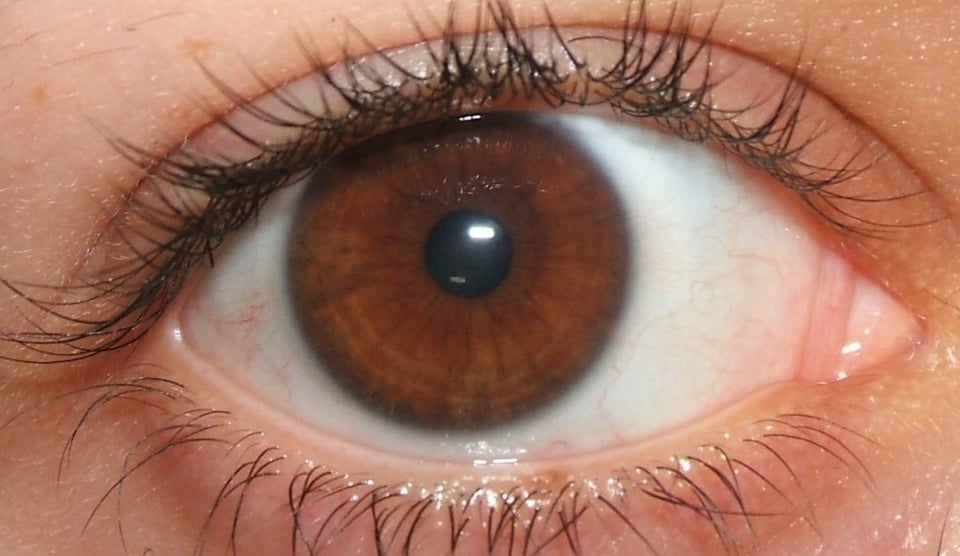
Pupil constriction
What It Means: When pupils constrict, the world snaps into sharp focus—like a camera narrowing its aperture. We constrict when we’ve processed something as negative, in a fraction of a second4, and when we’re scared and need to see clearly to fight or flee.
How an FBI Agent Used Pupils to Solve a Crime In 1989, FBI agents Joe Navarro and Marc Reeser interviewed a spy reluctant to name co-conspirators. They handed him 32 cards, each bearing a name, and asked what he knew about each person. On two names, something happened: his eyes widened in recognition, his pupils quickly constricted, then he gave a slight squint. That cluster was enough to draw suspicion—and those two people later confessed.
Eye Blocking: Reading the Real Signal
Eye blocking—prolonged blinks, eye rubbing, squinting, shielding, rapid blinking—is a largely involuntary response to discomfort, disagreement or overload. Covering or shielding the eyes shows up when people literally don’t like what they see. It’s a window into genuine feeling, if you’ve baselined first.

Closed eyelids
What It Means: Closed eyelids often signal disbelief or stress. One of the five most common signs of pain in babies is eyes squeezed tightly shut4—it’s so automatic that children born blind cover their eyes when they hear bad news.
In intimate settings, though, closed eyes can be positive: “I trust you, I’m in the moment”3. Navarro notes closed eyes can also add emphasis, affirming a point.
“It’s like your screensaver with password protection. Its goal is to stop people from seeing your sensitive information.”
—Janine Driver, TEDx talk
Watch Lance Armstrong the moment an interviewer says “performance-enhancing drugs”—notice the eye block and eyelid flutter (timestamp 0, p):
Pro Tip: How to Concentrate Like a Monk Closing your eyes filters out external stimuli. In one study, people answered hard factual questions more accurately with their eyes closed than while looking at the experimenter4. Next time you’re chewing on a tough problem, close your eyes.
Eyelid touching
What It Means: Eyelid touching is essentially eye blocking with a dose of tension relief3. Students often touch their eyes during an exam when they hit a hard question.
Rubbing eyes
What It Means: Eye rubbing functions to block visual input—a “visual reset” when someone is stressed, tired or wants to cut off eye contact to lower their own anxiety. You’ll see it in conversations and interrogations right after a stressful question.
You may have read that eye rubbing calms us by stimulating the vagus nerve via the oculocardiac reflex. Here’s the careful version: that reflex (pressure on the eyeball slowing the heart) is real physiology, well documented in eye surgery—but there’s no solid evidence that habitual eye rubbing reliably reduces stress through it, and deliberately pressing on the eyes carries real cardiac risks (EyeWiki; McGill OSS). Any calming effect is most likely from blocking visual input and general relaxation—not a “vagus nerve hack” you should try on purpose.
Increased blinking
What It Means: A spike in blinking can be a way to “block you” from sight2—like closing the curtain on whatever’s in front. It shows up with boredom, disinterest or a sense of superiority. An extreme version—eyes shut for 2–3 seconds—is a nonverbal “I wish you were gone.” Short bursts of 2–3 rapid blinks can also signal disbelief.
Eyelid twitching
What It Means: Dr. Sandy T. Feldman notes an eyelid twitch is a spasm that “may be indicative of stress or a medical condition.” A friend of mine developed one during a brutal stretch of overtime; once her workload eased, the twitch vanished as mysteriously as it arrived.
Squinting
What It Means: When people are suspicious, skeptical or simply concentrating, the muscles around the eyes tighten into a squint3. It can be brief—about an eighth of a second. Someone who squints the instant they meet you may be wary; someone who squints at a contract may dislike the wording.

Squinting is also one of the best cues for heading off conflict, because a slight squint with lowered lids signals subdued anger—anger before it erupts. Catch it early and you can de-escalate.
De-escalation: If you say something and the other person narrows their eyes, switch straight into clarification mode. Find out exactly what they’re hung up on and address it.
Slow eyelid closing
What It Means: A slow eyelid close usually signals disappointment, sometimes paired with a sigh. Any parent of a baby who cries a lot knows the move from the inside.
Slow eye movements
What It Means: Slower-than-normal eye movement indicates fatigue. A study of medical residents on 24-hour shifts found their eyes moved more slowly the more exhausted they got. Anecdotally, I have friends who seem to live at 0.5x speed—eyes included. Take note of a friend’s eye speed next time you’re playing board games together.
Rolling eyes
What It Means: The classic “oh, whatever.” Eye rolling signals disagreement or contempt. I was a champion eye-roller as a teenager—every time my mom told me to clean my room, I’d roll my eyes and say, “I’ll do it tomorrow.” I said that pretty much every day.
Decreased blinking
What It Means: A sudden drop in blink rate often means heightened attention or being on alert. You may notice it after you say something controversial or upsetting. Interestingly, liars also tend to blink less: a 2008 study found people blinked less while lying (likely from concentration), then returned to normal afterward—the opposite of the “shifty, blinking liar” stereotype.
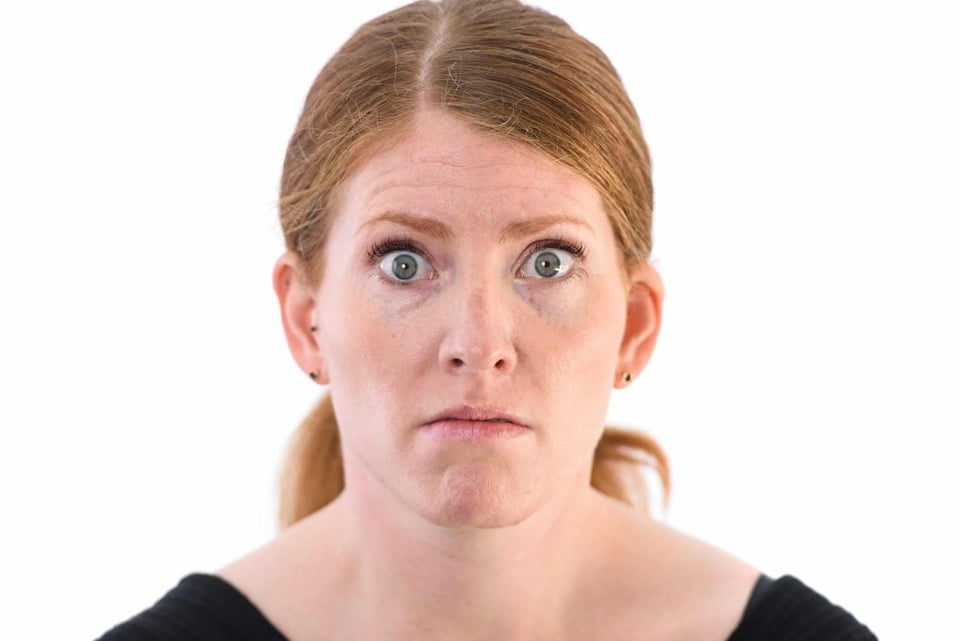
Eyebrow arching
What It Means: Arch your eyebrows with a tense face and compressed lips and you’re likely showing unwanted surprise3. The arch lasts longer than a quick eyebrow flash.
Glazed eyes
What It Means: The “far-off look”—you appear to be staring at something miles away when you’re really just zoned out. In conversation, glazed eyes usually mean boredom or disinterest (a glazed look on a date is not a great sign).
But not always: glazed eyes can also mean deep thought. Some people contemplate more effectively with an unfocused gaze, so that “creepy” stare may be entirely innocent.
Shifting eyes
What It Means: Darting eyes signal the processing of negative information—doubt, anxiety or scanning for options1. We do it when we feel trapped (a bad date that won’t end) and the brain starts hunting for exits. But some movement is just normal: eye contact is really a series of micromovements called saccades, about three per second. Hold a gaze with zero movement and you get the vacant, “looking through you” stare—not exactly charismatic.
Bonus: Shifting your eyes left and right has even been found to deactivate the amygdala—in other words, it can dampen fear. Here’s how:
Averting gaze
What It Means: Breaking eye contact more often, and for longer, can mean someone wants out of the conversation4—watch for the “eye break.” Looking away can also be plain shyness, the so-called lover’s gaze, where locked eyes keep slipping away. Context decides: dominant people roam their gaze freely, while people lower in a hierarchy keep their eye movements more restricted. Watch who scans the room in a meeting and who keeps their eyes pinned.
Eyeglasses
What It Means: People who wear glasses are generally seen as more intelligent, and eye adornment—glasses, makeup, thick lashes—tends to make a face more pleasing5. Some people park their glasses on top of their head; sunglasses up there read as relaxed and youthful, partly because they mimic two big “pupils,” the same non-threatening cue we respond to in babies and cuddly toys.

The Truth About Eyes and Lying
If you take one thing from this guide, make it this. The single most popular belief about lying is that liars avoid eye contact—and it’s wrong.
In a 75-country survey by the Global Deception Research Team (2006), “they avoid eye contact” was the number-one thing people worldwide associated with lying. Yet in a survey of deception experts, roughly 82% rejected gaze aversion as a reliable lie cue (BBC Science Focus). The public and the science point in opposite directions.
What do liars actually do? In high-stakes police interviews analyzed by Vrij and Mann (PMC), liars did not look away more than truth-tellers. If anything they often maintained or increased eye contact—to monitor whether they were being believed—blinked less from concentration and became unnaturally still.
Bottom line: Eye blocking and discomfort tell you someone is uncomfortable. The source could be disagreement, stress, confusion or hard thinking. It is not proof of lying.
So how do you actually spot deception? Not from a single eye cue. You look for clusters and incongruence—words that don’t match gestures, expressions that don’t match the situation, a baseline that suddenly shifts—and you treat all of it as a reason to ask better questions, not as a verdict. Real lie detection is intricate; anyone selling you a one-cue shortcut is selling a myth. We break down the full picture in our guide on how to spot a liar.

Lack of eye contact
What It Means: Low eye contact can read as nervousness, lower confidence or disinterest, and people who make little eye contact are sometimes seen as less trustworthy. In this Bachelor scene, Matt struggles to look at Abby because he’s nervous and likes her (timestamp 3awa):
But context rewrites this cue constantly. High-status people often gaze more while speaking and less while listening4—so looking away while you talk to them can signal status, not anxiety. Watch for it next time you talk to a VIP or your manager. Eye contact also carries emotional weight: people report feeling dehumanized when they’re not visually acknowledged, and children look for a parent’s gaze to feel their actions matter.
And critically, low eye contact is often about wiring, not character—which brings us to calibration.
Calibrate for Culture and Neurodivergence
No eye-contact rule is universal. The same gaze that reads as confident in one place reads as rude in another, and what looks like disengagement is often a difference in how a person’s brain processes social information.
Across cultures, the norms vary widely:
| Culture | Typical pattern |
|---|---|
| Western (US, Northern Europe) | Direct eye contact reads as confidence and honesty |
| East Asian (Japan, China, Korea) | Prolonged direct gaze can read as disrespectful |
| Middle Eastern | Direct among same sex; limited cross-gender by modesty norms |
| Latin American | More eye contact than North America; quick breaks read as disinterest |
| Many African, Caribbean and Native American traditions | Averted gaze with elders signals respect |
Research comparing Japanese and Finnish viewers found Japanese raters judged faces making direct eye contact as angrier and less approachable—same face, different read (SOP Eye Blocking).
Across neurotypes, the differences are just as real:
- Autism: Reduced eye contact is associated with autistic traits, but it’s role-dependent, not a blanket “deficit.” In live conversation, people with higher autistic traits reduce gaze especially when they’re the speaker and under cognitive load—it reflects processing differences, not disinterest (Thorsson et al., 2024, Frontiers in Psychology).
- Social anxiety: Often shows a hypervigilance-then-avoidance pattern—a fast initial lock onto the eyes, then active avoidance of the eye region.
The practical move is the same one we started with: calibrate to the person in front of you rather than impose a fixed percentage. If someone’s natural gaze runs low, meet them where they are.
Eye Contact on Video Calls
Half of modern conversation happens on a screen, where eye contact is structurally broken: to see someone’s eyes you look at the screen, but to simulate eye contact you look at the camera. You can’t do both. Here’s how to work with it.
- Put the camera at eye level. High or low angles distort how your status and engagement come across; eye level reads as most natural and competent.
- Use statement-ending eye contact. Let your gaze move naturally while you talk, then return to the lens as you land each point. That “punctuation” creates credibility without a constant stare (video-call study, 2024).
- Disable self-view if you can. Watching your own face splits your attention and degrades your natural gaze.
- Keep notes at camera height so your eyes don’t track back and forth (the “reading tell”).
The reassuring part: viewers respond to the feeling of being looked at, not to literal eye alignment. Aim for perceived connection, not pixel-perfect gaze. More in our guide to making eye contact.
Your Eye-Reading Toolkit
A quick field guide to put all 34 cues to work without overthinking it.
For reading other people
- Baseline first. Watch how someone behaves on neutral topics—the weather, dinner plans—before you read anything into a change. Establish it once and it can serve you for years.
- Cluster the cues. One squint is noise. A squint plus crossed arms plus a tight jaw is signal.
- Watch timing. A blink or eye block that lands right after a specific word or number carries far more information than random movement.
- Let people look away to think. Gaze aversion during a hard question usually means more cognitive effort, not evasion—especially with kids and deep processors.
For using your own eyes well
- Open with about 3 seconds of eye contact to signal engagement without pressure.
- Anchor your points. Let your gaze drift while speaking, then return to the listener (or camera) at the end of a key point.
- Pause for recovery. If someone looks away mid-conversation, pause briefly—it invites them back in without confrontation.
- Match gaze to your goal. Need rapport? A touch more gaze while listening. Reading romantic interest? Watch for the cluster, and if it isn’t mutual, dial the warmth down.
Guide attention in presentations. You can lead an audience’s eyes with a pen: hold it at eye level, then lift it as you make a point to raise their gaze, or move it left and right to compare ideas.
I hope this guide gave you some insight—or some eyesight—into the hidden behavior of the eyes. Used carefully, and always read in clusters, they’re remarkable windows into what people feel, where their attention sits and how they’re thinking. Just remember the first rule: read the person, not the cue.
Ready to keep learning? Read on…
Sources
1 Navarro, J. (2018). The Dictionary of Body Language: A Field Guide to Human Behavior. New York, NY: William Morrow. 2 Pease, A. (2017). The Definitive Book of Body Language: How to Read Others’ Attitudes by Their Gestures. London: Orion. 3 Navarro, J., & Karlins, M. (2015). What Every BODY Is Saying: An Ex-FBI Agent’s Guide to Speed-Reading People. New York, NY: Harper Collins. 4 Knapp, M. L., & Hall, J. A. (2014). Nonverbal Communication in Human Interaction. Boston: Wadsworth Cengage Learning. 5 Morris, D. (2012). Peoplewatching: The Desmond Morris Guide to Body Language. London: Vintage Digital.
Key peer-reviewed sources used in this update: Binetti et al., 2016, Royal Society Open Science (preferred mutual gaze duration); Harrison et al., 2021, PNAS (eye contact and shared attention); Doherty-Sneddon et al. (gaze aversion and cognitive load); Global Deception Research Team, 2006 (cross-cultural deception beliefs); Vrij & Mann (high-stakes interview gaze analysis); Thorsson et al., 2024, Frontiers in Psychology (autistic traits and communicative role).
Side Note: As much as possible we use academic research or expert opinion for this guide. Where solid research doesn’t exist, we say so and flag the claim rather than overstate it. As more research on nonverbal behavior comes out, we’ll keep this updated.


