Mental strength is a key skill that every athlete, businessperson, or motivated individual needs to thrive. In a study of 865 students, higher mental toughness went together with less perceived stress, fewer low-mood symptoms, and higher life satisfaction.
There’s also a gap most people never notice: research on self-awareness finds that nearly everyone believes they have it, while only about one in eight actually does. Which means most of us are guessing at how tough we are until pressure arrives and settles the question.
So how do you improve mental strength? Below are the tips, with frameworks from Dr. Nate Zinsser, Director of the Performance Psychology Program at West Point and author of The Confident Mind: A Battle-Tested Guide to Unshakable Performance.

What Is Mental Strength?
Mental strength is a measure of how resilient and confident you are when facing challenges, setbacks, and high-pressure situations. It includes your ability to regulate emotions, maintain focus under stress, and bounce back from adversity.
Research on mental toughness identifies four pillars, known as the 4 C’s:
- Control: Believing you can influence what happens to you and managing your emotional responses
- Commitment: Setting goals and sticking with them through difficulty
- Challenge: Viewing setbacks and change as opportunities
- Confidence: Self-belief in your abilities and willingness to assert yourself
There’s one reframe in that research worth holding onto. The true opposite of “tough” is “sensitive.” Sensitive people feel the world more intensely, which carries its own advantages, and mental toughness is a separate skill you can build on top of it.
Core abilities that make up mental strength include:
- Handling negative emotions in a healthy way (not stuffing them down)
- Understanding and interpreting what your emotions are telling you
- Knowing when to engage and when to step back
Mental strength doesn’t require you to be:
- Indifferent: “Tough” people are often afraid of their emotions, while mentally strong people embrace them
- Self-reliant to a fault: Mentally strong people know who their essential support people are
- Always happy: That’s a fast track to toxic positivity
The real opposite of “tough” is “sensitive.” Mental toughness is a skill you can layer on top.
How to Assess Your Own Mental Strength
There are many clinical tools for assessing mental health conditions, but far fewer for measuring mental strength specifically. Here are three self-assessment approaches grounded in validated frameworks:
-
The 4 C’s Self-Check. Rate yourself from 1–10 on each of the four pillars: Control, Commitment, Challenge, and Confidence. Where you score lowest is where to focus your effort. Revisit this rating monthly to track growth.
-
The Situation-Response Journal. For one week, record what happened in a stressful situation, how you responded, and how you wish you’d responded. The gap between columns two and three reveals your biggest growth opportunities. That’s the line between useful self-reflection and rumination. You’re hunting patterns. Leave the failures alone.
-
Emotional Trigger Mapping. Identify your top three stressors and your default reaction to each. Do you withdraw? Lash out? Freeze? Once you see the pattern, you can start choosing a different response. Taking daily notes on your biggest stressors is the first step to finding the factors that shape your mental well-being.
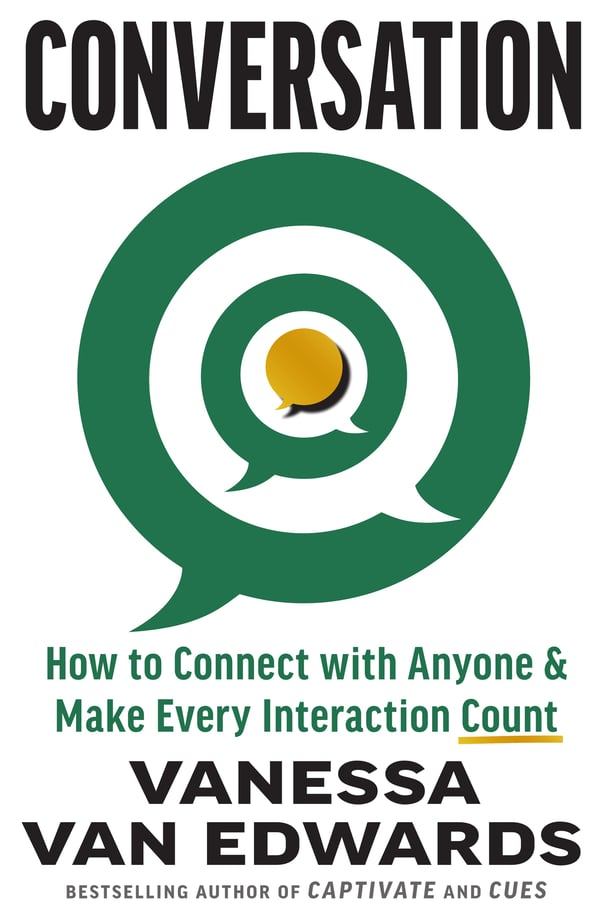
A new book by Vanessa Van Edwards
Every conversation is an opportunity.
If conversations have gotten harder, more awkward or less satisfying, you’re not imagining it. We’re simply out of practice. It’s time to find the joy in talking to each other again.
7 Tips to Build Mental Strength
Mental strength is a skill, and like any skill, it responds to deliberate practice. Set your expectations properly first. A new behavior takes an average of 66 days to go automatic, and the range ran from 18 days to 254. The popular “21 days” is nowhere close. So be patient with yourself, and know that missing one day doesn’t reset your progress.
Identify Your Success Cycles and Sewer Cycles
No matter who you are, there are stretches when you feel on top of the world and stretches when everything feels like it’s falling apart. Think of these as your Success Cycle and Sewer Cycle.
During a Success Cycle, a cascade of benefits opens up:
- You feel more relaxed
- Your body language naturally opens up
- Conversations flow more easily
- Your body releases “feel good” hormones like dopamine and serotonin
- You perform better under stress
During a Sewer Cycle, you might notice:
- Procrastination and mental fog
- A drop in confidence
- An unwillingness to socialize
- Difficulty making decisions
The goal is to spend more time in your Success Cycle and catch your Sewer Cycle earlier, before it spirals.
Dr. Nate Zinsser’s framework from West Point offers a concrete tool for this: the ESP Practice. Each night, write down three things:
- E, Effort: One thing you gave genuine effort toward today
- S, Success: One thing that went well
- P, Progress: One sign of improvement, however small
This builds what Zinsser calls your “Mental Bank Account,” a growing record of evidence that you’re capable and improving. Over time, this intentional memory practice rewires your default self-narrative from “I’m not good enough” to “I’ve done hard things before.”
Action Step: Tonight, grab a notebook or open your notes app. Write down one E, one S, and one P from today. Do this for 30 days and watch how your self-talk shifts.

The 3-Second Rule
The 3-second rule is a technique you can use whenever you’re feeling anxious or nervous about doing something. Count to 3 seconds, and as soon as you hit your mental “3,” do the thing.
You get a narrow window after the instinct to act (raising your hand in a meeting, starting a hard conversation, getting out of bed early) before your brain talks you out of it. The countdown works because it hands the decision to the rational part of your brain and cuts off the hesitation habit. It’s a “do it or do it” rule. There is no third option.
Use it:
- Before taking a cold shower
- When heading on a video call
- Before entering a meeting room
- Before chatting with your crush
There’s a second trick that pairs with it. People who say “I am excited” out loud before performing do better than people who try to “calm down.” Nervousness and excitement feel almost the same in the body. The only real difference is the label your brain puts on it, and swapping the label is far easier than forcing yourself to relax.
Dr. Zinsser teaches a complementary technique to West Point cadets called the C-B-A Routine for high-pressure moments:
- Cue your conviction: repeat a personal power phrase (“I’ve trained for this” or “I’m ready”)
- Breathe your body: take one slow diaphragmatic breath (inhale 4 counts, exhale 6)
- Attach your attention: put it on the task in front of you, out where you can see it
Pro Tip The 3-second rule is designed to make you act at just the right moment. Nerves are your body getting ready; the trouble starts when you wait long enough for the nerves to become the whole event. So combine the two: count to 3, say “I’m excited,” and go.
Count to 3. As soon as you hit “3,” do the thing.
Reframe Your Emotions (Don’t Suppress Them)
Mental strength gets mistaken for suppressing your emotions and putting on a brave face. Research on emotion regulation points the other way. Suppression hides the expression and leaves the feeling where it was, or turns it up. Worse, suppression impairs memory, increases cardiovascular stress, and makes you less socially connected.
The better strategy is cognitive reappraisal: changing how you interpret a situation before the emotion fully takes hold. Here are three reframing scripts you can use immediately:
- “My friend didn’t text back” → Instead of “They’re mad at me,” try “They’re probably busy.” You aren’t denying the feeling. You’re questioning the story behind it.
- Nerves before a presentation → Instead of “I’m panicking,” try “My body is getting ready to perform.” That’s the excitement reframe from the last tip.
- A setback at work → Instead of “I failed,” try “This is one round of feedback.” Research on mindset finds that people who treat a setback as information tend to keep trying new strategies instead of giving up.
Reappraisal actually lowers the felt intensity, which is the difference between mental strength and a poker face.
Action Step: The next time you notice a strong negative emotion, pause and ask: “What story am I telling myself about this situation?” Then test whether there’s a more accurate interpretation. Write down the original thought and the reframe. Over time, this becomes automatic.
Use Music Strategically
Humans are wired to respond to rhythm. A good song changes your physiology as well as your mood. Music can reduce perceived exertion during physical tasks by about 10%, lower cortisol levels, and trigger flow states when self-selected.
A powerful example: in 2013, David Goggins broke the Guinness World Record for most pull-ups in 24 hours (4,030 in 17 hours) on his third attempt (after two earlier failures ended at 2,588 and 3,207 due to severe hand damage). He listened to “Going the Distance” by Bill Conti from the Rocky soundtrack on repeat the entire time.
The science behind this is straightforward. Fast-tempo music above 120 BPM activates your sympathetic nervous system, which is what you want before a challenge. Slow-tempo music between 60 and 80 BPM activates the parasympathetic system, helping you manage pre-performance anxiety and recover from stress.
Action Step: Create two playlists this week:
- “Pump Up” playlist: songs above 120 BPM for workouts, big presentations, or challenging tasks
- “Calm Focus” playlist: songs between 60–80 BPM for deep work, pre-performance nerves, or winding down after a stressful day
Move Your Body (Even for 10 Minutes)
Physical and mental strength work in tandem. You don’t need a full gym session to see results. Research shows that just 10 minutes of moderate walking can boost cognitive performance by 14%, increase creative output by 60% (Stanford), and trigger the release of dopamine, serotonin, and endorphins.
Walking in nature specifically decreases activity in the amygdala (your brain’s stress center) and reduces rumination, that pattern of replaying negative thoughts on a loop. Even a short walk around the block can interrupt a Sewer Cycle.

Action Step: After your next stressful meeting or difficult conversation, take a 10-minute walk before responding to anything. Don’t check your phone. Pay attention to what you see, hear, and feel. That’s a cognitive reset, and it works better than a break.
Seek Discomfort on Purpose
Most people assume comfort is the goal. But a 2022 study from the University of Chicago and Cornell found something counterintuitive: participants told to “seek discomfort” during a learning challenge achieved significantly more growth than those told to simply “try their best.”
The Yerkes-Dodson Law says much the same thing: performance peaks in a zone of “productive discomfort,” just outside your comfort zone. Too little challenge and you stagnate. Too much and you freeze. The sweet spot is the stretch that makes you slightly nervous but not overwhelmed.
Voluntarily facing small stressors works through a process called stress inoculation, a kind of vaccination against larger future challenges. Novel experiences also trigger dopamine release, which strengthens learning and boosts mood.
You don’t need to run an ultramarathon. Start with micro-challenges:
- Talk to a stranger in line at the coffee shop
- Take a different route to work
- Volunteer to present first in a meeting
- Try a hobby you’ve always been curious about but never attempted
Action Step: Choose one small discomfort to seek this week. Write it down. After you do it, note how you felt before, during, and after. You’ll almost always find the anticipation was worse than the reality.
People told to “seek discomfort” achieved more growth than those told to “try their best.”
Pull the Mental Weeds Out, and Repeat
Even if you manage to stay mentally strong, deep-rooted emotions have a way of returning during the darkest times.
The mental weeds will grow back.
So tend to them regularly. Pick out a pain point: a lack of self-discipline, a habit you can’t shake, not having good friends. Concentrate on how it makes you feel and say it plainly: “not having close friends makes me feel invisible.” Then, and this is the hardest part, accept the feeling instead of arguing with it. Meditation techniques help with that acceptance. Finally, take one action against the pain point.
Action Step: While you’re mapping your Sewer Cycle triggers, make yourself a “flush” object, whether that’s a toy toilet you can physically flush or a small box of sticky notes with your best moments written on them. When you catch yourself heading down the spiral, use the object to interrupt it.
Try Cold Exposure
Wim Hof, the Dutch athlete known as “The Iceman,” holds over 20 Guinness World Records for cold endurance, including climbing to 7,400 meters on Everest in shorts. He has argued for cold exposure as mental training for decades. Some of the science supports him, with an important caveat about the numbers below.
The shower-sized version has the best evidence behind it: in a trial of 3,018 people, those who finished a hot shower with 30 to 90 seconds of cold water took 29% fewer sick days off work. A single 5-minute cold immersion left participants feeling more active, alert, and inspired.
The eye-popping chemistry numbers you may have seen, norepinephrine up 530% and dopamine up 250%, come from a small 1970s-style lab study that sat young men in 14°C water for a full hour. That is not your shower. Treat those figures as evidence that an hour of cold does something dramatic to a body. They promise nothing about 90 seconds.
Cold exposure also builds mental strength through the same stress inoculation principle: voluntarily facing a controlled stressor teaches your nervous system to recover faster from all stressors.
Action Step: Start small. At the end of your normal warm shower tomorrow, turn the water cold for 15 seconds. Add 5 seconds a day. In two weeks you’re at 90 seconds, the top of the range used in the shower trial. Notice how much faster your body stops protesting each day.
Build a Daily Meditation Practice
If cold showers train your body’s stress response, meditation trains your brain’s. Harvard neuroscientist Sara Lazar found that just 8 weeks of mindfulness practice (averaging 27 minutes a day) produced measurable changes in brain structure: increased gray matter in the hippocampus (responsible for learning and emotional regulation) and decreased gray matter in the amygdala (the brain’s fear center). The amygdala shrinkage directly correlated with lower self-reported stress.
Meditation also strengthens the connection between your prefrontal cortex (rational brain) and your amygdala (emotional brain), building stronger “mental brakes” so a reaction has time to become a response.
You don’t need 27 minutes to start. Here’s a 5-minute beginner practice:
- Sit comfortably and close your eyes
- Inhale for 4 counts, hold for 4, exhale for 6
- When your mind wanders (it will), notice it without judgment and return to the breath
- That’s it. The noticing-and-returning is the exercise, the mental equivalent of a bicep curl
Action Step: Set a recurring alarm for tomorrow morning, 5 minutes before you normally check your phone. Use those 5 minutes for this breathing practice instead. After one week, you’ll notice you’re catching reactive emotions earlier, before they escalate.

Frequently Asked Questions
What are the 4 C's of mental toughness?
The 4 C’s model, developed by Professor Peter Clough, identifies four pillars: Control (believing you can influence outcomes and manage emotions), Commitment (goal-setting and persistence through setbacks), Challenge (viewing difficulty as opportunity), and Confidence (self-belief and social assertiveness). These are measured by the MTQ48 questionnaire and can be trained through deliberate practice.
What are the 5 pillars of resilience?
The five pillars are Self-Awareness (knowing your strengths, weaknesses, and triggers), Mindfulness (staying present when your head wants to replay things), Self-Care (sleep, nutrition, exercise, and boundaries), Positive Relationships (social support is one of the strongest predictors of resilience), and Purpose (having a “why” that sustains you through difficulty).
How can I regulate my emotions without suppressing them?
Use cognitive reappraisal: change how you interpret a situation before the emotion fully forms. Instead of hiding what you feel, question the story behind it. Nerves before a presentation are your body preparing to perform. Research on emotion regulation finds that reappraisal lowers the felt intensity of a negative emotion, while suppression leaves the internal stress where it was.
What is the 3-3-3 rule in mental health?
The 3-3-3 rule is a grounding technique for moments of anxiety or overwhelm. Name 3 things you can see, 3 sounds you can hear, then move 3 parts of your body (wiggle your toes, roll your shoulders, rotate your ankles). It works by pulling your attention out of anxious future-thinking and anchoring it in present-moment sensory experience, which activates the prefrontal cortex and interrupts the amygdala’s alarm response.
How can I boost my mood immediately?
Four science-backed quick mood boosters: take a 10-minute walk (especially in nature, which reduces amygdala activity and rumination), splash cold water on your face or end your shower with 30 seconds of cold, listen to personally meaningful music (lowers cortisol and can trigger flow states), or do 5 minutes of focused breathing (activates the parasympathetic nervous system).
How can I become emotionally tougher?
Start with self-awareness by tracking your emotional triggers and default reactions for one week. Then practice cognitive reappraisal (reframing situations before emotions escalate), build a daily ESP journaling habit (Effort, Success, Progress), and seek small discomforts regularly to build stress inoculation. Mental toughness responds to consistent practice the way physical fitness responds to exercise.
How does mental strength help you?
A longitudinal study of 865 students found that those with higher mental toughness reported less perceived stress, fewer depressive symptoms, and higher life satisfaction, even when facing the same external pressures as their peers. Mental toughness acts as a psychological buffer, helping you hold your well-being and performance steady through a stressful stretch.
Mental Strength Takeaways
Mental strength is about having a set of moves for when you struggle. Here are the key actions from this article:
- Build your Mental Bank Account with nightly ESP journaling: one Effort, one Success, one sign of Progress.
- Use the 5 Second Rule (5-4-3-2-1, then move) to beat hesitation before your brain talks you out of it.
- Reframe emotions instead of hiding them. Ask “What story am I telling myself?” and test a more accurate interpretation.
- Use music strategically with a pump-up playlist (>120 BPM) and a calm-focus playlist (60–80 BPM).
- Move for 10 minutes after stressful moments. Walking boosts cognitive performance by 14% and creative output by 60%.
- Seek one small discomfort each week to build stress inoculation.
- Start cold exposure with 15 seconds at the end of your shower, adding 5 seconds daily.
- Meditate for 5 minutes each morning. Eight weeks of practice measurably shrinks your brain’s stress center.
Mental toughness takes an average of 66 days to build as a habit, far longer than the popular 21-day myth. Be patient. And if you want to go deeper, check out Vanessa’s book Cues for the science of reading and projecting confidence under pressure.
Mental strength comes down to having a set of moves ready for the hard moments.
If you are struggling, please note that this content is not professional medical advice. Consult a doctor or licensed therapist for questions about your physical or mental health.
Recommended Videos on Mental Strength
Amy Morin: The Secret of Becoming Mentally Strong
Wim Hof Breathing Technique
9 Brain Exercises to Strengthen Your Mind
Relaxing Yoga For Mental Health
Navy SEAL Explains How to Build Mental Toughness (David Goggins)
Read next: Push your growth further with our guides to building good habits, getting out of your comfort zone, and becoming the best version of yourself. If you struggle with overthinking, see our guide to beating procrastination.